THE ADVENTURE COLLECTIVE® · Independent discovery and booking for outdoor travel

Short on time but eager for island scenery? This guided Lind Point Trail hike drops to Honeymoon Beach for snorkel time among coral and reef fish—perfect for first-time snorkelers and hikers who want a compact St. John experience.
Short on time but eager for island scenery? This guided Lind Point Trail hike drops to Honeymoon Beach for snorkel time among coral and reef fish—perfect for first-time snorkelers and hikers who want a compact St. John experience.
The walk begins in the heat and bustle of Cruz Bay and quickly lets the island breathe; palms thin, coral rock shows through red soil, and the trail angles toward a water-bright horizon. On the Lind Point Trail a guide moves at an easy pace, pointing out a patch of orchids, the rough geometry of volcanic rock, and a lookout that frames Cruz Bay and distant St. Thomas before the descent to Honeymoon Beach.
Verified experiences and guided adventures in the surrounding area.
Operated by Virgin Islands Ecotours · Cruz Bay, U.S. Virgin Islands
The walk begins in the heat and bustle of Cruz Bay and quickly lets the island breathe; palms thin, coral rock shows through red soil, and the trail angles toward a water-bright horizon. On the Lind Point Trail a guide moves at an easy pace, pointing out a patch of orchids, the rough geometry of volcanic rock, and a lookout that frames Cruz Bay and distant St. Thomas before the descent to Honeymoon Beach.
Geology here reads like a two-part story: volcanic backbone overlain by ancient reef and white sand made from crushed coral. The land holds Danish-era ruins and the modern, quietly resilient culture of St. John—fishermen, ferry crews, and National Park stewards who protect these coves. Virgin Islands National Park, created in the 1950s, preserves both reef and ridge and sets the scene for short interpretive hikes.
The practical side is simple: the guided loop takes about three hours, covers roughly 1–1.5 miles round trip with a few rocky, uneven sections and 150–250 feet of cumulative elevation change. Guides provide masks, fins, inflatable vests and a fish ID card for snorkeling the shallow reef where parrotfish, sergeant majors and occasional turtles cruise.
Expect hot sun, salty spray and patches of shade. Bring reef‑safe sunscreen, a sturdy pair of trail sandals or shoes, and a dry bag for valuables. The return is slow, barefoot on soft sand if you choose, with a final climb back into the village’s hum—done, cooler, and quietly acquainted with a small corner of Caribbean marine life and island history.
easy.
3 hours.
Suitable for most fitness levels; you should be comfortable walking on uneven terrain and entering calm, shallow water.
The guided outing is about 1–1.5 miles round trip; the full experience, including snorkeling and time on the sand, runs roughly three hours.
No—guides supply masks, fins and inflatable vests and accompany swimmers; basic comfort in shallow water is sufficient.
Yes, the route is family-friendly, but there are some rocky and sloped sections—people with limited mobility should assess footing and stamina.
Expect reef fish like parrotfish and sergeant majors; sea turtles are possible but not guaranteed—guides emphasize calm, respectful viewing.
Virgin Islands National Park was established in the 1950s to protect St. John’s beaches and backcountry; many trails pass old plantation ruins and colonial roads.
Visitors are asked to use reef-safe sunscreen, avoid touching coral, and pack out all trash—the park relies on visitor stewardship to protect fragile reefs and coastal vegetation.
Virgin Islands Ecotours operates guided outdoor trips and adventures with an emphasis on safety, stewardship, and memorable experiences.
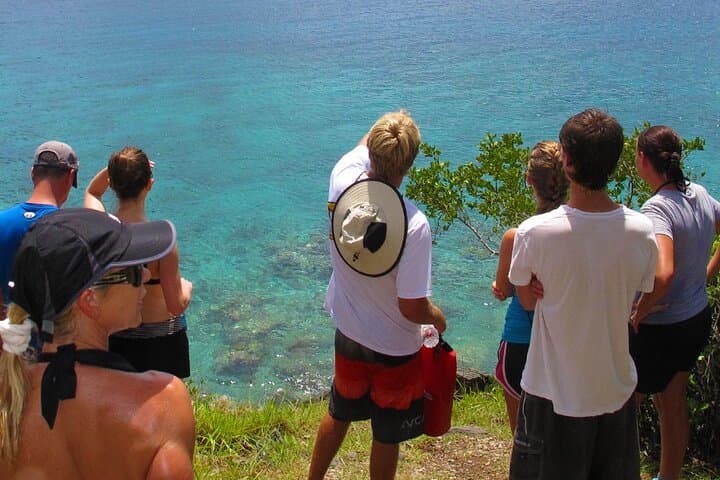

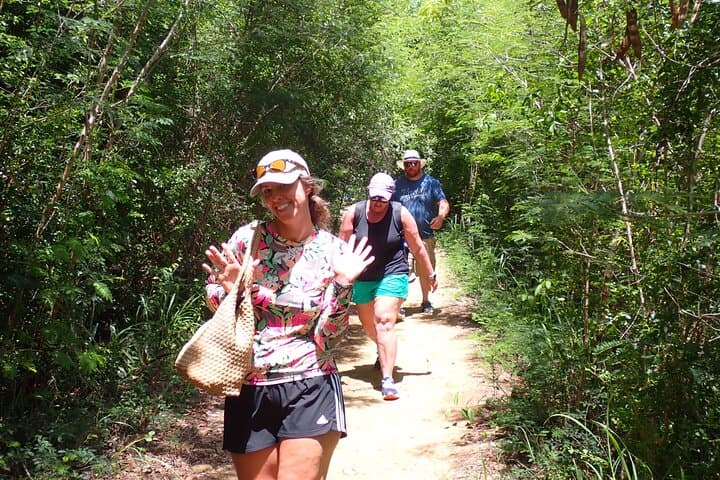
The walk begins in the heat and bustle of Cruz Bay and quickly lets the island breathe; palms thin, coral rock shows through red soil, and the trail angles toward a water-bright horizon. On the Lind Point Trail a guide moves at an easy pace, pointing out a patch of orchids, the rough geometry of volcanic rock, and a lookout that frames Cruz Bay and distant St. Thomas before the descent to Honeymoon Beach.
The walk begins in the heat and bustle of Cruz Bay and quickly lets the island breathe; palms thin, coral rock shows through red soil, and the trail angles toward a water-bright horizon. On the Lind Point Trail a guide moves at an easy pace, pointing out a patch of orchids, the rough geometry of volcanic rock, and a lookout that frames Cruz Bay and distant St. Thomas before the descent to Honeymoon Beach.
Geology here reads like a two-part story: volcanic backbone overlain by ancient reef and white sand made from crushed coral. The land holds Danish-era ruins and the modern, quietly resilient culture of St. John—fishermen, ferry crews, and National Park stewards who protect these coves. Virgin Islands National Park, created in the 1950s, preserves both reef and ridge and sets the scene for short interpretive hikes.
The practical side is simple: the guided loop takes about three hours, covers roughly 1–1.5 miles round trip with a few rocky, uneven sections and 150–250 feet of cumulative elevation change. Guides provide masks, fins, inflatable vests and a fish ID card for snorkeling the shallow reef where parrotfish, sergeant majors and occasional turtles cruise.
Expect hot sun, salty spray and patches of shade. Bring reef‑safe sunscreen, a sturdy pair of trail sandals or shoes, and a dry bag for valuables. The return is slow, barefoot on soft sand if you choose, with a final climb back into the village’s hum—done, cooler, and quietly acquainted with a small corner of Caribbean marine life and island history.