THE ADVENTURE COLLECTIVE® · Independent discovery and booking for outdoor travel

Spend a half-day hiking humid broadleaf forest, visiting the Jivales spring, and kayaking through bird-rich mangroves to San Lorenzo Bay. This private excursion from Sabana de la Mar blends plant lore, karst geology, and hands-on paddling for all fitness levels.
Spend a half-day hiking humid broadleaf forest, visiting the Jivales spring, and kayaking through bird-rich mangroves to San Lorenzo Bay. This private excursion from Sabana de la Mar blends plant lore, karst geology, and hands-on paddling for all fitness levels.
You step off a small skiff into a hush of broadleaf forest—humid air slicks your skin, leaves drip like slow applause, and the guide bends to pluck a glossy-leafed sprig to name aloud: guaco for aches, a sap used for fevers. The trail through Los Haitises feels older than the maps that stitched these coves together; footfall wakes roots and cricket-song rather than crowds. Three hours of hiking threads along primary and secondary humid forest, past coffee and cacao groves, up low ridges, and finally to the spring of the Jivales River where clear water pools like a found thing you didn’t know you were looking for.
Verified experiences and guided adventures in the surrounding area.
Operated by Ballenas · Sabana de la Mar, Hato Mayor
You step off a small skiff into a hush of broadleaf forest—humid air slicks your skin, leaves drip like slow applause, and the guide bends to pluck a glossy-leafed sprig to name aloud: guaco for aches, a sap used for fevers. The trail through Los Haitises feels older than the maps that stitched these coves together; footfall wakes roots and cricket-song rather than crowds. Three hours of hiking threads along primary and secondary humid forest, past coffee and cacao groves, up low ridges, and finally to the spring of the Jivales River where clear water pools like a found thing you didn’t know you were looking for.
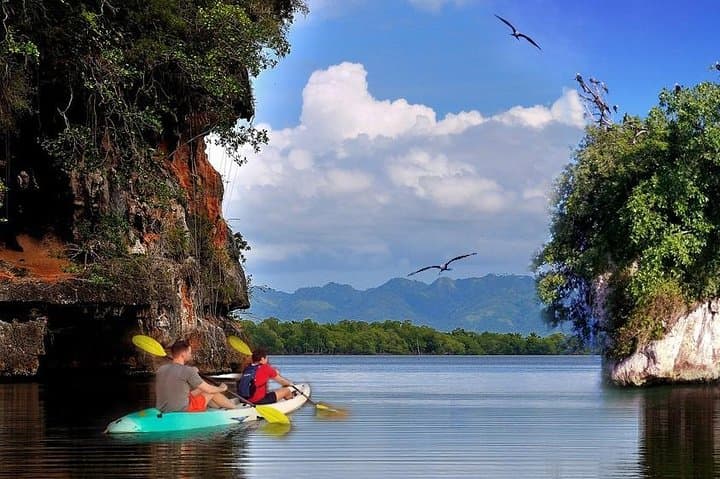
Leaving the spring, the day changes gear: lifejackets snug, kayaks launched into a green cathedral of mangrove roots. The channel narrows—prop roots arch like ribs—then opens to the wind and cliff-creased shore of San Lorenzo Bay. Birds use the mangroves as a freeway; herons stalk, kingfishers flash, and from the water you can photograph the rugged forestline sniffing the sea.
Los Haitises is a geological patchwork of karst limestone, caves, and sinkholes left by ancient reefs and uplift. Taíno people used these sheltered bays and caverns centuries ago; colonial history threaded through the region as fishermen, farmers, and later conservationists recognized the fragile value of its bays and mangroves. Local eco-lodges and guides now emphasize traditional plant knowledge—expect to hear practical uses for species you’ve never noticed before.
Practically, the route is compact but varied: about three hours of forest hiking followed by paddling through mangrove channels to San Lorenzo Bay over a roughly four-hour excursion. Trail surfaces shift from packed soil to rooty singletrack; elevation changes are modest (typically under 200m cumulative gain), but humidity makes effort feel greater. Guides provide safety equipment and lead paddles—this is a trip for beginners through experienced adventurers alike.
Plan for sun that finds the breaks in the canopy, and mosquitoes that find the breaks in your repellent. Wear quick-dry layers, sturdy trail shoes that can get wet, and a small dry bag for camera and phone. Take a refillable bottle; hydration on humid Caribbean hikes is constant work, not an afterthought. Lastly, bring curiosity: guides here share plant lore, history, and an unsentimental pride in protecting waters that still feed small coastal communities.
For photographers, low-angle mangrove reflections and the vista from San Lorenzo’s open bay make the best frames; for wildlife watchers, mornings bring the most bird activity. Whether you’re drawn by the tactile forest, the slow choreography of paddling, or the quiet satisfaction of a spring found and photographed, this combined hike-and-kayak day delivers a concise, hands-on portrait of one of the Dominican Republic’s more intimate wild places.
easy.
4 hours.
Suitable for people with basic walking fitness who can handle 3 hours of mixed trail and short paddling stints; no sustained elevation required.
Expect roughly three hours of hiking through humid forest with short interpretive stops and a stretch to the Jivales spring.
No prior experience required—guides provide instruction, lifejackets, and lead the route through calm mangrove channels and open bay.
This tour is classified as easy and suitable for most people who can walk for several hours on uneven ground and perform short paddling efforts.
Infants must sit on an adult’s lap; check operator age policies for older children and book a private excursion if traveling with a family.
Yes—expect birds like herons and kingfishers in mangroves and potentially other small mammals or reptiles in the forest; sightings can’t be guaranteed.
A small dry bag or waterproof case plus a microfiber cloth for spray are recommended; bring extra memory and batteries since charging options are limited.
The park’s bays and caves were used by the Taíno and later became strategic coastal refuges; conservation efforts since the 20th century have focused on protecting mangroves and karst landscapes.
Visitors are encouraged to use reef-safe sunscreen, avoid picking plants, and follow guides’ instructions to minimize disturbance to bird nesting and mangrove root systems.
Ballenas operates guided outdoor trips and adventures with an emphasis on safety, stewardship, and memorable experiences.
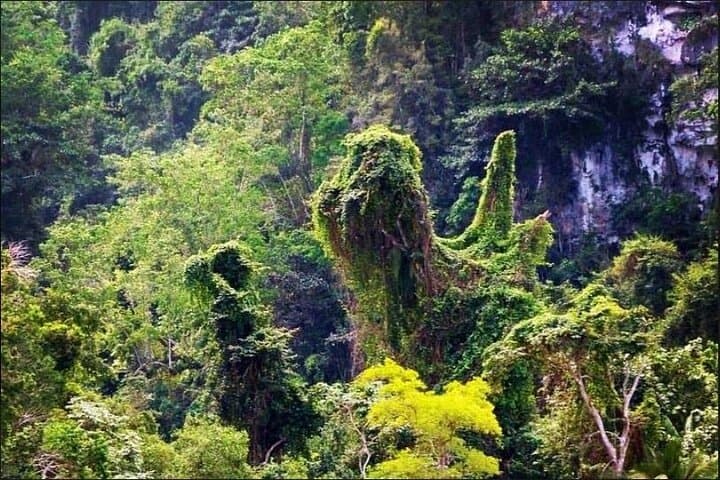
You step off a small skiff into a hush of broadleaf forest—humid air slicks your skin, leaves drip like slow applause, and the guide bends to pluck a glossy-leafed sprig to name aloud: guaco for aches, a sap used for fevers. The trail through Los Haitises feels older than the maps that stitched these coves together; footfall wakes roots and cricket-song rather than crowds. Three hours of hiking threads along primary and secondary humid forest, past coffee and cacao groves, up low ridges, and finally to the spring of the Jivales River where clear water pools like a found thing you didn’t know you were looking for.
You step off a small skiff into a hush of broadleaf forest—humid air slicks your skin, leaves drip like slow applause, and the guide bends to pluck a glossy-leafed sprig to name aloud: guaco for aches, a sap used for fevers. The trail through Los Haitises feels older than the maps that stitched these coves together; footfall wakes roots and cricket-song rather than crowds. Three hours of hiking threads along primary and secondary humid forest, past coffee and cacao groves, up low ridges, and finally to the spring of the Jivales River where clear water pools like a found thing you didn’t know you were looking for.
Leaving the spring, the day changes gear: lifejackets snug, kayaks launched into a green cathedral of mangrove roots. The channel narrows—prop roots arch like ribs—then opens to the wind and cliff-creased shore of San Lorenzo Bay. Birds use the mangroves as a freeway; herons stalk, kingfishers flash, and from the water you can photograph the rugged forestline sniffing the sea.
Los Haitises is a geological patchwork of karst limestone, caves, and sinkholes left by ancient reefs and uplift. Taíno people used these sheltered bays and caverns centuries ago; colonial history threaded through the region as fishermen, farmers, and later conservationists recognized the fragile value of its bays and mangroves. Local eco-lodges and guides now emphasize traditional plant knowledge—expect to hear practical uses for species you’ve never noticed before.
Practically, the route is compact but varied: about three hours of forest hiking followed by paddling through mangrove channels to San Lorenzo Bay over a roughly four-hour excursion. Trail surfaces shift from packed soil to rooty singletrack; elevation changes are modest (typically under 200m cumulative gain), but humidity makes effort feel greater. Guides provide safety equipment and lead paddles—this is a trip for beginners through experienced adventurers alike.
Plan for sun that finds the breaks in the canopy, and mosquitoes that find the breaks in your repellent. Wear quick-dry layers, sturdy trail shoes that can get wet, and a small dry bag for camera and phone. Take a refillable bottle; hydration on humid Caribbean hikes is constant work, not an afterthought. Lastly, bring curiosity: guides here share plant lore, history, and an unsentimental pride in protecting waters that still feed small coastal communities.
For photographers, low-angle mangrove reflections and the vista from San Lorenzo’s open bay make the best frames; for wildlife watchers, mornings bring the most bird activity. Whether you’re drawn by the tactile forest, the slow choreography of paddling, or the quiet satisfaction of a spring found and photographed, this combined hike-and-kayak day delivers a concise, hands-on portrait of one of the Dominican Republic’s more intimate wild places.