THE ADVENTURE COLLECTIVE® · Independent discovery and booking for outdoor travel

Two days of guided hiking through lesser-known Sinai wadis, overnighting in a basic mountain camp and sharing tea with Bedouin hosts. Expect rocky trails, brief steep sections, and vivid desert skies.
Two days of guided hiking through lesser-known Sinai wadis, overnighting in a basic mountain camp and sharing tea with Bedouin hosts. Expect rocky trails, brief steep sections, and vivid desert skies.
Dawn spills slow and gold across bare granite ridges as your group sets off from Abu Gifa, footsteps crunching on sand that remembers Roman caravan tracks. The route threads narrow wadis—Taboq, El Zawatin, Om Elsaad—where cliffs lean in like curious neighbors and small springs dare you to pause. Nights are spent at a basic mountain camp beneath a sky that pushes constellations low enough to touch.
Verified experiences and guided adventures in the surrounding area.
Operated by Sepa Mostafa · Saint Catherine, South Sinai
Dawn spills slow and gold across bare granite ridges as your group sets off from Abu Gifa, footsteps crunching on sand that remembers Roman caravan tracks. The route threads narrow wadis—Taboq, El Zawatin, Om Elsaad—where cliffs lean in like curious neighbors and small springs dare you to pause. Nights are spent at a basic mountain camp beneath a sky that pushes constellations low enough to touch.
This corner of South Sinai carries layers of history: Nabatean travelers, Byzantine hermits, and the long presence of Bedouin communities whose trails predate modern maps. Geologically, the valleys cut into uplifted Precambrian granite and occasional tufa formations that outline past water flow. Culturally, expect warm hospitality—tea and stories at a Bedouin camp—and simple rhythms: wake, walk, eat, and listen.
Practically, the tour is a two-day trek with site-specific walking routes, short steep sections, and mostly sandy or rocky terrain; it’s offered as guided multi-day camping with basic sleeping mats and blankets. Meals are provided for the two days. Because trails are remote, pack for self-sufficiency: water, sun protection, layered clothing, and a reliable headlamp. Footwear with good grip helps on loose scree and rocky steps.
Timing matters—spring and fall offer the best temperatures; summer can be hot and winter crisp overnight. Respect private grazing areas, follow your guide’s advice on route choices, and leave no trace: the valleys recover slowly. This trip suits travelers wanting hands-on exploration, cultural exchange, and a compact wilderness overnight without technical climbing.
moderate.
2 days (approx. 8–10 hours activity per day).
Suitable for reasonably fit travelers able to walk multiple hours with a daypack; not technically demanding.
Camps are in basic sites between mountains with mattress and blanket provided; facilities are minimal and access is by foot and short drives.
No technical camping experience is required; guides handle camp setup, but you should be comfortable sleeping outdoors and carrying a daypack.
Yes—two breakfasts and two lunches are included as stated; snacks and additional beverages are recommended to bring yourself.
Policies vary; the tour is physically suitable for many ages but confirm with the operator about minimum age and safety considerations.
The Saint Catherine area has millennia of human passage—from ancient caravan routes to Byzantine monasticism—reflected in scattered inscriptions and the famous monastery nearby.
This fragile desert environment recovers slowly; stick to established trails, avoid disturbing vegetation or archaeological features, and minimize campfire impact.
Sepa Mostafa operates guided outdoor trips and adventures with an emphasis on safety, stewardship, and memorable experiences.
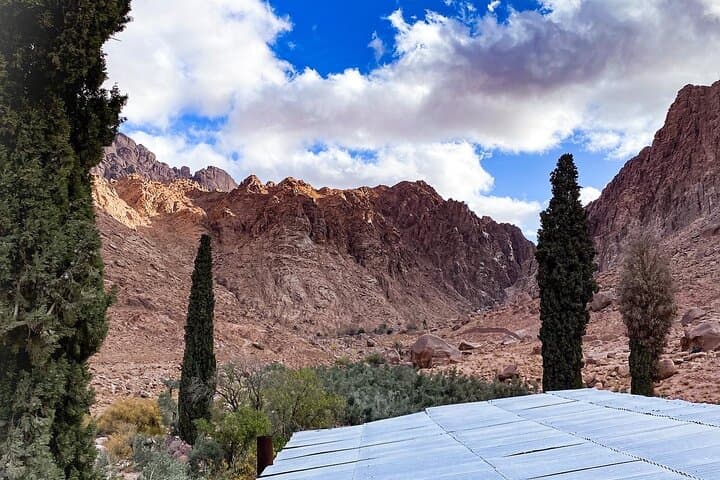
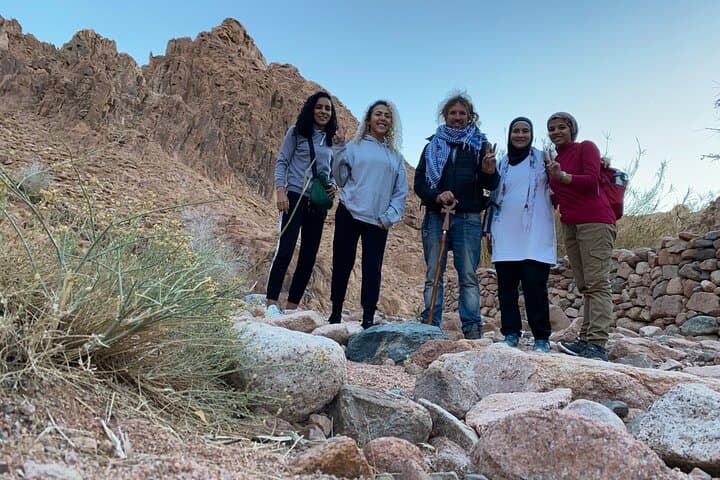
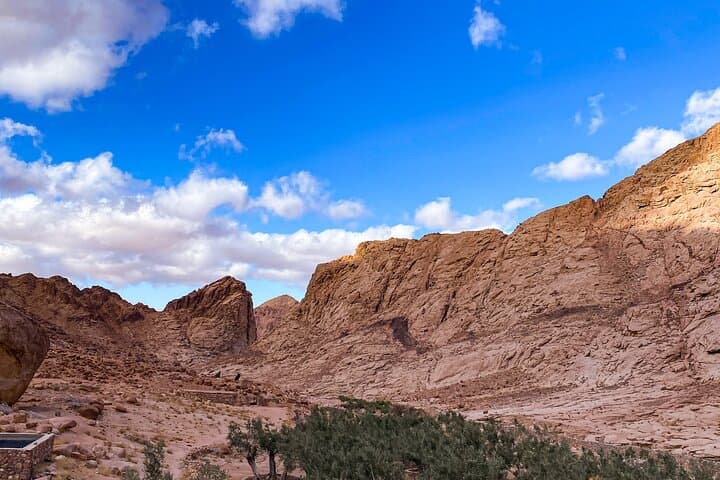
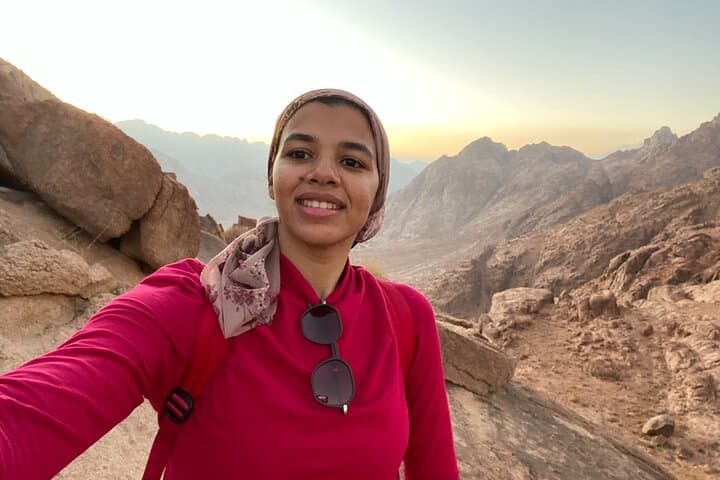
Dawn spills slow and gold across bare granite ridges as your group sets off from Abu Gifa, footsteps crunching on sand that remembers Roman caravan tracks. The route threads narrow wadis—Taboq, El Zawatin, Om Elsaad—where cliffs lean in like curious neighbors and small springs dare you to pause. Nights are spent at a basic mountain camp beneath a sky that pushes constellations low enough to touch.
Dawn spills slow and gold across bare granite ridges as your group sets off from Abu Gifa, footsteps crunching on sand that remembers Roman caravan tracks. The route threads narrow wadis—Taboq, El Zawatin, Om Elsaad—where cliffs lean in like curious neighbors and small springs dare you to pause. Nights are spent at a basic mountain camp beneath a sky that pushes constellations low enough to touch.
This corner of South Sinai carries layers of history: Nabatean travelers, Byzantine hermits, and the long presence of Bedouin communities whose trails predate modern maps. Geologically, the valleys cut into uplifted Precambrian granite and occasional tufa formations that outline past water flow. Culturally, expect warm hospitality—tea and stories at a Bedouin camp—and simple rhythms: wake, walk, eat, and listen.
Practically, the tour is a two-day trek with site-specific walking routes, short steep sections, and mostly sandy or rocky terrain; it’s offered as guided multi-day camping with basic sleeping mats and blankets. Meals are provided for the two days. Because trails are remote, pack for self-sufficiency: water, sun protection, layered clothing, and a reliable headlamp. Footwear with good grip helps on loose scree and rocky steps.
Timing matters—spring and fall offer the best temperatures; summer can be hot and winter crisp overnight. Respect private grazing areas, follow your guide’s advice on route choices, and leave no trace: the valleys recover slowly. This trip suits travelers wanting hands-on exploration, cultural exchange, and a compact wilderness overnight without technical climbing.