THE ADVENTURE COLLECTIVE® · Independent discovery and booking for outdoor travel

A guided day trip from Marrakech to Ouzoud offers a blend of easy hiking, a short traditional boat ride, and close encounters with Barbary macaques — all centered on North Africa’s most dramatic cascade. Practical trail and timing tips help you make the most of the day.
A guided day trip from Marrakech to Ouzoud offers a blend of easy hiking, a short traditional boat ride, and close encounters with Barbary macaques — all centered on North Africa’s most dramatic cascade. Practical trail and timing tips help you make the most of the day.
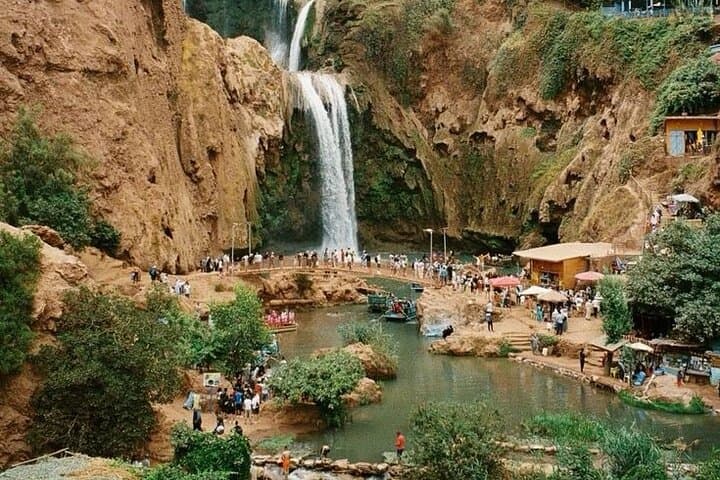
You step off the vehicle and the first roar of water takes over — a raw, wind-driven voice that pulls you down the terrace of olive trees toward the drop. The trail winds through argan and olive groves, local terraces hovering above the gorge, and every turn opens onto a new vantage where the falls throw spray like a curtain.
Verified experiences and guided adventures in the surrounding area.
Operated by Afro Marrakech Tours · Ouzoud, Marrakesh-Safi
You step off the vehicle and the first roar of water takes over — a raw, wind-driven voice that pulls you down the terrace of olive trees toward the drop. The trail winds through argan and olive groves, local terraces hovering above the gorge, and every turn opens onto a new vantage where the falls throw spray like a curtain.
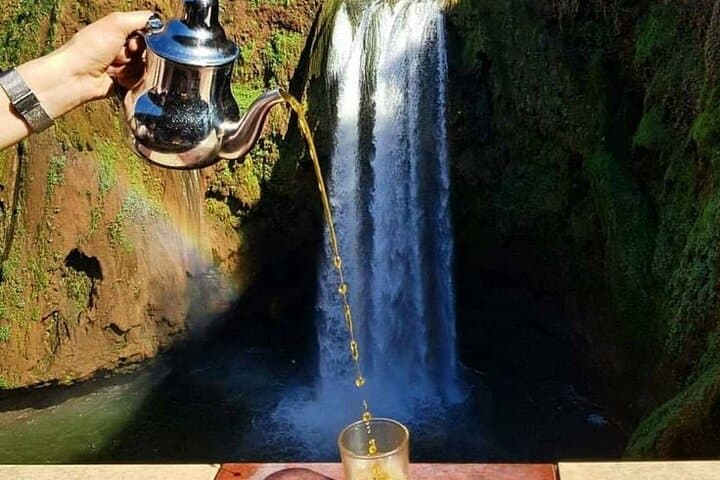
Ouzoud’s main cascade plunges roughly 110 meters (360 feet) into a broad pool carved from Miocene-era rock; the river has cut terraces and pools that locals have long used for milling and irrigation. The area is strongly connected to Berber village life — small cooperatives pressing argan oil and cafés where fresh orange juice is poured while elders trade stories about seasonal floods.
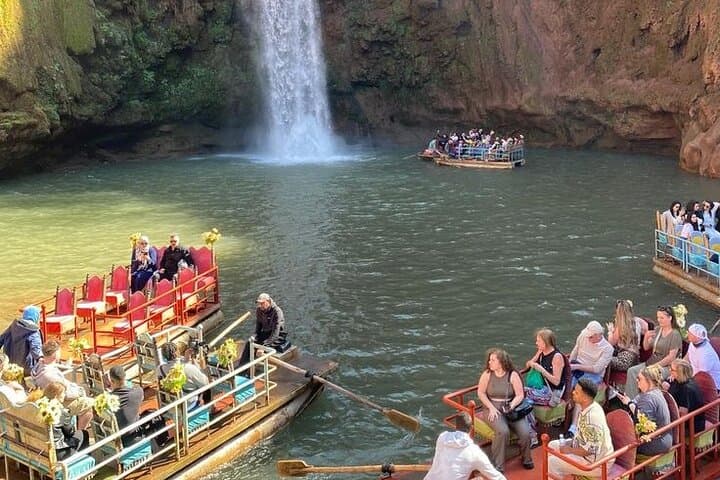
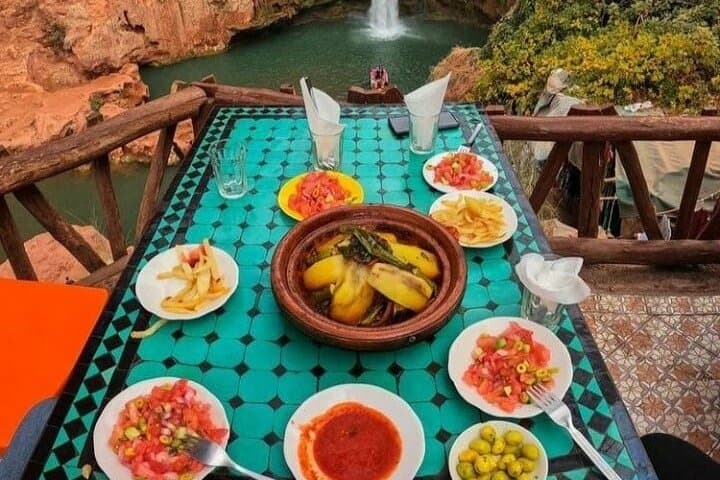
Your guide leads a steady descent on stone and dirt paths, pointing out Barbary macaques that treat the cliffs as their playground and the traditional wooden boats that ferry visitors across the pool. After a short boat ride at the base, there’s time for a late lunch at a terrace restaurant with waterfall views, and a slow walk back up as the canyon exhales afternoon light.
Practical notes: trails include packed dirt, exposed rock and uneven steps; expect about 3–4 km of walking and elevation changes of several hundred meters round-trip. Bring good traction shoes, sunscreen, and a light windbreaker for spray. Aim for mornings to avoid the hottest hours and allow the best light for photography. Water is available in the village, and local businesses welcome tips for guides and boatmen.
easy.
6–8 hours.
Suitable for most fitness levels; expect several hundred meters of elevation change on uneven trails
The falls are about 150 km (roughly a 2.5–3 hour drive) north of Marrakech depending on traffic and route.
Short traditional boat rides on the pool at the base are typically included; operators provide life vests and experienced boatmen handle the craft.
Yes — the trail has uneven sections but is suitable for families and most elderly visitors; inform the operator of mobility needs for pickup or alternate routes.
Spring (March–May) and after winter rains produce higher flow; early morning visits avoid heat and crowds for clearer views and photography.
Ouzoud has long been an agricultural and milling area; its name likely derives from a local Berber word associated with olive trees, and watermills shaped village life for centuries.
Visitors should stick to marked paths and avoid feeding wildlife; local economies depend on sustainable tourism that limits erosion and protects water quality.
Afro Marrakech Tours operates guided outdoor trips and adventures with an emphasis on safety, stewardship, and memorable experiences.
You step off the vehicle and the first roar of water takes over — a raw, wind-driven voice that pulls you down the terrace of olive trees toward the drop. The trail winds through argan and olive groves, local terraces hovering above the gorge, and every turn opens onto a new vantage where the falls throw spray like a curtain.
You step off the vehicle and the first roar of water takes over — a raw, wind-driven voice that pulls you down the terrace of olive trees toward the drop. The trail winds through argan and olive groves, local terraces hovering above the gorge, and every turn opens onto a new vantage where the falls throw spray like a curtain.
Ouzoud’s main cascade plunges roughly 110 meters (360 feet) into a broad pool carved from Miocene-era rock; the river has cut terraces and pools that locals have long used for milling and irrigation. The area is strongly connected to Berber village life — small cooperatives pressing argan oil and cafés where fresh orange juice is poured while elders trade stories about seasonal floods.
Your guide leads a steady descent on stone and dirt paths, pointing out Barbary macaques that treat the cliffs as their playground and the traditional wooden boats that ferry visitors across the pool. After a short boat ride at the base, there’s time for a late lunch at a terrace restaurant with waterfall views, and a slow walk back up as the canyon exhales afternoon light.
Practical notes: trails include packed dirt, exposed rock and uneven steps; expect about 3–4 km of walking and elevation changes of several hundred meters round-trip. Bring good traction shoes, sunscreen, and a light windbreaker for spray. Aim for mornings to avoid the hottest hours and allow the best light for photography. Water is available in the village, and local businesses welcome tips for guides and boatmen.