THE ADVENTURE COLLECTIVE® · Independent discovery and booking for outdoor travel

Follow ancient Minoan tracks up to Kastros and be rewarded with sweeping views over Mirabello Bay, stone terraces, and concentrated history underfoot. This guided, moderately paced five-hour hike blends archaeology, endemic flora, and panoramic coastal ridgelines.
Follow ancient Minoan tracks up to Kastros and be rewarded with sweeping views over Mirabello Bay, stone terraces, and concentrated history underfoot. This guided, moderately paced five-hour hike blends archaeology, endemic flora, and panoramic coastal ridgelines.
A narrow track winds up from an olive-swept valley and the sea drops away beneath you: Mirabello Bay opens like a bright lap of water, while terraces and dry-stone walls stitch the slope together. The guide pauses to point out a carved step worn into local limestone — a trace of the Minoan footsteps you’re following — then leads you higher toward Kastros, the stepped fortress often nicknamed Crete’s “Machu Picchu.”
Verified experiences and guided adventures in the surrounding area.
Operated by Adventure Crete · Agios Nikolaos, Crete
A narrow track winds up from an olive-swept valley and the sea drops away beneath you: Mirabello Bay opens like a bright lap of water, while terraces and dry-stone walls stitch the slope together. The guide pauses to point out a carved step worn into local limestone — a trace of the Minoan footsteps you’re following — then leads you higher toward Kastros, the stepped fortress often nicknamed Crete’s “Machu Picchu.”
The route traces ancient agricultural terraces and mule paths that connect small mountain villages. Geologically, the eastern Cretan massifs are folded limestone and schist; their ridges produce sharp viewpoints and pockets of thin, aromatic soil where oregano and Cretan dittany cling. Culturally the walk threads Minoan ritual landscapes with later Byzantine and rural shepherding traditions, so expect ruined terraces, occasional chapels, and centuries-old olive trees.
Practically, the outing runs about five hours with roughly two hours’ ascent to the site on rocky, uneven trails. Guides interpret archaeology on-site and the operator supplies a sandwich, fruit, and a soda. Moderate fitness is required; good hiking shoes and layered sun protection make the day more comfortable. Start early in summer for cooler morning light and to avoid mid-day heat; in cooler seasons, bring a wind layer for ridge exposure. Watch for loose scree on descents and respect fragile terraces — erosion is a real threat to the archaeology. The payoff is straightforward: sweeping sea views, concentrated history under your boots, and a day spent where landscape and past press up close.
moderate.
5 hours.
Moderate cardiovascular fitness and balance for uneven terrain; regular walkers will be comfortable.
Moderate fitness is required: expect about two hours uphill on uneven paths and a similar time descending; regular walkers should manage fine.
The guided hike includes a professional guide, a sandwich, fruit, and a soda; transportation and meeting details are provided at booking.
Not recommended for children under 10 due to rocky terrain and the length of the hike.
Not recommended for people with serious heart conditions or pregnant travelers; the trail has uneven surfaces and some steep sections.
The paths follow routes used since Minoan times; Kastros and its stepped terraces are part of Crete’s layered Bronze Age and post-Bronze traditions.
Trails and terraces are vulnerable to erosion and trampling—stick to marked routes, carry out trash, and avoid stepping on archaeological features.
Adventure Crete operates guided outdoor trips and adventures with an emphasis on safety, stewardship, and memorable experiences.
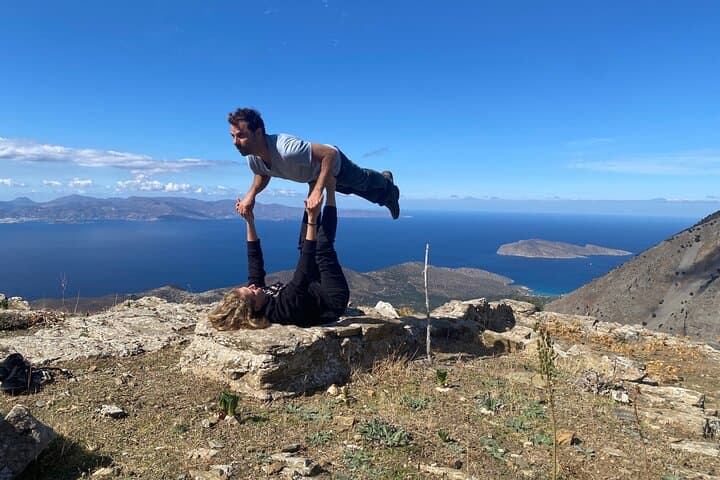
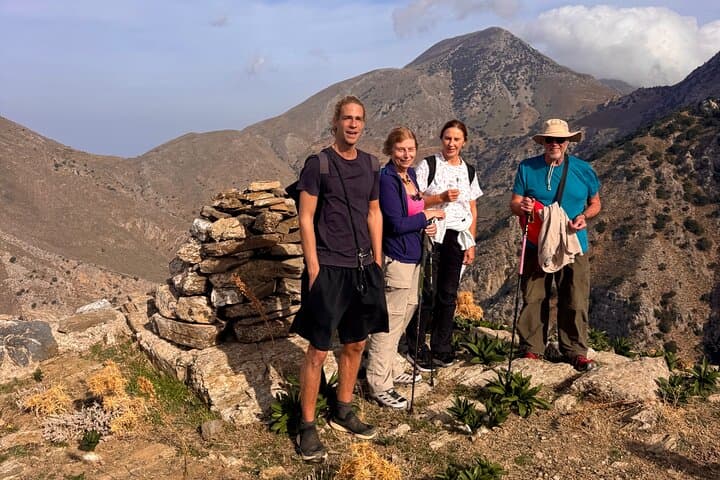
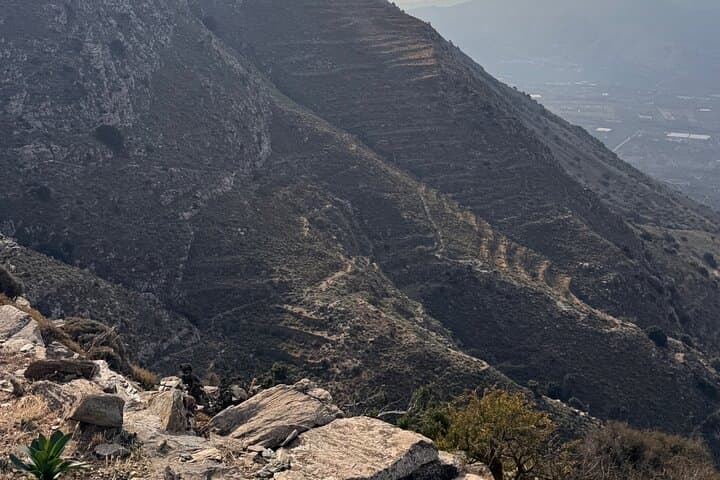
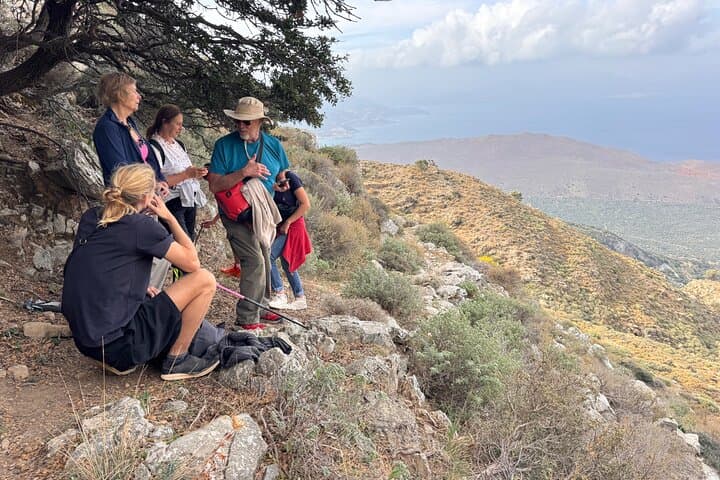
A narrow track winds up from an olive-swept valley and the sea drops away beneath you: Mirabello Bay opens like a bright lap of water, while terraces and dry-stone walls stitch the slope together. The guide pauses to point out a carved step worn into local limestone — a trace of the Minoan footsteps you’re following — then leads you higher toward Kastros, the stepped fortress often nicknamed Crete’s “Machu Picchu.”
A narrow track winds up from an olive-swept valley and the sea drops away beneath you: Mirabello Bay opens like a bright lap of water, while terraces and dry-stone walls stitch the slope together. The guide pauses to point out a carved step worn into local limestone — a trace of the Minoan footsteps you’re following — then leads you higher toward Kastros, the stepped fortress often nicknamed Crete’s “Machu Picchu.”
The route traces ancient agricultural terraces and mule paths that connect small mountain villages. Geologically, the eastern Cretan massifs are folded limestone and schist; their ridges produce sharp viewpoints and pockets of thin, aromatic soil where oregano and Cretan dittany cling. Culturally the walk threads Minoan ritual landscapes with later Byzantine and rural shepherding traditions, so expect ruined terraces, occasional chapels, and centuries-old olive trees.
Practically, the outing runs about five hours with roughly two hours’ ascent to the site on rocky, uneven trails. Guides interpret archaeology on-site and the operator supplies a sandwich, fruit, and a soda. Moderate fitness is required; good hiking shoes and layered sun protection make the day more comfortable. Start early in summer for cooler morning light and to avoid mid-day heat; in cooler seasons, bring a wind layer for ridge exposure. Watch for loose scree on descents and respect fragile terraces — erosion is a real threat to the archaeology. The payoff is straightforward: sweeping sea views, concentrated history under your boots, and a day spent where landscape and past press up close.