THE ADVENTURE COLLECTIVE® · Independent discovery and booking for outdoor travel

Descend dramatic limestone cliffs, swim a secluded pebble cove and visit abandoned hill villages on a full-day loop above Aradena Gorge. Expect steep sections, sparse shade and rewarding coastal views of the Libyan Sea.
Descend dramatic limestone cliffs, swim a secluded pebble cove and visit abandoned hill villages on a full-day loop above Aradena Gorge. Expect steep sections, sparse shade and rewarding coastal views of the Libyan Sea.
A dry wind pushes salt and thyme up from the Libyan Sea as you step off the dusty track at Papadiana and look down into Aradena Gorge. The gorge cuts a raw spine through southern Crete; cliffs drop away and the trail threads narrow ledges that force you to watch every footfall. To the north, the White Mountains loom pale and jagged; to the south, Marmara cove glitters and dares you to descend.
Verified experiences and guided adventures in the surrounding area.
Operated by Pari Vigli · Anopolis, Crete
A dry wind pushes salt and thyme up from the Libyan Sea as you step off the dusty track at Papadiana and look down into Aradena Gorge. The gorge cuts a raw spine through southern Crete; cliffs drop away and the trail threads narrow ledges that force you to watch every footfall. To the north, the White Mountains loom pale and jagged; to the south, Marmara cove glitters and dares you to descend.
This route threads history and geology—sheer limestone carved by winter runoff, abandoned settlements that recall Ottoman and Venetian eras, and ruined stone houses in Livaniana and Azoyres where shepherding once sustained families. The villages still hold small chapels and stone ovens; Anopolis, an old prefectural center, remains a practical stop for supplies and a local loaf.
Expect varied terrain: mule tracks, loose scree, steep ascents and a final exposed descent to the pebble shore. The full loop is roughly 10 km of trail with about 600–700 m cumulative elevation change, though car transfers add time. Hikers report sections of easy walking that harden into technical steps near Marmara and in the gorge. A short swim at Marmara rewards effort; pack a quick-dry towel.
Practical edge: start early to avoid heat, carry 2–3 liters of water, wear stiff-soled boots, and bring a map or GPS—cell coverage is intermittent. Local hosts often provide hiking sticks and private transport from Chania; plan for a long day (6–10 hours door-to-door) and a post-hike meal in Anopolis or Chora Sfakion to close the loop.
challenging.
6–10 hours.
Strong aerobic fitness and experience on uneven, exposed trails; comfortable with sustained ascents and descents.
The trail portion is roughly 8–12 km depending on exact route choices and takes about 3–5 hours of hiking; expect a full day including transfers.
Yes for short swims—Marmara is a sheltered pebble cove but check for currents and avoid swimming alone if waves rise.
Fit beginners with mountain hiking experience and a steady pace can manage easier sections, but several parts are steep and exposed—recommend prior day hikes with elevation.
Service is intermittent; there are limited facilities in villages like Anopolis, so carry water, snacks, and a basic first-aid kit.
The villages and trails trace centuries of shepherding and resistance—Anopolis was once a local administrative center and the gorge provided natural defense and routes between coast and interior.
This coastline is ecologically sensitive; stick to established trails, pack out waste, and avoid lighting fires to protect dry shrubland and archaeological remains.
Pari Vigli operates guided outdoor trips and adventures with an emphasis on safety, stewardship, and memorable experiences.
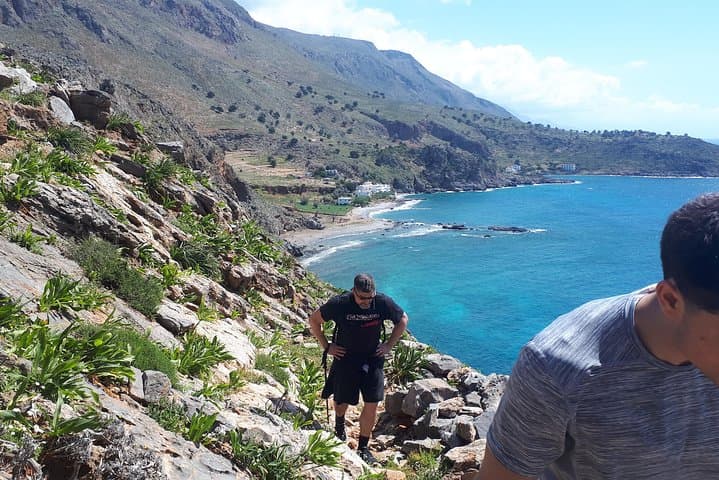
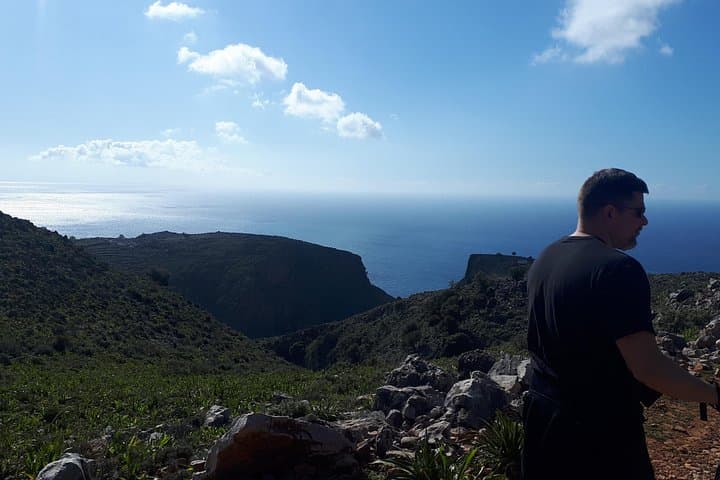
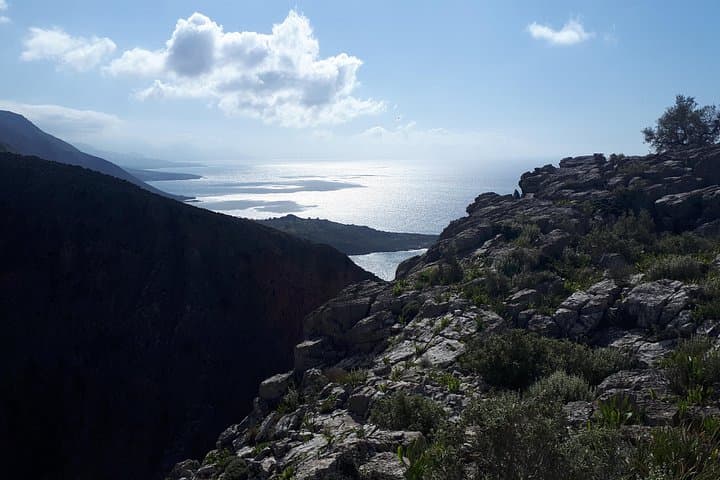
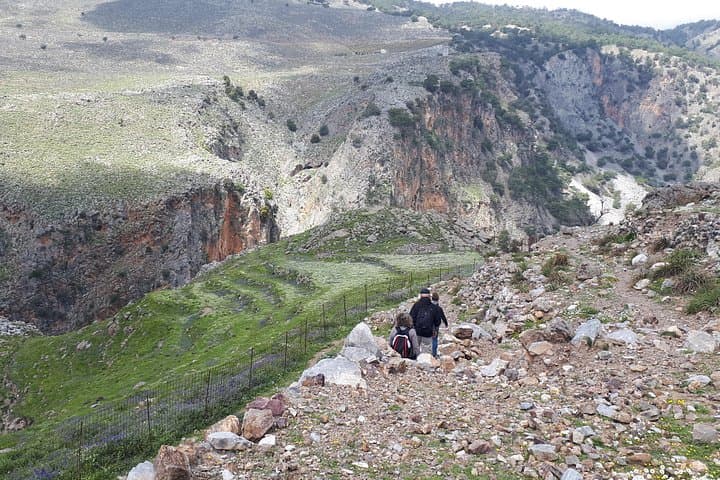
A dry wind pushes salt and thyme up from the Libyan Sea as you step off the dusty track at Papadiana and look down into Aradena Gorge. The gorge cuts a raw spine through southern Crete; cliffs drop away and the trail threads narrow ledges that force you to watch every footfall. To the north, the White Mountains loom pale and jagged; to the south, Marmara cove glitters and dares you to descend.
A dry wind pushes salt and thyme up from the Libyan Sea as you step off the dusty track at Papadiana and look down into Aradena Gorge. The gorge cuts a raw spine through southern Crete; cliffs drop away and the trail threads narrow ledges that force you to watch every footfall. To the north, the White Mountains loom pale and jagged; to the south, Marmara cove glitters and dares you to descend.
This route threads history and geology—sheer limestone carved by winter runoff, abandoned settlements that recall Ottoman and Venetian eras, and ruined stone houses in Livaniana and Azoyres where shepherding once sustained families. The villages still hold small chapels and stone ovens; Anopolis, an old prefectural center, remains a practical stop for supplies and a local loaf.
Expect varied terrain: mule tracks, loose scree, steep ascents and a final exposed descent to the pebble shore. The full loop is roughly 10 km of trail with about 600–700 m cumulative elevation change, though car transfers add time. Hikers report sections of easy walking that harden into technical steps near Marmara and in the gorge. A short swim at Marmara rewards effort; pack a quick-dry towel.
Practical edge: start early to avoid heat, carry 2–3 liters of water, wear stiff-soled boots, and bring a map or GPS—cell coverage is intermittent. Local hosts often provide hiking sticks and private transport from Chania; plan for a long day (6–10 hours door-to-door) and a post-hike meal in Anopolis or Chora Sfakion to close the loop.