THE ADVENTURE COLLECTIVE® · Independent discovery and booking for outdoor travel

A full-day shore excursion from Invergordon that links prehistoric Clava Cairns, the somber Culloden battlefield, sweeping views along Loch Ness and Urquhart Castle. Expect short walks, historic storytelling, a distillery stop and plenty of photo moments.
A full-day shore excursion from Invergordon that links prehistoric Clava Cairns, the somber Culloden battlefield, sweeping views along Loch Ness and Urquhart Castle. Expect short walks, historic storytelling, a distillery stop and plenty of photo moments.
You step off the cruise gangway and the cold, clean air of the Cromarty Firth greets you — peat smoke on the wind, a long ribbon of road pointing west toward the Great Glen. The day moves in chapters: a quiet Bronze Age cemetery where stones stand like slow guardians; a windswept battlefield where the ground still remembers 1746; the broad, dark mirror of Loch Ness with hills pushing the horizon; and, finally, the castle ruins that lean into the loch’s edge.
Verified experiences and guided adventures in the surrounding area.
Operated by highland bucket list tours · Invergordon, Highland
You step off the cruise gangway and the cold, clean air of the Cromarty Firth greets you — peat smoke on the wind, a long ribbon of road pointing west toward the Great Glen. The day moves in chapters: a quiet Bronze Age cemetery where stones stand like slow guardians; a windswept battlefield where the ground still remembers 1746; the broad, dark mirror of Loch Ness with hills pushing the horizon; and, finally, the castle ruins that lean into the loch’s edge.
Clava Cairns is about 4,000 years old and offers passage graves and standing stones that predate written Highland stories. Culloden Moor holds the last major battle fought on British soil; its flagged lines, graves and interpretive centre trace Jacobite and government positions. Geology here is dominated by the Great Glen fault — a linear trough carved by tectonics and glacial action that created Loch Ness. Local culture remains strongly Gaelic-inflected: place names, clan histories, and distilling traditions framed by the land.
Practicalities: this is a 7-hour guided shore excursion with small-group transport and bottled water included; expect short, mostly flat walks (uneven stone and turf at some sites) and up to an hour at key stops. Wear waterproof layers and sturdy footwear, bring a camera and small daypack, and budget a little cash for optional admissions or souvenirs. Midges can appear in summer; mornings and late afternoons are best for photography. The tour balances history, landscape and a distilled taste of Highland hospitality — straightforward, richly textured, and manageable for most travelers.
easy.
7 hours.
Suitable for most fitness levels; involves short, mostly flat walks and some uneven ground at historic sites.
Yes — pick up and drop off from the Cromarty/Invergordon cruise port is included in the tour.
Culloden battlefield access is free, but the optional visitor centre exhibition has a separate fee (approximately £10); Urquhart Castle admission is not included unless specified.
Yes — the tour is designed for all fitness levels, but parents should supervise children near ruins and water; some short walks are on uneven ground.
Expect several short walks at each stop (typically 20–60 minutes at sites); terrain is mostly flat but can be damp or rocky in places.
The Clava Cairns date to the Bronze Age (~4,000 years ago) while Culloden Moor marks the 1746 defeat of the Jacobite rising, a pivotal event in Highland history.
Culloden is actively managed to restore historic land-use and protect breeding skylarks; visitors are asked to keep to paths and avoid disturbing habitats.
highland bucket list tours operates guided outdoor trips and adventures with an emphasis on safety, stewardship, and memorable experiences.
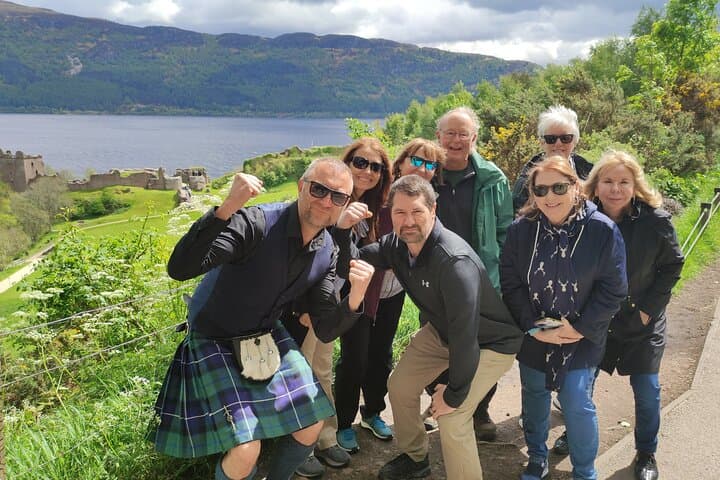

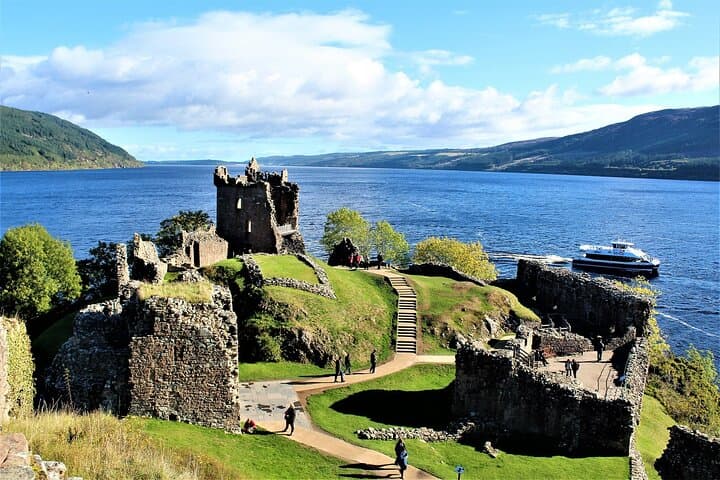
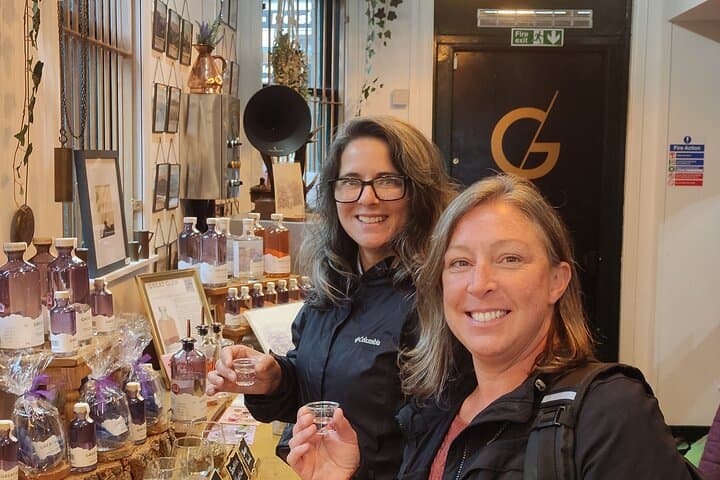
You step off the cruise gangway and the cold, clean air of the Cromarty Firth greets you — peat smoke on the wind, a long ribbon of road pointing west toward the Great Glen. The day moves in chapters: a quiet Bronze Age cemetery where stones stand like slow guardians; a windswept battlefield where the ground still remembers 1746; the broad, dark mirror of Loch Ness with hills pushing the horizon; and, finally, the castle ruins that lean into the loch’s edge.
You step off the cruise gangway and the cold, clean air of the Cromarty Firth greets you — peat smoke on the wind, a long ribbon of road pointing west toward the Great Glen. The day moves in chapters: a quiet Bronze Age cemetery where stones stand like slow guardians; a windswept battlefield where the ground still remembers 1746; the broad, dark mirror of Loch Ness with hills pushing the horizon; and, finally, the castle ruins that lean into the loch’s edge.
Clava Cairns is about 4,000 years old and offers passage graves and standing stones that predate written Highland stories. Culloden Moor holds the last major battle fought on British soil; its flagged lines, graves and interpretive centre trace Jacobite and government positions. Geology here is dominated by the Great Glen fault — a linear trough carved by tectonics and glacial action that created Loch Ness. Local culture remains strongly Gaelic-inflected: place names, clan histories, and distilling traditions framed by the land.
Practicalities: this is a 7-hour guided shore excursion with small-group transport and bottled water included; expect short, mostly flat walks (uneven stone and turf at some sites) and up to an hour at key stops. Wear waterproof layers and sturdy footwear, bring a camera and small daypack, and budget a little cash for optional admissions or souvenirs. Midges can appear in summer; mornings and late afternoons are best for photography. The tour balances history, landscape and a distilled taste of Highland hospitality — straightforward, richly textured, and manageable for most travelers.