THE ADVENTURE COLLECTIVE® · Independent discovery and booking for outdoor travel

Ride a nimble RIB out of Cabo San Lucas to track migrating humpback and gray whales at close range. Expect expert narration, hydrophone listening, and quick, regulated approaches that prioritize animal welfare.
Ride a nimble RIB out of Cabo San Lucas to track migrating humpback and gray whales at close range. Expect expert narration, hydrophone listening, and quick, regulated approaches that prioritize animal welfare.
A low-slung RIB punches through a Pacific swell, spray scoring the air while the shoreline of Cabo San Lucas slides past — desert cliffs giving way to bright water. Onboard, the captain listens for blows and the hydrophone translates whale song into a ghostly bass you can feel more than hear. The boat’s agility makes quick, respectful approaches possible, offering clear forward sightlines and frequent chances to watch breaches and tail slaps.
Verified experiences and guided adventures in the surrounding area.
Operated by Bellaterra Los Cabos · Cabo San Lucas, Baja California Sur
A low-slung RIB punches through a Pacific swell, spray scoring the air while the shoreline of Cabo San Lucas slides past — desert cliffs giving way to bright water. Onboard, the captain listens for blows and the hydrophone translates whale song into a ghostly bass you can feel more than hear. The boat’s agility makes quick, respectful approaches possible, offering clear forward sightlines and frequent chances to watch breaches and tail slaps.
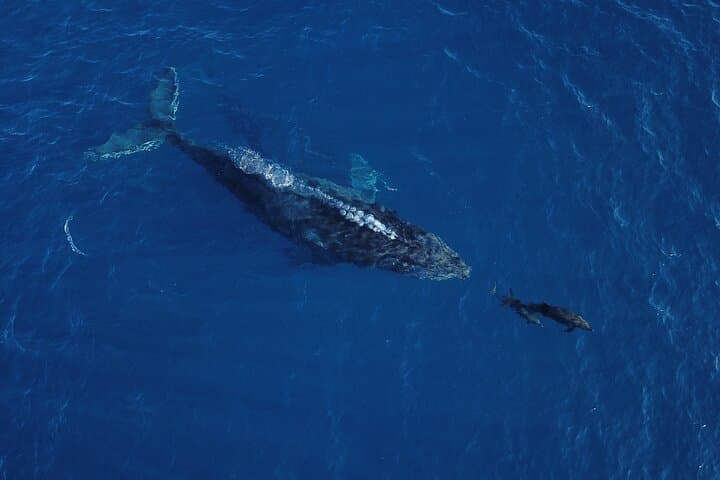
The waters off southern Baja are a winter refuge for migrating whales. Humpbacks and, less commonly, gray whales arrive to breed and nurse in Baja’s warmer bays before heading north to feeding grounds. Geologically, the Cape marks where the Pacific meets a steep, arid peninsula; currents and coastal topography create feeding corridors that whales and dolphins use each season. Local mariners and guides combine generations of maritime knowledge with modern marine-mammal science to locate animals while following vessel guidelines.
Expect an interpretive trip: marine-mammal experts explain behavior, hydrophones reveal underwater sound, and the captain maneuvers for observation while maintaining distance. Practical notes: trips run December 15–April 15 (peak Jan–Feb), last about two hours, and are suitable for most fitness levels though ocean motion can be rough. Bring windproof layers, non-slip shoes, sun protection and motion-sickness remedies if you’re sensitive. Plan for early departures, follow crew briefings on safety and whale approach rules, and keep cameras ready — but also allow time to listen and simply watch the animals move through their ocean habitat.
easy.
2 hours.
Minimal fitness required—able to board small boat and stand for short periods; expect some balance work in choppier seas.
Whale season runs December 15–April 15, with peak sightings typically in January and February when many humpbacks concentrate in the area.
Captains follow regulations and best practices—approaches are controlled and close sightings depend on animal behavior; crew will position the boat for viewing without causing disturbance.
Trips are family-friendly but not recommended for pregnant travelers or people with serious spinal issues; check operator guidance before booking.
Yes — the boat carries hydrophones so guides can play live whale vocalizations, but sound levels are kept low to avoid disturbing the animals.
Whale migration to Baja’s sheltered waters has shaped local fishing and coastal communities for generations; modern tours combine that local knowledge with scientific monitoring.
Operators follow approach guidelines and speed limits to minimize stress on animals; avoid single-use plastics and follow crew instructions to reduce your footprint.
Bellaterra Los Cabos operates guided outdoor trips and adventures with an emphasis on safety, stewardship, and memorable experiences.
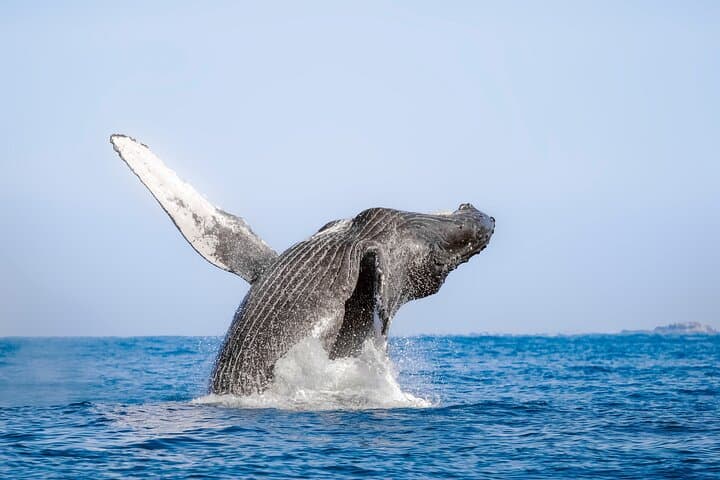
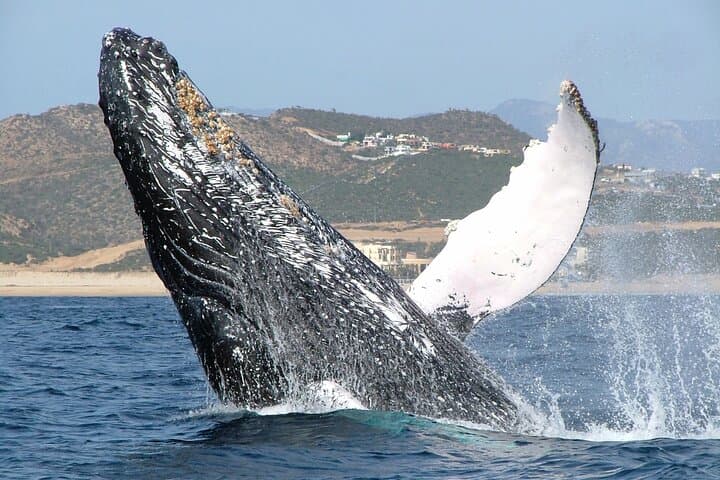
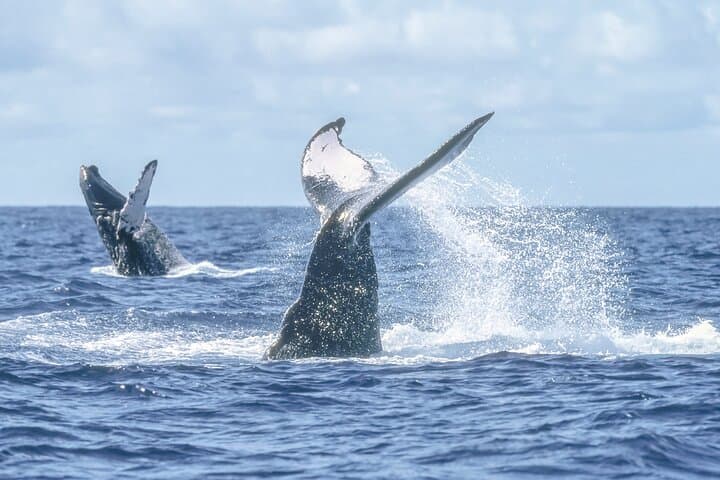
A low-slung RIB punches through a Pacific swell, spray scoring the air while the shoreline of Cabo San Lucas slides past — desert cliffs giving way to bright water. Onboard, the captain listens for blows and the hydrophone translates whale song into a ghostly bass you can feel more than hear. The boat’s agility makes quick, respectful approaches possible, offering clear forward sightlines and frequent chances to watch breaches and tail slaps.
A low-slung RIB punches through a Pacific swell, spray scoring the air while the shoreline of Cabo San Lucas slides past — desert cliffs giving way to bright water. Onboard, the captain listens for blows and the hydrophone translates whale song into a ghostly bass you can feel more than hear. The boat’s agility makes quick, respectful approaches possible, offering clear forward sightlines and frequent chances to watch breaches and tail slaps.
The waters off southern Baja are a winter refuge for migrating whales. Humpbacks and, less commonly, gray whales arrive to breed and nurse in Baja’s warmer bays before heading north to feeding grounds. Geologically, the Cape marks where the Pacific meets a steep, arid peninsula; currents and coastal topography create feeding corridors that whales and dolphins use each season. Local mariners and guides combine generations of maritime knowledge with modern marine-mammal science to locate animals while following vessel guidelines.
Expect an interpretive trip: marine-mammal experts explain behavior, hydrophones reveal underwater sound, and the captain maneuvers for observation while maintaining distance. Practical notes: trips run December 15–April 15 (peak Jan–Feb), last about two hours, and are suitable for most fitness levels though ocean motion can be rough. Bring windproof layers, non-slip shoes, sun protection and motion-sickness remedies if you’re sensitive. Plan for early departures, follow crew briefings on safety and whale approach rules, and keep cameras ready — but also allow time to listen and simply watch the animals move through their ocean habitat.