THE ADVENTURE COLLECTIVE® · Independent discovery and booking for outdoor travel

Leave Marrakech for a high-adrenaline 2-hour quad ride across palm groves, stony plains and Berber villages. This hotel-transfer experience pairs easy-to-handle automatic quads with guided trails suited to riders of moderate fitness.
Leave Marrakech for a high-adrenaline 2-hour quad ride across palm groves, stony plains and Berber villages. This hotel-transfer experience pairs easy-to-handle automatic quads with guided trails suited to riders of moderate fitness.
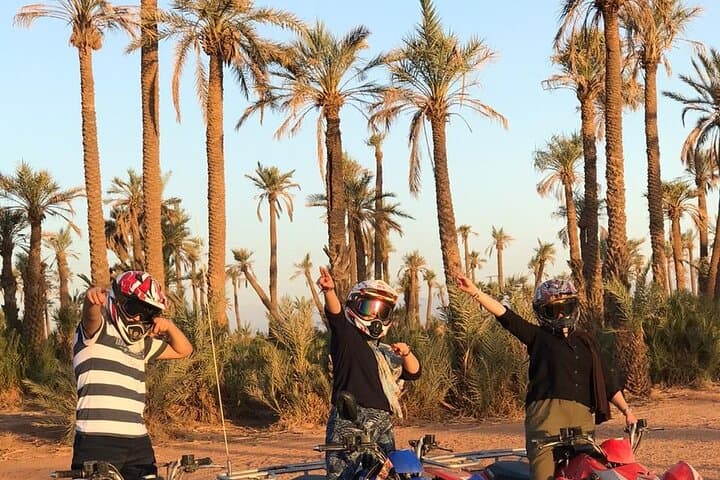
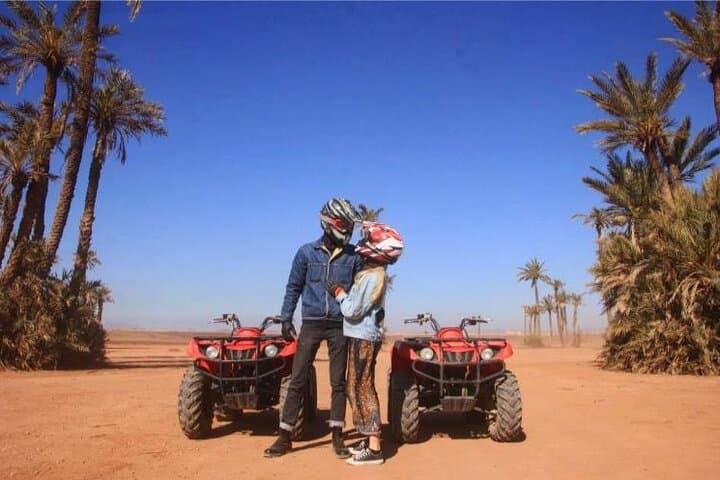
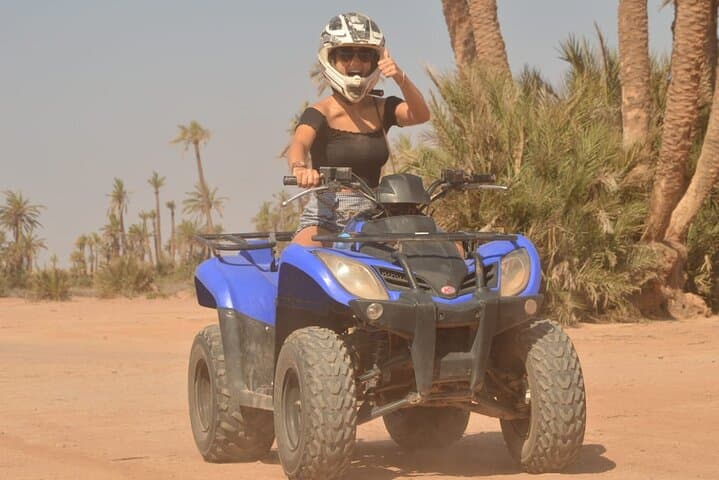
A roar of engines breaks the Marrakech morning as riders leave the city behind and cross scrubby plains toward the stony desert. Dust rises in the quad’s wake while palm groves thin into broken rock; the guide threads the group through washes, soft sandy bowls and narrow village tracks. In two hours you’ll feel the rhythm of the terrain—short bursts on open flats, technical lines between boulders, and quieter stretches past local farms and Berber homesteads.
Verified experiences and guided adventures in the surrounding area.
Operated by Marrakechandcasablancatours · Marrakech, Marrakech-Safi
A roar of engines breaks the Marrakech morning as riders leave the city behind and cross scrubby plains toward the stony desert. Dust rises in the quad’s wake while palm groves thin into broken rock; the guide threads the group through washes, soft sandy bowls and narrow village tracks. In two hours you’ll feel the rhythm of the terrain—short bursts on open flats, technical lines between boulders, and quieter stretches past local farms and Berber homesteads.
This stretch outside Marrakech sits at the interface of the High Atlas foothills and the arid plateaus beyond. Historically these routes linked market towns and oases; today they’re used for small-scale agriculture, grazing and tourism. Geologically you’ll see weathered metamorphic outcrops and wind-swept stone plains rather than the dunes of the Sahara.
Culturally the ride often passes small Berber villages where communities maintain traditional crafts and irrigation groves. Local operators commonly include hotel pickup and a safety briefing; helmets are provided and instructors lead the group.
Practical guidance: expect a 30–45 minute transfer from central Marrakech, a 2-hour machine time covering roughly 15–30 km with minimal elevation gain (typically under 200 m). Wear closed-toe shoes, sunglasses and layered clothing for wind and sun. Bring a small daypack with water and a camera with a secure strap. Operators advise moderate fitness and guests should follow the guide’s pace—quads are automatic and accessible, but terrain requires attentive handling. Morning slots offer cooler temperatures and clearer light for photos.
moderate.
2–3 hours.
Moderate—be comfortable standing on pegs occasionally and handling short, bumpy sections.
No—automatic quads and a safety briefing make this accessible; however, riders should have moderate fitness and be comfortable with basic vehicle control.
Most operators require riders to be at least 18 years old; check the booking for age and licensing rules.
Yes—this tour typically includes hotel pickup and drop-off from central Marrakech with a roughly 30–45 minute transfer to the base.
Operators may cancel or reschedule rides in heavy rain or unsafe conditions; confirm cancellation policy at booking as many sales are final.
Routes around Marrakech historically linked mountain markets and oases; many villages along the way retain Berber agricultural practices and oral traditions.
Stick to marked trails and follow guide instructions—motorized traffic can accelerate erosion; choose operators that limit group sizes and support local communities.
Marrakechandcasablancatours operates guided outdoor trips and adventures with an emphasis on safety, stewardship, and memorable experiences.
A roar of engines breaks the Marrakech morning as riders leave the city behind and cross scrubby plains toward the stony desert. Dust rises in the quad’s wake while palm groves thin into broken rock; the guide threads the group through washes, soft sandy bowls and narrow village tracks. In two hours you’ll feel the rhythm of the terrain—short bursts on open flats, technical lines between boulders, and quieter stretches past local farms and Berber homesteads.
A roar of engines breaks the Marrakech morning as riders leave the city behind and cross scrubby plains toward the stony desert. Dust rises in the quad’s wake while palm groves thin into broken rock; the guide threads the group through washes, soft sandy bowls and narrow village tracks. In two hours you’ll feel the rhythm of the terrain—short bursts on open flats, technical lines between boulders, and quieter stretches past local farms and Berber homesteads.
This stretch outside Marrakech sits at the interface of the High Atlas foothills and the arid plateaus beyond. Historically these routes linked market towns and oases; today they’re used for small-scale agriculture, grazing and tourism. Geologically you’ll see weathered metamorphic outcrops and wind-swept stone plains rather than the dunes of the Sahara.
Culturally the ride often passes small Berber villages where communities maintain traditional crafts and irrigation groves. Local operators commonly include hotel pickup and a safety briefing; helmets are provided and instructors lead the group.
Practical guidance: expect a 30–45 minute transfer from central Marrakech, a 2-hour machine time covering roughly 15–30 km with minimal elevation gain (typically under 200 m). Wear closed-toe shoes, sunglasses and layered clothing for wind and sun. Bring a small daypack with water and a camera with a secure strap. Operators advise moderate fitness and guests should follow the guide’s pace—quads are automatic and accessible, but terrain requires attentive handling. Morning slots offer cooler temperatures and clearer light for photos.