THE ADVENTURE COLLECTIVE® · Independent discovery and booking for outdoor travel

Blast through Louisiana marsh at high speed then slow for close-up wildlife viewing on this small-group airboat tour with downtown New Orleans pickup. Expect stadium seating, loud engines, and the best chance to see alligators in spring through fall.
Blast through Louisiana marsh at high speed then slow for close-up wildlife viewing on this small-group airboat tour with downtown New Orleans pickup. Expect stadium seating, loud engines, and the best chance to see alligators in spring through fall.
You feel the city fall away as the van follows the river’s curve, then the air changes — thicker, greener, alive. The airboat’s engine announces itself long before the marsh appears: a mechanical wind that promises speed and close wildlife encounters. As the captain throttles forward you skim inches above black water, cypress knees and Spanish moss sliding past like slow-moving islands.
Verified experiences and guided adventures in the surrounding area.
Operated by Louisiana Tour company · New Orleans, Louisiana
You feel the city fall away as the van follows the river’s curve, then the air changes — thicker, greener, alive. The airboat’s engine announces itself long before the marsh appears: a mechanical wind that promises speed and close wildlife encounters. As the captain throttles forward you skim inches above black water, cypress knees and Spanish moss sliding past like slow-moving islands.
The swamplands around New Orleans are part of the Mississippi River’s deltaic network — soft alluvial soils, submerged bald cypress and tupelo forests shaped by floods and tides. Indigenous peoples and later Cajun and Creole communities have long read these waterways for food and transport; modern swamp guides combine that local knowledge with an eye for conservation.
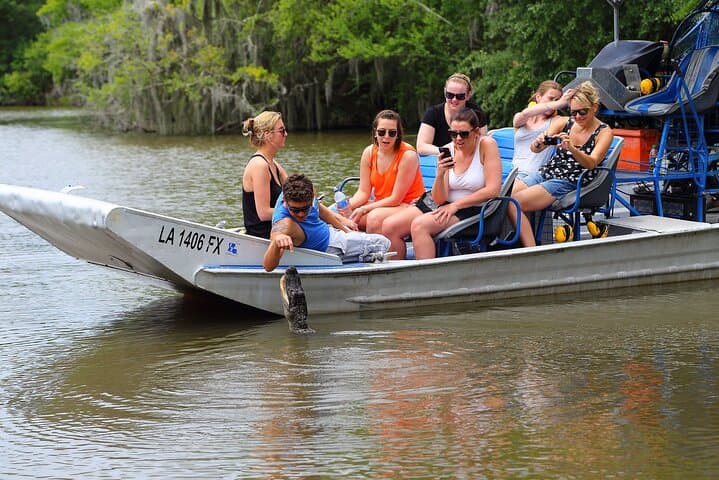
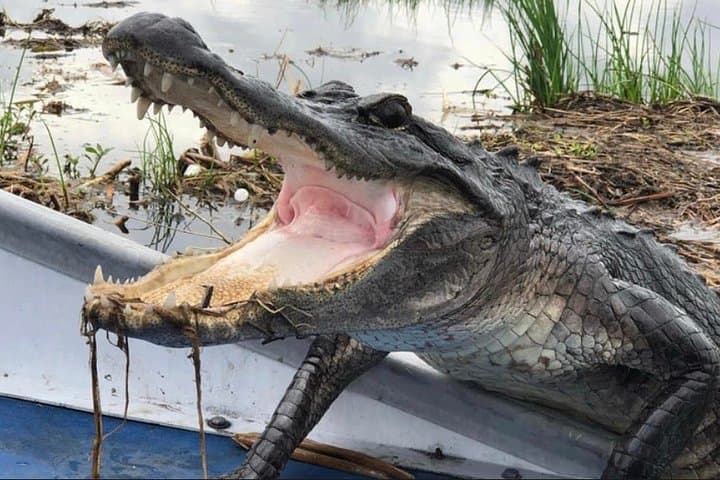
Expect two moods on this tour: pulse-quickening speed (airboats can reach about 35 mph) and patient observation when the captain slows for photos. The one hour 40 minute airboat segment moves through shallow marshes inaccessible to conventional craft; captains point out alligators, wading birds, and the occasional bald eagle or osprey.
Practical notes: downtown pickup makes logistics simple, but the ride is noisy and exposed — ear protection and sunglasses help. The tour is not suitable for people with serious heart or back issues or for pregnant travelers, and boats require you to step up and down unassisted. Cameras on straps, closed-toe shoes, layered sun protection, and a small water bottle will keep you comfortable. Winter reduces gator activity; spring through fall offers the best chance for close sightings. With small-group seating and an experienced captain, this trip balances adrenaline and nature watching for a distinctly Louisiana afternoon.
easy.
4–4.5 hours.
Suitable for most people who can step on/off a small boat and sit for extended periods; not for those with serious heart or back conditions.
The airboat segment is about 1 hour and 40 minutes within a roughly 4 hour 15 minute total outing including pickup and transit.
Gator sightings are common in spring, summer, and fall but not guaranteed — winter lowers activity and visibility; captains know the best spots to search.
Children are allowed but must meet the height requirement (at least 48 inches); the boats are not handicapped-accessible and guests must be able to board without lifts.
Service animals are permitted, though not recommended due to loud noise and potential wildlife interactions; emotional support animals are not allowed.
The swamp corridor reflects the Mississippi Delta’s shifting channels and was historically used by indigenous communities, trappers, and later Cajun settlers who adapted to life on the water.
These wetlands buffer storm surge and filter water; choose operators who follow no-chase wildlife policies and minimize wake in sensitive areas.
Louisiana Tour company operates guided outdoor trips and adventures with an emphasis on safety, stewardship, and memorable experiences.
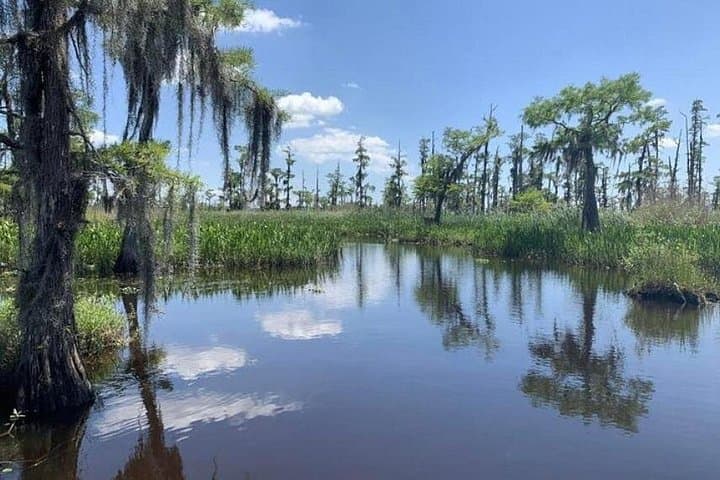
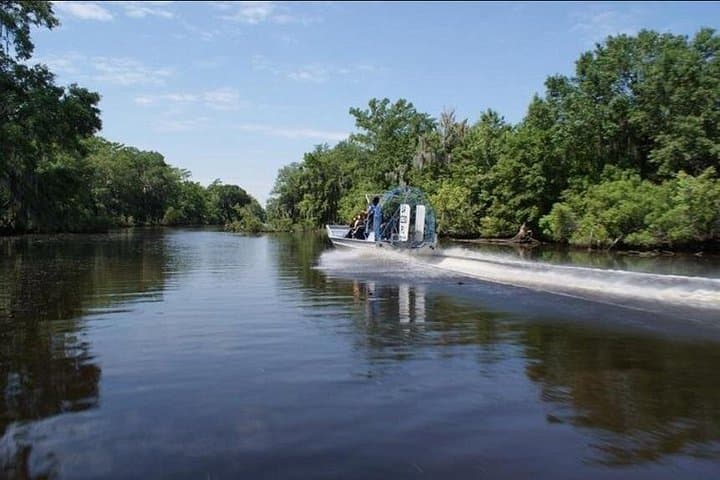
You feel the city fall away as the van follows the river’s curve, then the air changes — thicker, greener, alive. The airboat’s engine announces itself long before the marsh appears: a mechanical wind that promises speed and close wildlife encounters. As the captain throttles forward you skim inches above black water, cypress knees and Spanish moss sliding past like slow-moving islands.
You feel the city fall away as the van follows the river’s curve, then the air changes — thicker, greener, alive. The airboat’s engine announces itself long before the marsh appears: a mechanical wind that promises speed and close wildlife encounters. As the captain throttles forward you skim inches above black water, cypress knees and Spanish moss sliding past like slow-moving islands.
The swamplands around New Orleans are part of the Mississippi River’s deltaic network — soft alluvial soils, submerged bald cypress and tupelo forests shaped by floods and tides. Indigenous peoples and later Cajun and Creole communities have long read these waterways for food and transport; modern swamp guides combine that local knowledge with an eye for conservation.
Expect two moods on this tour: pulse-quickening speed (airboats can reach about 35 mph) and patient observation when the captain slows for photos. The one hour 40 minute airboat segment moves through shallow marshes inaccessible to conventional craft; captains point out alligators, wading birds, and the occasional bald eagle or osprey.
Practical notes: downtown pickup makes logistics simple, but the ride is noisy and exposed — ear protection and sunglasses help. The tour is not suitable for people with serious heart or back issues or for pregnant travelers, and boats require you to step up and down unassisted. Cameras on straps, closed-toe shoes, layered sun protection, and a small water bottle will keep you comfortable. Winter reduces gator activity; spring through fall offers the best chance for close sightings. With small-group seating and an experienced captain, this trip balances adrenaline and nature watching for a distinctly Louisiana afternoon.