THE ADVENTURE COLLECTIVE® · Independent discovery and booking for outdoor travel

An elevated walk through Manhattan’s industrial past and its latest skyline statement: the High Line leads you from the gritty Meatpacking District to The Vessel at Hudson Yards. This 90-minute guided tour blends architecture, public art, and planted cityscape with practical tips for timing, access, and what to bring.
An elevated walk through Manhattan’s industrial past and its latest skyline statement: the High Line leads you from the gritty Meatpacking District to The Vessel at Hudson Yards. This 90-minute guided tour blends architecture, public art, and planted cityscape with practical tips for timing, access, and what to bring.
You step onto an old railbed and Manhattan shifts beneath your feet: the city becomes a horizontal promenade, glass towers leaning in like curious neighbors while grasses and pearly serviceberry trees thread between benches. The High Line's 1.45-mile greenway moves you through neighborhoods that once ferried freight and now host rotating public art, pop-up performance, and skyline views that make the Hudson River feel like a bright seam at the edge of the island.
Verified experiences and guided adventures in the surrounding area.
Operated by WalksNYC, LLC · New York, New York
You step onto an old railbed and Manhattan shifts beneath your feet: the city becomes a horizontal promenade, glass towers leaning in like curious neighbors while grasses and pearly serviceberry trees thread between benches. The High Line's 1.45-mile greenway moves you through neighborhoods that once ferried freight and now host rotating public art, pop-up performance, and skyline views that make the Hudson River feel like a bright seam at the edge of the island.
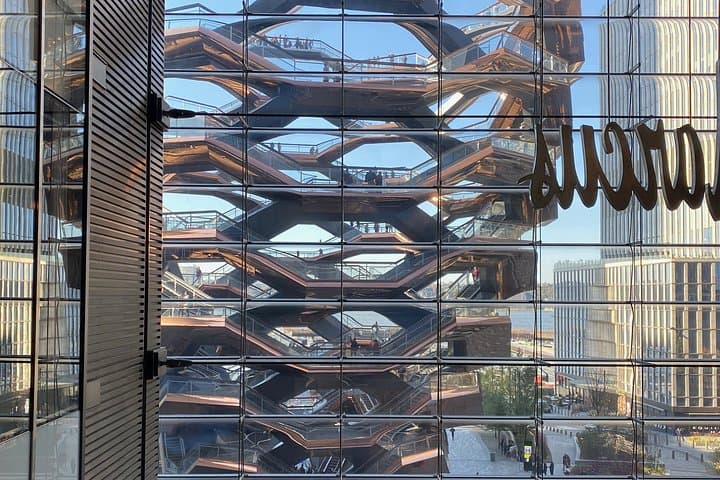
This guided route follows the elevated corridor from the Meatpacking District north to Hudson Yards, where The Vessel rises — a honeycomb of bronzed steel with 154 interlocking flights and 2,500 steps. The climb isn’t mandatory, but the geometry of the structure and the way it frames Manhattan’s west side reward both slow walkers and quick photographers.
The High Line is part urban reclamation and part living laboratory. Built on a 19th-century freight spur, it echoes New York’s industrial past even as plantings reference the scrappy ecology that grew on the unused tracks: grasses that tolerate shade, woodland edge species, gray birch that punch through heat-reflecting concrete. Geologically the west side sits on glacially scoured schist and Manhattan bedrock; the elevated park is a human-made ridge that gives new perspective to that old stone and the river beyond.
Chelsea and Hudson Yards showcase two eras of city-making: light-filled galleries and century-old meatpacking buildings give way to privately developed plazas, high-fashion retail, and public art installations. The neighborhood pulses—art openings, food vendors, and free performances create a civic rhythm the guide will point out as they trace the site’s evolution from rail to recreation.
Practical notes: the tour is about 90 minutes and requires a moderate level of fitness—expect walking on paved, occasionally sloped paths and some stair climbing if you choose to explore The Vessel. Wear comfortable, grippy shoes; bring a light layer for wind near the river and a refillable water bottle. Peak times are mornings and evenings when light slants across the Hudson and the crowds thin; weekends can be busy.
Accessibility: parts of the High Line are ADA-accessible with elevators, but The Vessel’s stair-focused design limits access to those who can manage steps. Public transit and bike lanes make arrival easy—your guide meets outside the Starbucks (not inside) so you’ll have a clear start point.
For anyone who wants a compact, layered view of Manhattan—history folded into horticulture and architecture—this walk is efficient and satisfying. It’s a city hike that teaches you to read New York: how infrastructure becomes public space, how plants soft-edge glass and steel, and how a single elevated path can reframe a whole neighborhood.
moderate.
1–1.5 hours.
Moderate—able to walk on paved paths, handle short stair sections, and stand for short explanations.
The guided walk runs approximately 90 minutes from the Meatpacking District to The Vessel in Hudson Yards.
Yes—you can climb The Vessel after the tour ends, but access depends on crowd levels and health advisories; the structure involves many stairs.
Many sections of the High Line have elevators and ramps, but The Vessel’s stair-focused design is not wheelchair-accessible.
Public restrooms are available at certain access points and in nearby Hudson Yards buildings and restaurants.
Tipping is customary for local guides—10–20% of the tour price is a common range if you enjoyed the experience.
Strollers are manageable on most of the High Line’s paved path, though The Vessel and some narrow sections may be less accommodating.
The High Line repurposes a 19th-century elevated freight rail line; Hudson Yards is one of the largest private real-estate developments in the U.S., reshaping Manhattan’s west side.
Friends of the High Line manages plantings and programming with native species and sustainable practices; visitors should stay on paths and avoid picking plants to protect fragile plant communities.
WalksNYC, LLC operates guided outdoor trips and adventures with an emphasis on safety, stewardship, and memorable experiences.
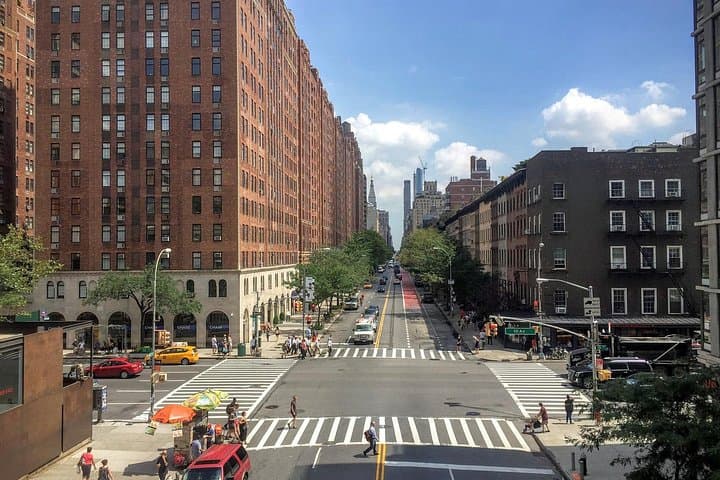
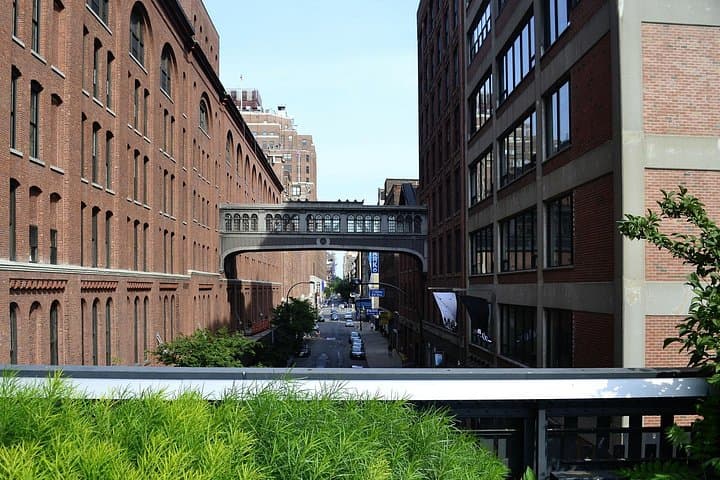
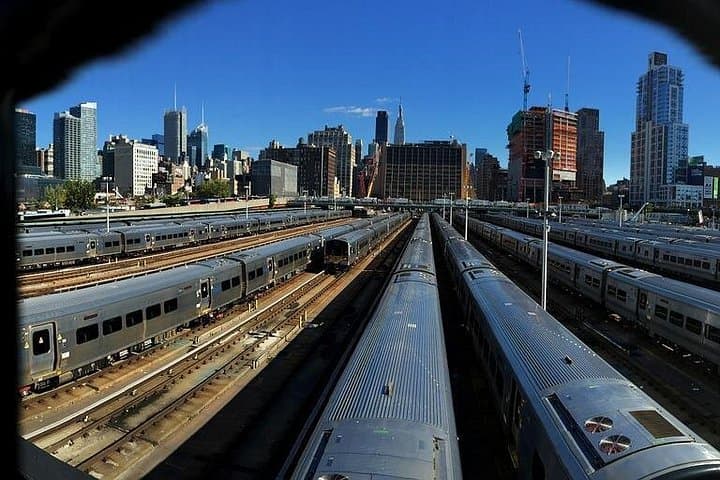
You step onto an old railbed and Manhattan shifts beneath your feet: the city becomes a horizontal promenade, glass towers leaning in like curious neighbors while grasses and pearly serviceberry trees thread between benches. The High Line's 1.45-mile greenway moves you through neighborhoods that once ferried freight and now host rotating public art, pop-up performance, and skyline views that make the Hudson River feel like a bright seam at the edge of the island.
You step onto an old railbed and Manhattan shifts beneath your feet: the city becomes a horizontal promenade, glass towers leaning in like curious neighbors while grasses and pearly serviceberry trees thread between benches. The High Line's 1.45-mile greenway moves you through neighborhoods that once ferried freight and now host rotating public art, pop-up performance, and skyline views that make the Hudson River feel like a bright seam at the edge of the island.
This guided route follows the elevated corridor from the Meatpacking District north to Hudson Yards, where The Vessel rises — a honeycomb of bronzed steel with 154 interlocking flights and 2,500 steps. The climb isn’t mandatory, but the geometry of the structure and the way it frames Manhattan’s west side reward both slow walkers and quick photographers.
The High Line is part urban reclamation and part living laboratory. Built on a 19th-century freight spur, it echoes New York’s industrial past even as plantings reference the scrappy ecology that grew on the unused tracks: grasses that tolerate shade, woodland edge species, gray birch that punch through heat-reflecting concrete. Geologically the west side sits on glacially scoured schist and Manhattan bedrock; the elevated park is a human-made ridge that gives new perspective to that old stone and the river beyond.
Chelsea and Hudson Yards showcase two eras of city-making: light-filled galleries and century-old meatpacking buildings give way to privately developed plazas, high-fashion retail, and public art installations. The neighborhood pulses—art openings, food vendors, and free performances create a civic rhythm the guide will point out as they trace the site’s evolution from rail to recreation.
Practical notes: the tour is about 90 minutes and requires a moderate level of fitness—expect walking on paved, occasionally sloped paths and some stair climbing if you choose to explore The Vessel. Wear comfortable, grippy shoes; bring a light layer for wind near the river and a refillable water bottle. Peak times are mornings and evenings when light slants across the Hudson and the crowds thin; weekends can be busy.
Accessibility: parts of the High Line are ADA-accessible with elevators, but The Vessel’s stair-focused design limits access to those who can manage steps. Public transit and bike lanes make arrival easy—your guide meets outside the Starbucks (not inside) so you’ll have a clear start point.
For anyone who wants a compact, layered view of Manhattan—history folded into horticulture and architecture—this walk is efficient and satisfying. It’s a city hike that teaches you to read New York: how infrastructure becomes public space, how plants soft-edge glass and steel, and how a single elevated path can reframe a whole neighborhood.