THE ADVENTURE COLLECTIVE® · Independent discovery and booking for outdoor travel

Walk Manhattan’s west side from the Meatpacking District up the elevated High Line to Hudson Yards on this private two-hour tour. Expect urban history, contemporary architecture, public art, and practical local knowledge delivered by a guide.
Walk Manhattan’s west side from the Meatpacking District up the elevated High Line to Hudson Yards on this private two-hour tour. Expect urban history, contemporary architecture, public art, and practical local knowledge delivered by a guide.
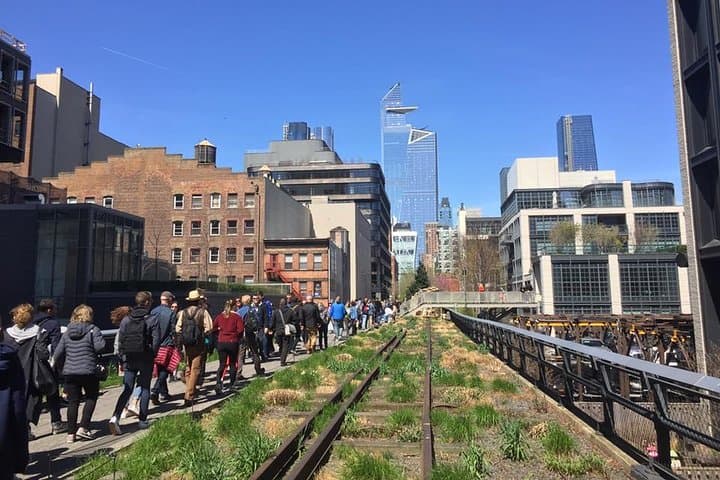
A winter sky bleeds into glass and steel as the group gathers outside the Apple Store on West 14th. The guide raises a card, and the city — equal parts memory and new construction — starts to speak. Underfoot the old railbed of the High Line lifts visitors above the grind of 10th Avenue; grasses push between reclaimed ties, and the Hudson River glints to the west like a constant, cool companion daring you to keep moving north.
Verified experiences and guided adventures in the surrounding area.
Operated by Custom NYC Tours · New York, NY
A winter sky bleeds into glass and steel as the group gathers outside the Apple Store on West 14th. The guide raises a card, and the city — equal parts memory and new construction — starts to speak. Underfoot the old railbed of the High Line lifts visitors above the grind of 10th Avenue; grasses push between reclaimed ties, and the Hudson River glints to the west like a constant, cool companion daring you to keep moving north.
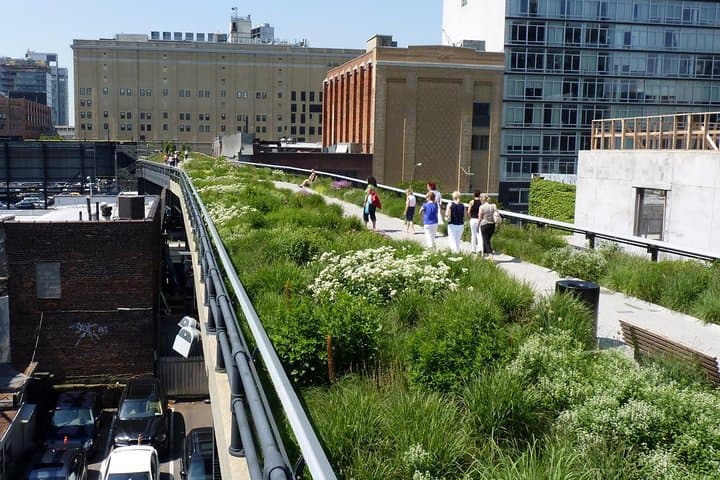
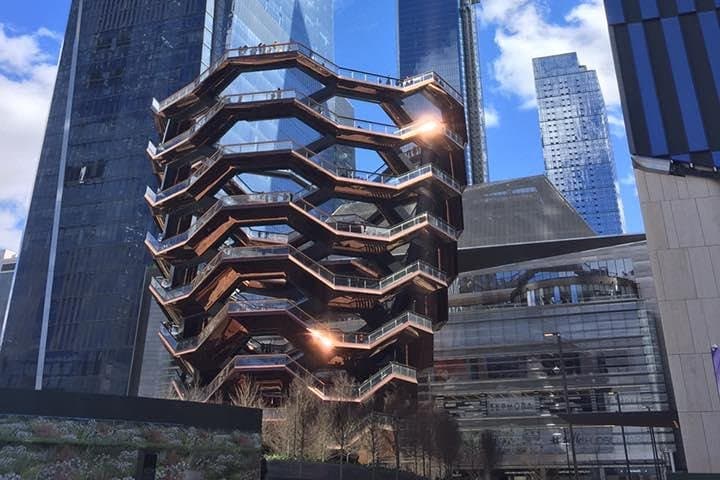
This two-hour private walk threads the Meatpacking District’s brick and iron past through the High Line’s planted promenades and finishes in Hudson Yards, a landscape of recent ambitions: the Vessel, the Shed, and towers designed by Gehry, Hadid and Bjarke Ingels. The High Line itself began as a freight rail in the 1930s, a pragmatic artery for meat and goods. Closed to trains in the 1980s, it was reborn as a public park in phases after 2009, and its success reshaped how cities think about adaptive reuse and public space.
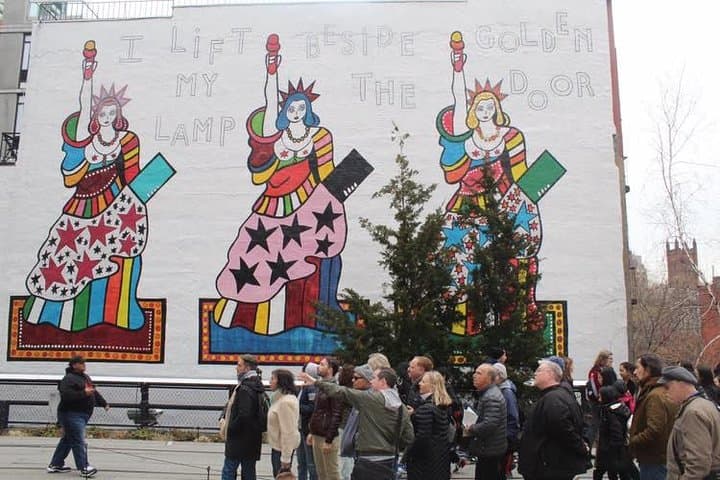
Geology is subtle here — Manhattan’s bedrock keeps the city up and level — but the urban strata are visible: cobbled alleys and cast-iron facades of the 19th century give way to polished glass and metal. Culture is equally layered. In the Meatpacking District, former factories have become galleries and restaurants; on the High Line, curated plantings and rotating public art create a curated reading of nature. Hudson Yards, the largest private development in New York history, is a showcase of 21st-century ambition and debate about density, public vs. private space, and skyline identity.
Practical guidance matters on a city walk. Expect roughly 1.5–2 miles of walking, almost entirely flat with short stair or ramp sections for grade changes. Surfaces are paved or wooden deck; comfortable, broken-in walking shoes are essential. Bring a small water bottle and a light layer: wind funnels along the river, and microclimates change between shady garden niches and exposed viewing platforms.
Timing shapes the experience. Early morning or late afternoon softens crowds and gives better light for photos; midday feels energetic but busier. The private format (groups up to 10) means questions, photo stops, and a pace tuned to the group.
Accessibility is strong compared with many city walks — most High Line sections are wheelchair accessible — but check meeting-point directions: the tour starts at 401 W 14th St. If you want a detour, ask the guide about Chelsea Market for a quick bite or a peek at The Shed’s rotating programs in Hudson Yards.
This walk is a short, concentrated lesson in how cities repurpose, how architecture argues with history, and how a park built on old rails can become a new kind of urban room. It’s site-seeing with a guide who holds the past in one hand and the city’s future in the other.
moderate.
2 hours.
Able to walk 1.5–2 miles at a steady pace and stand for periodic stops; casual to moderate fitness level sufficient
The tour meets in front of the Apple Store at 401 W 14th St and ends at Hudson Yards (near the Vessel and The Shed).
Yes — most sections of the High Line are wheelchair and stroller accessible, with ramps and elevators at key access points.
Expect about 1.5–2 miles total over two hours, with frequent stops for history, architecture, and photo opportunities.
Yes — Chelsea Market and nearby cafés are easy detours; guide can suggest stops but food purchases are typically on your own.
The tour may be canceled for severe weather; check your booking policy and the operator’s cancellation notice (full refund if canceled 24+ hours prior).
Yes — it’s a private tour for your group (up to 10 people), allowing a personalized pace and Q&A with the guide.
The High Line was a freight rail line built in the early 20th century and transformed into a public park beginning in 2009; Hudson Yards is the largest private real estate development in U.S. history, completed in the 2010s.
The High Line operates as a public park managed through a public-private partnership; staying on paths and respecting plantings helps protect fragile plant communities amid heavy visitation.
Custom NYC Tours operates guided outdoor trips and adventures with an emphasis on safety, stewardship, and memorable experiences.
A winter sky bleeds into glass and steel as the group gathers outside the Apple Store on West 14th. The guide raises a card, and the city — equal parts memory and new construction — starts to speak. Underfoot the old railbed of the High Line lifts visitors above the grind of 10th Avenue; grasses push between reclaimed ties, and the Hudson River glints to the west like a constant, cool companion daring you to keep moving north.
A winter sky bleeds into glass and steel as the group gathers outside the Apple Store on West 14th. The guide raises a card, and the city — equal parts memory and new construction — starts to speak. Underfoot the old railbed of the High Line lifts visitors above the grind of 10th Avenue; grasses push between reclaimed ties, and the Hudson River glints to the west like a constant, cool companion daring you to keep moving north.
This two-hour private walk threads the Meatpacking District’s brick and iron past through the High Line’s planted promenades and finishes in Hudson Yards, a landscape of recent ambitions: the Vessel, the Shed, and towers designed by Gehry, Hadid and Bjarke Ingels. The High Line itself began as a freight rail in the 1930s, a pragmatic artery for meat and goods. Closed to trains in the 1980s, it was reborn as a public park in phases after 2009, and its success reshaped how cities think about adaptive reuse and public space.
Geology is subtle here — Manhattan’s bedrock keeps the city up and level — but the urban strata are visible: cobbled alleys and cast-iron facades of the 19th century give way to polished glass and metal. Culture is equally layered. In the Meatpacking District, former factories have become galleries and restaurants; on the High Line, curated plantings and rotating public art create a curated reading of nature. Hudson Yards, the largest private development in New York history, is a showcase of 21st-century ambition and debate about density, public vs. private space, and skyline identity.
Practical guidance matters on a city walk. Expect roughly 1.5–2 miles of walking, almost entirely flat with short stair or ramp sections for grade changes. Surfaces are paved or wooden deck; comfortable, broken-in walking shoes are essential. Bring a small water bottle and a light layer: wind funnels along the river, and microclimates change between shady garden niches and exposed viewing platforms.
Timing shapes the experience. Early morning or late afternoon softens crowds and gives better light for photos; midday feels energetic but busier. The private format (groups up to 10) means questions, photo stops, and a pace tuned to the group.
Accessibility is strong compared with many city walks — most High Line sections are wheelchair accessible — but check meeting-point directions: the tour starts at 401 W 14th St. If you want a detour, ask the guide about Chelsea Market for a quick bite or a peek at The Shed’s rotating programs in Hudson Yards.
This walk is a short, concentrated lesson in how cities repurpose, how architecture argues with history, and how a park built on old rails can become a new kind of urban room. It’s site-seeing with a guide who holds the past in one hand and the city’s future in the other.