THE ADVENTURE COLLECTIVE® · Independent discovery and booking for outdoor travel

Walk the High Line at daybreak with a local guide and see Chelsea and the Meatpacking District through the lens of history, design and food. This small-group morning tour pairs elevated park views with inside stops at Chelsea Market.
Walk the High Line at daybreak with a local guide and see Chelsea and the Meatpacking District through the lens of history, design and food. This small-group morning tour pairs elevated park views with inside stops at Chelsea Market.
You step into morning light at the corner of 15th Street and 9th Avenue, where the city still smells of coffee and the first deliveries to Chelsea Market are being stacked. An orange-hatted guide greets the small group, and you fold into a two-hour walk that moves between elevated greenway and gritty city blocks. The High Line rises like a reclaimed spine above traffic — rusted rail peeks from native grasses, concrete benches curve toward skyline cuts, and the Hudson occasionally opens a cool, metallic view.
Verified experiences and guided adventures in the surrounding area.
Operated by ExperienceFirst · New York, NY
You step into morning light at the corner of 15th Street and 9th Avenue, where the city still smells of coffee and the first deliveries to Chelsea Market are being stacked. An orange-hatted guide greets the small group, and you fold into a two-hour walk that moves between elevated greenway and gritty city blocks. The High Line rises like a reclaimed spine above traffic — rusted rail peeks from native grasses, concrete benches curve toward skyline cuts, and the Hudson occasionally opens a cool, metallic view.
The High Line began life as the West Side Line, a 19th-century freight railway that threaded meat, produce and goods along Manhattan’s west side. After decades of disuse and demolition, neighborhood activists and designers reimagined the right-of-way as public space; today the park is a layered narrative of industrial bones, contemporary planting design and rotating public art. Around it, Chelsea’s identity shifted from slaughterhouses and warehouses to galleries, tech offices and boutique restaurants. The Meatpacking District’s cobbled streets hint at horse-drawn wagons and industrial grit, now juxtaposed with glass-fronted nightlife and high-fashion stores.
Walks with a local guide make the park’s small details sing: masonry scars that map old tracks, murals tucked behind hedgerows, and the way plantings were chosen to reflect seasonal motion rather than static color. The tour includes a stop inside Chelsea Market — a repurposed Nabisco factory that’s now a food and design bazaar — where you can sense continuity: architecture repurposed, commerce reinvented. Despite being in the middle of Manhattan, the High Line feels intentionally paced; the elevated view reduces urban noise and highlights skyline geometry.
Practical side: the route covers about one mile of the High Line with additional street-level walking through Chelsea and the Meatpacking District. Expect a moderate amount of walking on mostly paved and raised boardwalk surfaces, with short stairs and gentle ramps; the experience is wheelchair accessible on designated access points. Mornings are quieter and windier; layers and comfortable walking shoes are crucial. Bring a small water bottle and a portable phone charger — you’ll want to photograph the shifting light across steel and glass.
Why go: the combination of urban history, contemporary design, and neighborhood culture gives you not just photos but context — the brief two-hour tour unpacks how infrastructure becomes public realm, and how a neighborhood continually redefines itself. Whether you’re a first-time visitor or a local, the guided route surfaces the stories beneath the rails so the city’s west side feels newly familiar.
easy.
2 hours.
Suitable for most fitness levels; able to walk for 1–2 miles with short stairs/ramps
The tour runs about two hours and covers roughly one mile of the High Line plus street-level walking through Chelsea and the Meatpacking District.
Meet on the corner of 15th Street & 9th Avenue next to Chelsea Market; the tour ends near 14th Street & 9th Avenue.
Yes — the tour is wheelchair accessible via High Line access points and the guide will accommodate mobility needs; notify them when booking if you require assistance.
Yes — the itinerary includes a visit inside Chelsea Market to sample the atmosphere and learn about its history.
The activity runs rain or shine. In extreme cases the seller may cancel and offer a reschedule or refund; dress appropriately for the forecast.
Gratuities are appreciated though not required; if you enjoyed the experience 10–20% is customary for guided city tours.
The High Line was originally a 19th-century freight rail line that transported meat and goods; after decades of disuse it was transformed into an elevated public park beginning in the early 2000s.
The park is managed with a focus on low-maintenance, native plantings and community stewardship; stay on pathways to protect fragile planting zones and support park efforts through donations or volunteer programs.
ExperienceFirst operates guided outdoor trips and adventures with an emphasis on safety, stewardship, and memorable experiences.
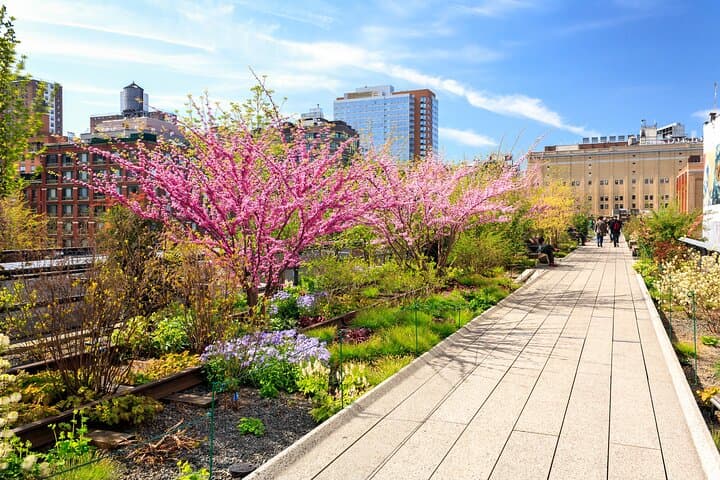
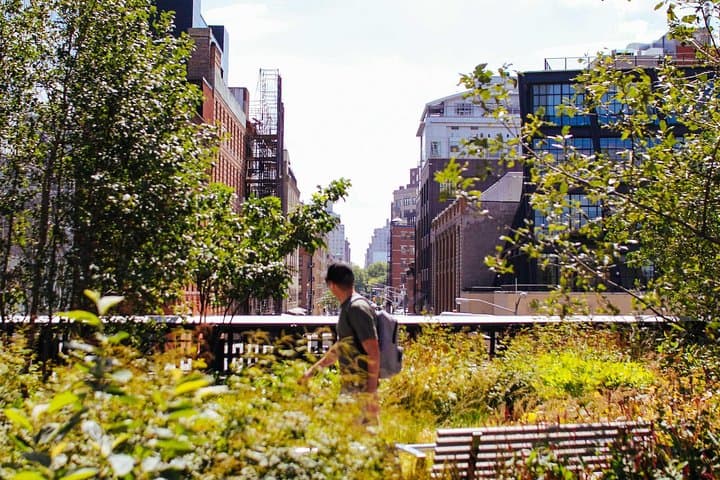
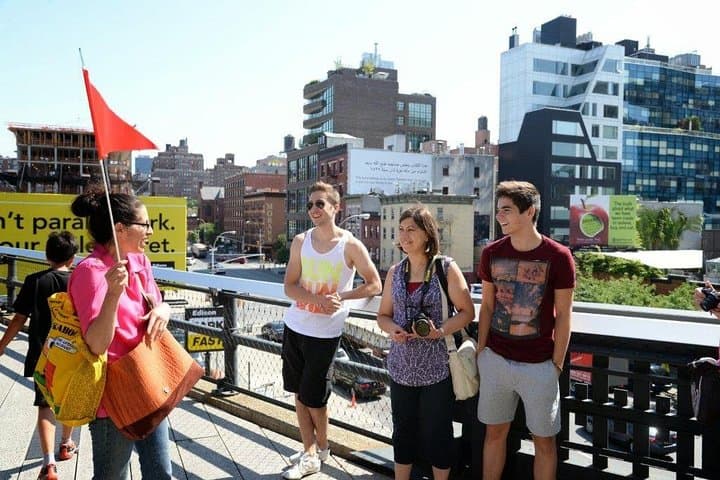
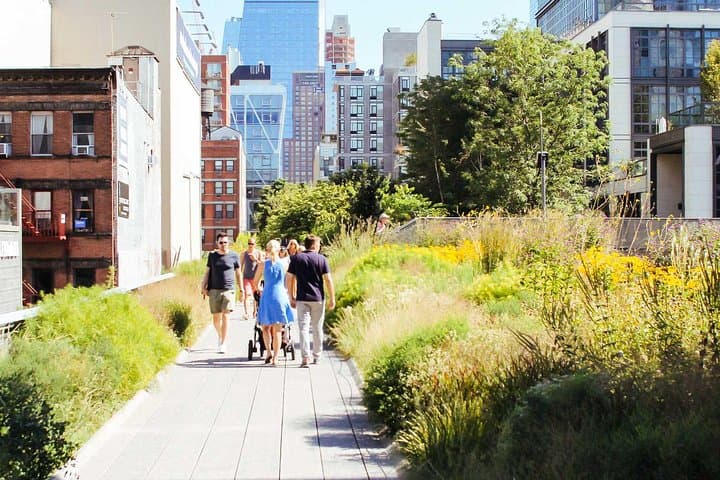
You step into morning light at the corner of 15th Street and 9th Avenue, where the city still smells of coffee and the first deliveries to Chelsea Market are being stacked. An orange-hatted guide greets the small group, and you fold into a two-hour walk that moves between elevated greenway and gritty city blocks. The High Line rises like a reclaimed spine above traffic — rusted rail peeks from native grasses, concrete benches curve toward skyline cuts, and the Hudson occasionally opens a cool, metallic view.
You step into morning light at the corner of 15th Street and 9th Avenue, where the city still smells of coffee and the first deliveries to Chelsea Market are being stacked. An orange-hatted guide greets the small group, and you fold into a two-hour walk that moves between elevated greenway and gritty city blocks. The High Line rises like a reclaimed spine above traffic — rusted rail peeks from native grasses, concrete benches curve toward skyline cuts, and the Hudson occasionally opens a cool, metallic view.
The High Line began life as the West Side Line, a 19th-century freight railway that threaded meat, produce and goods along Manhattan’s west side. After decades of disuse and demolition, neighborhood activists and designers reimagined the right-of-way as public space; today the park is a layered narrative of industrial bones, contemporary planting design and rotating public art. Around it, Chelsea’s identity shifted from slaughterhouses and warehouses to galleries, tech offices and boutique restaurants. The Meatpacking District’s cobbled streets hint at horse-drawn wagons and industrial grit, now juxtaposed with glass-fronted nightlife and high-fashion stores.
Walks with a local guide make the park’s small details sing: masonry scars that map old tracks, murals tucked behind hedgerows, and the way plantings were chosen to reflect seasonal motion rather than static color. The tour includes a stop inside Chelsea Market — a repurposed Nabisco factory that’s now a food and design bazaar — where you can sense continuity: architecture repurposed, commerce reinvented. Despite being in the middle of Manhattan, the High Line feels intentionally paced; the elevated view reduces urban noise and highlights skyline geometry.
Practical side: the route covers about one mile of the High Line with additional street-level walking through Chelsea and the Meatpacking District. Expect a moderate amount of walking on mostly paved and raised boardwalk surfaces, with short stairs and gentle ramps; the experience is wheelchair accessible on designated access points. Mornings are quieter and windier; layers and comfortable walking shoes are crucial. Bring a small water bottle and a portable phone charger — you’ll want to photograph the shifting light across steel and glass.
Why go: the combination of urban history, contemporary design, and neighborhood culture gives you not just photos but context — the brief two-hour tour unpacks how infrastructure becomes public realm, and how a neighborhood continually redefines itself. Whether you’re a first-time visitor or a local, the guided route surfaces the stories beneath the rails so the city’s west side feels newly familiar.