THE ADVENTURE COLLECTIVE® · Independent discovery and booking for outdoor travel

Leave Marrakech for a seven-hour circuit through the High Atlas: camel rides in Moulay Brahim, a valley hike to Imlil and lunch in a Berber home. Expect terraced fields, mountain views and easy-to-moderate walking on mixed terrain.
Leave Marrakech for a seven-hour circuit through the High Atlas: camel rides in Moulay Brahim, a valley hike to Imlil and lunch in a Berber home. Expect terraced fields, mountain views and easy-to-moderate walking on mixed terrain.
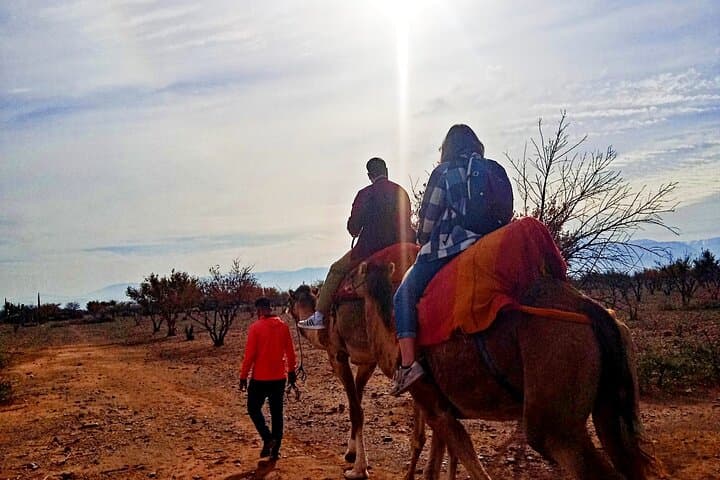
A dust-scented morning leaves Marrakech behind as the van threads up toward the High Atlas. Within an hour the city’s heat gives way to jagged gorges and orchards; streams wink through terraces and a line of camels waits at the trailhead like patient pack-animals in a slow parade.
Verified experiences and guided adventures in the surrounding area.
Operated by Marrakech Outdoor Trips · Imlil, Marrakech-Safi
A dust-scented morning leaves Marrakech behind as the van threads up toward the High Atlas. Within an hour the city’s heat gives way to jagged gorges and orchards; streams wink through terraces and a line of camels waits at the trailhead like patient pack-animals in a slow parade.
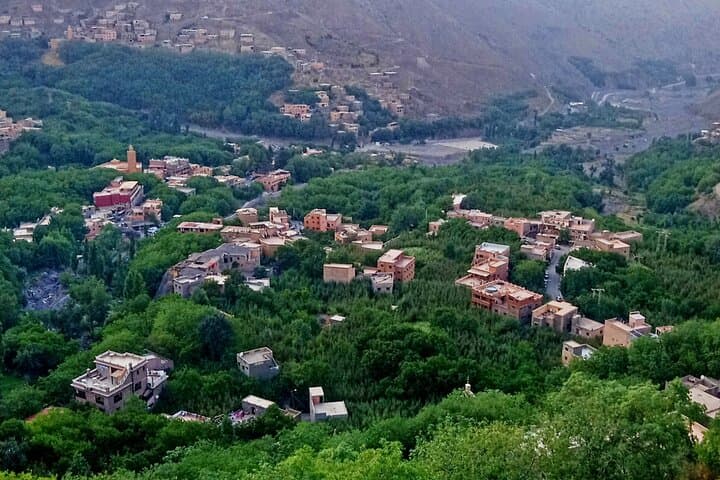
This full-day route stitches together Moulay Brahim’s rocky ravines, the Imlil Valley’s stone villages and terraces in the Three Valleys. Geologically the High Atlas is young and uplifted—steep-folded limestone and volcanic outcrops that force rivers to carve narrow gorges. Culturally the valleys belong to Amazigh (Berber) communities who have managed water with terraced fields and qanat-style irrigation for generations. Expect warm welcomes: mint tea at a village home and a family-cooked lunch offer a direct window into daily life.
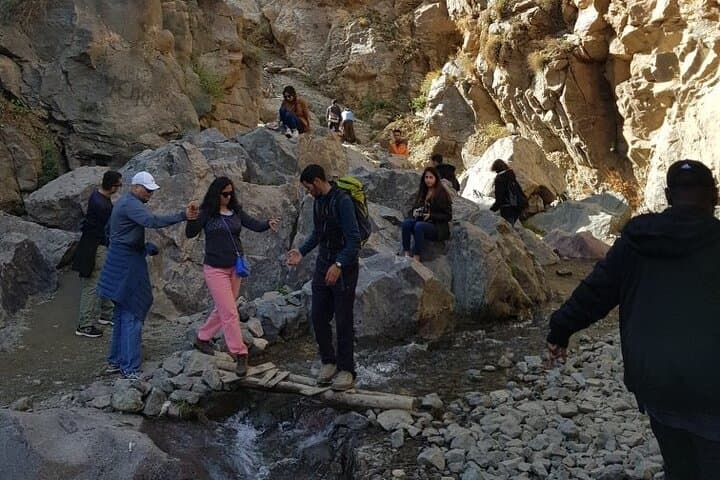
On the trail you’ll alternate easy valley walking and steeper switchbacks; the advertised hike includes one to two hours of walking to Armed and side routes past Ait Mizan, Targa and Imoula. Wildlife includes mountain birds and the occasional grazing goat; seasonal fruit trees—cherry and walnut—mark the fields.
Practical guidance: start early to avoid midday sun, bring 2–3 liters of water, and wear sturdy shoes for mixed dirt, stone and short scree sections. The pace is relaxed and suitable for most fit travelers, but uneven paths and short climbs require ankle stability. Carry cash for the family lunch and gratuities, and honor local customs—ask before photographing inside homes. Time your visit for spring blossom or autumn’s cooler clarity for the most comfortable conditions.
moderate.
7–8 hours.
Suitable for travelers with regular walking fitness; be comfortable on uneven terrain and short climbs.
The walking sections are rated easy to moderate: expect 1–2 hours of trekking on varied terrain with some short climbs; the overall day includes driving and rests.
The camel portion is a short, guided ride over gentle trails—more scenic and cultural than physically demanding.
Local families can often accommodate common dietary requests if notified in advance—indicate restrictions when booking.
Tipping is customary: small amounts for your guide, driver and the host family are appreciated and best given in cash.
The Imlil and surrounding valleys have long been inhabited by Amazigh (Berber) communities who developed terraced agriculture and irrigation to farm steep slopes for centuries.
Water is scarce in the High Atlas—stick to marked paths, avoid littering, and support local families directly to help keep tourism benefits in the valley.
Marrakech Outdoor Trips operates guided outdoor trips and adventures with an emphasis on safety, stewardship, and memorable experiences.
A dust-scented morning leaves Marrakech behind as the van threads up toward the High Atlas. Within an hour the city’s heat gives way to jagged gorges and orchards; streams wink through terraces and a line of camels waits at the trailhead like patient pack-animals in a slow parade.
A dust-scented morning leaves Marrakech behind as the van threads up toward the High Atlas. Within an hour the city’s heat gives way to jagged gorges and orchards; streams wink through terraces and a line of camels waits at the trailhead like patient pack-animals in a slow parade.
This full-day route stitches together Moulay Brahim’s rocky ravines, the Imlil Valley’s stone villages and terraces in the Three Valleys. Geologically the High Atlas is young and uplifted—steep-folded limestone and volcanic outcrops that force rivers to carve narrow gorges. Culturally the valleys belong to Amazigh (Berber) communities who have managed water with terraced fields and qanat-style irrigation for generations. Expect warm welcomes: mint tea at a village home and a family-cooked lunch offer a direct window into daily life.
On the trail you’ll alternate easy valley walking and steeper switchbacks; the advertised hike includes one to two hours of walking to Armed and side routes past Ait Mizan, Targa and Imoula. Wildlife includes mountain birds and the occasional grazing goat; seasonal fruit trees—cherry and walnut—mark the fields.
Practical guidance: start early to avoid midday sun, bring 2–3 liters of water, and wear sturdy shoes for mixed dirt, stone and short scree sections. The pace is relaxed and suitable for most fit travelers, but uneven paths and short climbs require ankle stability. Carry cash for the family lunch and gratuities, and honor local customs—ask before photographing inside homes. Time your visit for spring blossom or autumn’s cooler clarity for the most comfortable conditions.