THE ADVENTURE COLLECTIVE® · Independent discovery and booking for outdoor travel

Leave Agadir for a compact High Atlas day trip to Imouzzer and Paradise Valley. Expect olive- and argan-lined passes, a small mountain souk, pockets of natural pools and a seasonal waterfall best seen in winter.
Leave Agadir for a compact High Atlas day trip to Imouzzer and Paradise Valley. Expect olive- and argan-lined passes, a small mountain souk, pockets of natural pools and a seasonal waterfall best seen in winter.
The van pulls out of Agadir at first light and a ribbon of asphalt climbs toward the High Atlas; by mid-morning the air cools and the road cuts through firs and argan stands as the foothills open onto terraced fields and scattered Berber houses.
Verified experiences and guided adventures in the surrounding area.
Operated by Adi Tours · Agadir, Souss-Massa
The van pulls out of Agadir at first light and a ribbon of asphalt climbs toward the High Atlas; by mid-morning the air cools and the road cuts through firs and argan stands as the foothills open onto terraced fields and scattered Berber houses.
At around 1,200 m the village of Imouzzer sits on a steep shelf—its Thursday souk still the best place to watch local trade in salt, dates and semiprecious stones. Geologically the road follows folded limestone and schist; water has carved narrow gorges and the streams that feed Paradise Valley have gouged pockets and plunge pools into the bedrock.
Culture here is hands-on: farmers tend small banana plots and almond trees that explode in white in winter, locals offer mint tea and flatbread sweetened with thyme honey, and shepherds move flocks along seasonal tracks.
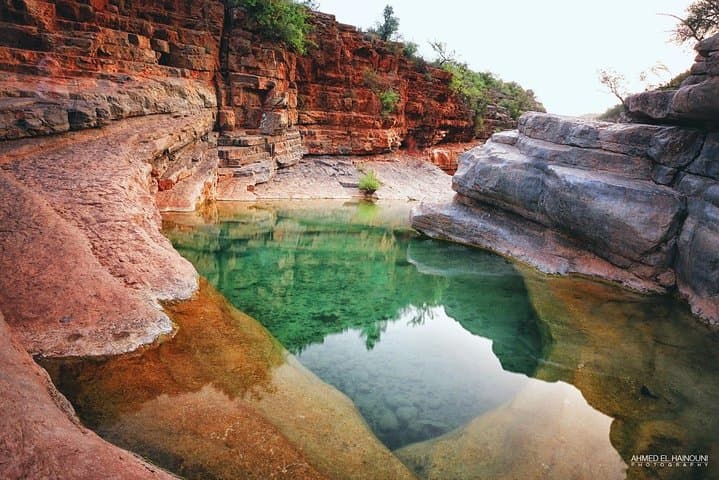
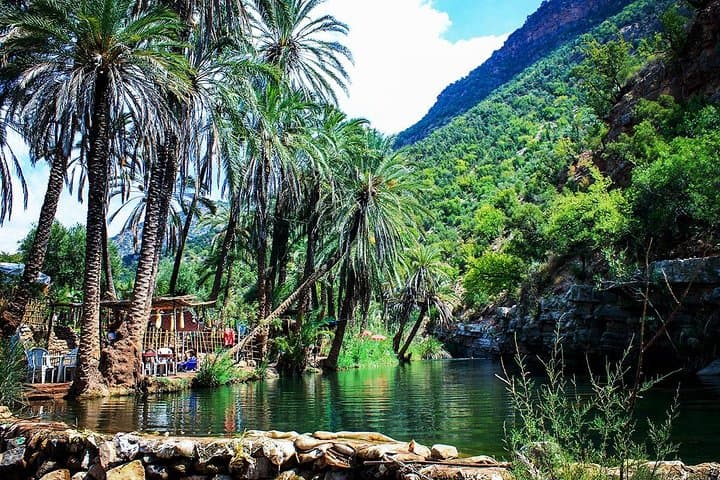
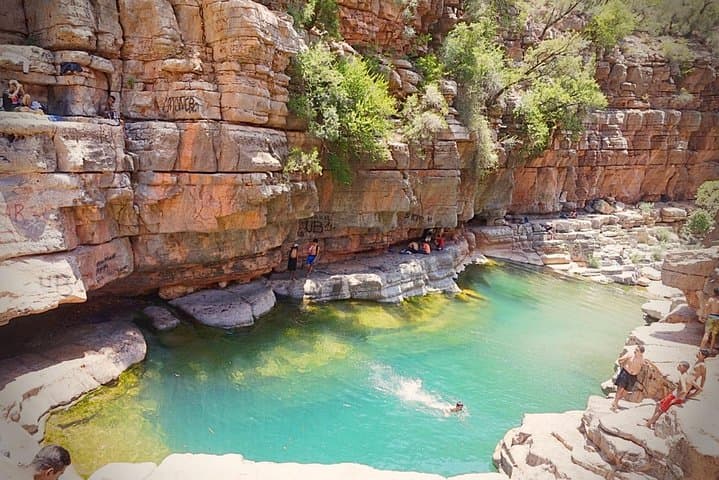
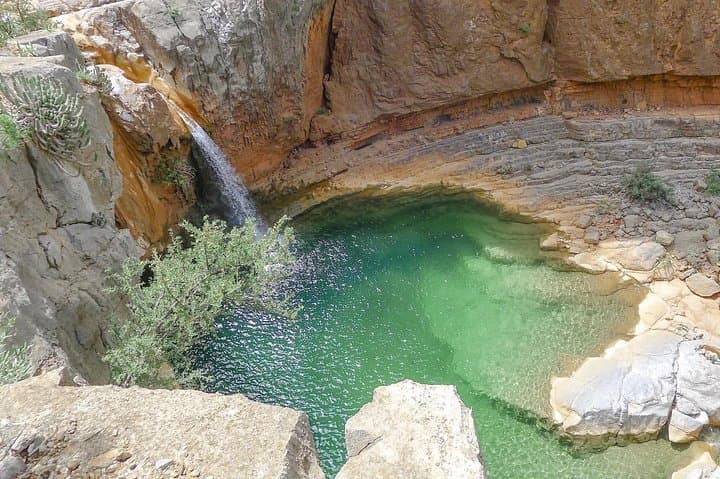
Paradise Valley itself is a stretch of palm-lined ravine where oleanders and natural pools collect runoff. In winter the waterfall near Imouzzer runs full and dramatic; in dry months the valley is a series of emerald pools and cooling shade.
Practically: expect a 5-hour round trip from Agadir with short stops for photos and a longer break in the valley. Trails are informal—rocky, uneven and sometimes slippery after rain—so allow time for cautious footing. Bring water, sun protection and a light layer for higher elevations. If you want the waterfall at full force plan winter travel; for swimming pick late spring or early autumn when pools are accessible. Respect private plots and local customs: ask before photographing people and pack out any waste.
moderate.
5 hours.
Moderate fitness; ability to walk on uneven ground and climb short steep sections
The Imouzzer waterfall fills after winter rains—best viewed December through March; in dry months flows can be minimal.
Yes, swimming in natural pools is common in warmer months; check local conditions and avoid pools after heavy rain due to flash-flow risk.
Most operators include hotel or port pickup; confirm your pickup point and arrival time when booking.
Facilities are basic—pack snacks and use village cafes or roadside stops for refreshments; public restrooms may be limited.
The High Atlas villages are predominantly Amazigh (Berber); local agriculture—almonds, small bananas and argan—has shaped the landscape for centuries.
Water is scarce outside the rainy season; stick to established paths, avoid disturbing riparian plants and carry out all trash to protect fragile valley habitats.
Adi Tours operates guided outdoor trips and adventures with an emphasis on safety, stewardship, and memorable experiences.
The van pulls out of Agadir at first light and a ribbon of asphalt climbs toward the High Atlas; by mid-morning the air cools and the road cuts through firs and argan stands as the foothills open onto terraced fields and scattered Berber houses.
The van pulls out of Agadir at first light and a ribbon of asphalt climbs toward the High Atlas; by mid-morning the air cools and the road cuts through firs and argan stands as the foothills open onto terraced fields and scattered Berber houses.
At around 1,200 m the village of Imouzzer sits on a steep shelf—its Thursday souk still the best place to watch local trade in salt, dates and semiprecious stones. Geologically the road follows folded limestone and schist; water has carved narrow gorges and the streams that feed Paradise Valley have gouged pockets and plunge pools into the bedrock.
Culture here is hands-on: farmers tend small banana plots and almond trees that explode in white in winter, locals offer mint tea and flatbread sweetened with thyme honey, and shepherds move flocks along seasonal tracks.
Paradise Valley itself is a stretch of palm-lined ravine where oleanders and natural pools collect runoff. In winter the waterfall near Imouzzer runs full and dramatic; in dry months the valley is a series of emerald pools and cooling shade.
Practically: expect a 5-hour round trip from Agadir with short stops for photos and a longer break in the valley. Trails are informal—rocky, uneven and sometimes slippery after rain—so allow time for cautious footing. Bring water, sun protection and a light layer for higher elevations. If you want the waterfall at full force plan winter travel; for swimming pick late spring or early autumn when pools are accessible. Respect private plots and local customs: ask before photographing people and pack out any waste.