THE ADVENTURE COLLECTIVE® · Independent discovery and booking for outdoor travel

Escape Marrakech for a day in the High Atlas: camel tracks, stepped fields and a home-cooked Berber lunch in Imlil. This guided trip blends short hikes, cultural stops and big mountain views—ideal for moderately fit travelers.
Escape Marrakech for a day in the High Atlas: camel tracks, stepped fields and a home-cooked Berber lunch in Imlil. This guided trip blends short hikes, cultural stops and big mountain views—ideal for moderately fit travelers.
Morning light slants across red earth as the road rises out of Marrakech and the city’s heat gives way to pine-scented air. By the time you reach Moulay Brahim the landscape opens into steep gorges and irrigation channels that seem to carve the mountains into living rooms and gardens. A short camel ride along a stream sets the tone: this is a day of movement between small villages and wide views.
Verified experiences and guided adventures in the surrounding area.
Operated by Marrakech experiences · Imlil, Marrakech-Safi
Morning light slants across red earth as the road rises out of Marrakech and the city’s heat gives way to pine-scented air. By the time you reach Moulay Brahim the landscape opens into steep gorges and irrigation channels that seem to carve the mountains into living rooms and gardens. A short camel ride along a stream sets the tone: this is a day of movement between small villages and wide views.
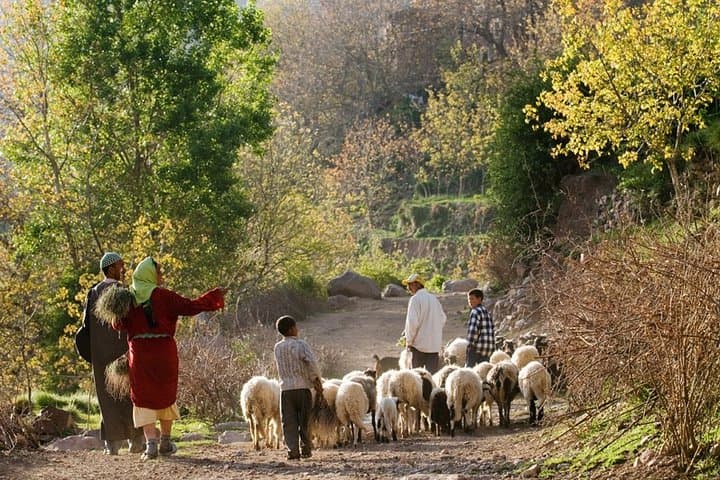
The High Atlas is geologically young—folded and uplifted by tectonic pressure—so valleys are steep, terraces are ancient engineering, and streams still set the rhythm of agriculture. Imlil sits at the foot of Toubkal’s lower ridgelines and has long been a waypoint for Berber farmers; tea offered by a host is as much social currency as refreshment.
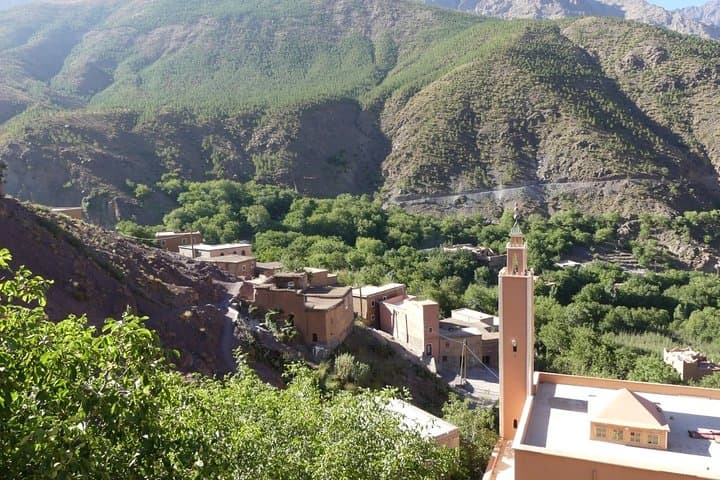
Expect 2–3 hours of steady walking on stony mule tracks and narrow paths between hamlets like Ait Mizan and Ait Souka, with intermittent climbs and panoramic breaks over terraced fields of barley, fruit trees and walnut groves. Lunch in a Berber home illuminates local foodways: slow-cooked tagine, mint tea and seasonal produce.
Practical guidance: wear broken-in hiking shoes, carry 1–2 liters of water, and layer for sharp temperature swings—sun at low elevations can feel intense even when mornings are cool. The route is suitable for moderately fit walkers; guides manage navigation, and the group pace accommodates stops for photos and tea. Bring cash for souvenirs, a sun hat, and a compact rain shell in spring or autumn. Return to Marrakech in the evening with the mountains’ quiet still clinging to your shoes.
moderate.
6–7 hours.
Good basic fitness for 2–3 hours of steady uphill and uneven trail sections; comfortable on sustained walks.
The route is classified as moderate—short steep sections occur, but the guide paces the group and many parts follow mule tracks suitable for beginners with reasonable fitness.
The tour typically includes round-trip transport from Marrakech, a local guide, mint tea, a home-cooked lunch with a Berber family, bottled water and a short camel ride at Moulay Brahim.
Imlil sits around 1,700–1,800 m elevation; the trail gains modest elevation during the hike—most travelers experience no altitude sickness on a single day trip but take it easy if you have cardiovascular issues.
Children can usually participate, but check age restrictions with the operator and consider the hike length and uneven terrain before booking.
The High Atlas has served as a cultural crossroads for Amazigh (Berber) communities for centuries; terracing and irrigation reflect long-established mountain agriculture.
Visit with respect—stay on paths, avoid disturbing irrigation channels and support local families by buying food or crafts directly; mountain ecosystems are sensitive to erosion and overuse.
Marrakech experiences operates guided outdoor trips and adventures with an emphasis on safety, stewardship, and memorable experiences.
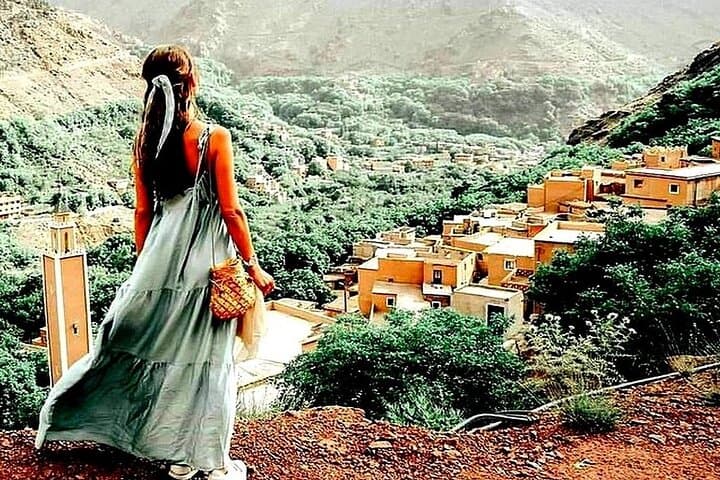
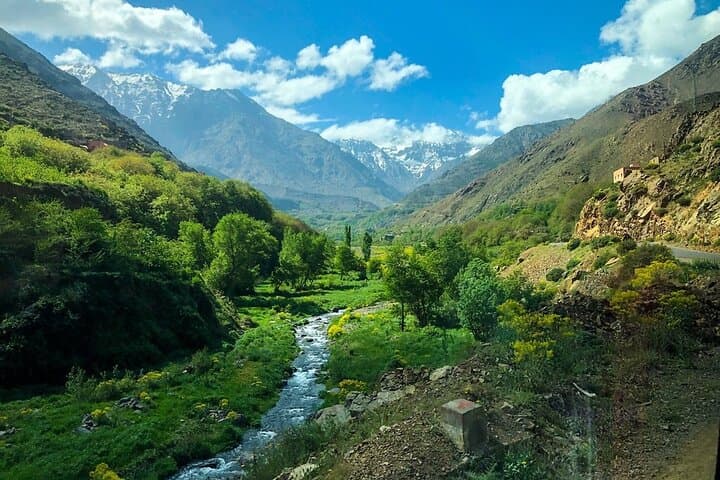
Morning light slants across red earth as the road rises out of Marrakech and the city’s heat gives way to pine-scented air. By the time you reach Moulay Brahim the landscape opens into steep gorges and irrigation channels that seem to carve the mountains into living rooms and gardens. A short camel ride along a stream sets the tone: this is a day of movement between small villages and wide views.
Morning light slants across red earth as the road rises out of Marrakech and the city’s heat gives way to pine-scented air. By the time you reach Moulay Brahim the landscape opens into steep gorges and irrigation channels that seem to carve the mountains into living rooms and gardens. A short camel ride along a stream sets the tone: this is a day of movement between small villages and wide views.
The High Atlas is geologically young—folded and uplifted by tectonic pressure—so valleys are steep, terraces are ancient engineering, and streams still set the rhythm of agriculture. Imlil sits at the foot of Toubkal’s lower ridgelines and has long been a waypoint for Berber farmers; tea offered by a host is as much social currency as refreshment.
Expect 2–3 hours of steady walking on stony mule tracks and narrow paths between hamlets like Ait Mizan and Ait Souka, with intermittent climbs and panoramic breaks over terraced fields of barley, fruit trees and walnut groves. Lunch in a Berber home illuminates local foodways: slow-cooked tagine, mint tea and seasonal produce.
Practical guidance: wear broken-in hiking shoes, carry 1–2 liters of water, and layer for sharp temperature swings—sun at low elevations can feel intense even when mornings are cool. The route is suitable for moderately fit walkers; guides manage navigation, and the group pace accommodates stops for photos and tea. Bring cash for souvenirs, a sun hat, and a compact rain shell in spring or autumn. Return to Marrakech in the evening with the mountains’ quiet still clinging to your shoes.