THE ADVENTURE COLLECTIVE® · Independent discovery and booking for outdoor travel

Leave Marrakech for a full-day ascent into the High Atlas: village walks, a short camel trek and panoramic tea breaks with Toubkal on the horizon. This approachable day trip mixes cultural contact, varied terrain and practical guide support—ideal for fit travelers who want a quick mountain escape.
Leave Marrakech for a full-day ascent into the High Atlas: village walks, a short camel trek and panoramic tea breaks with Toubkal on the horizon. This approachable day trip mixes cultural contact, varied terrain and practical guide support—ideal for fit travelers who want a quick mountain escape.
A cool Kasbah-lined dawn in Marrakech gives way to a winding road that climbs into the High Atlas, where juniper-scented air and stone-built Berber villages set the scene. By mid-morning the city noise fades; terraces and mule tracks appear, and the slope opens to a scrubby skyline with Toubkal—North Africa’s highest peak—looming sharp and stony to the south.
Verified experiences and guided adventures in the surrounding area.
Operated by Plan Trip Budget · Imlil, Marrakech-Safi
A cool Kasbah-lined dawn in Marrakech gives way to a winding road that climbs into the High Atlas, where juniper-scented air and stone-built Berber villages set the scene. By mid-morning the city noise fades; terraces and mule tracks appear, and the slope opens to a scrubby skyline with Toubkal—North Africa’s highest peak—looming sharp and stony to the south.
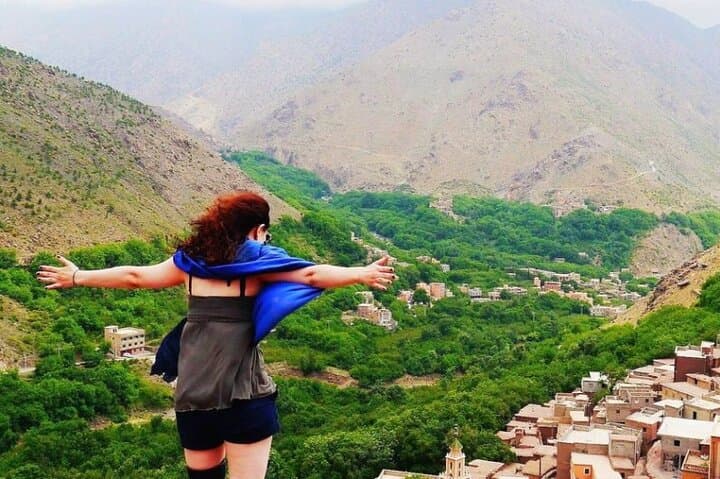
The route follows age-old shepherd paths between hamlets where Amazigh (Berber) life remains visible in terraced fields and mint tea rituals. Geologically the High Atlas is young and rugged: uplift from the African‑Eurasian collision folded volcanic and sedimentary rock into steep ridges that erode into dramatic gullies. The day trip blends a valley walk of easy to moderate sections with an optional short camel trek through lower juniper groves—an experience shaped by local transport, mountain guides, and a village lunch overlooking Imlil and the Imouzzer ridges.
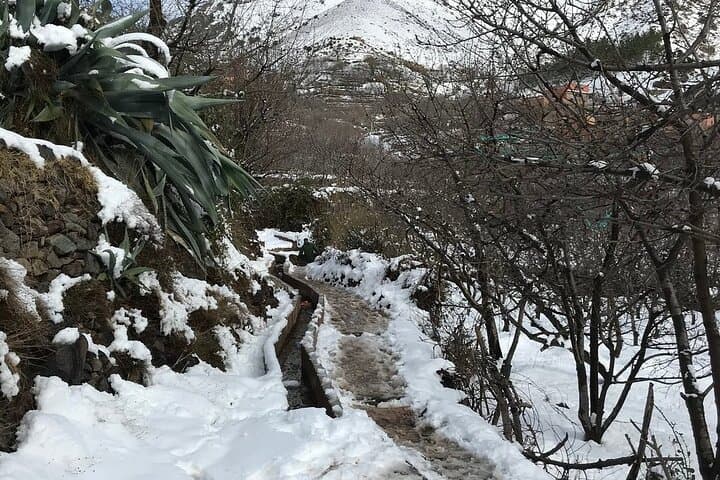
Expect village trails that alternate packed dirt, loose scree and short steep pitches; views reward the effort with long panoramas to Marrakech on clear days. Guides share cultural context—house construction, seasonal grazing—and pour sweet mint tea at stops.
Practical notes: this is a full 6–7 hour excursion from Marrakech with vehicle pickup, moderate fitness needed for uneven footing, and altitude changes up to 1,800–2,000 m depending on route. Wear sturdy boots, carry layers, sun protection and at least 1.5L water. Lunch and bottled water are included; cameras and cash for small purchases are useful. The itinerary suits families and fit walkers but adjust expectations if you choose the more challenging walk option.
moderate.
6–7 hours.
Suitable for travelers in regular aerobic shape who can hike on uneven terrain and ascend short steep sections; not for those with serious mobility limits.
Most operators provide hotel or riad pickup in an air-conditioned vehicle; confirm your pickup point and time when booking.
The short camel ride is family-friendly, but mounting and uneven surfaces can challenge very young children or those with mobility issues—check with your guide.
Options range from easy valley walks to more challenging ascents; the standard tour is moderate—expect uneven terrain and some steep pitches over several hours.
Yes—an experienced mountain guide, bottled water and a local lunch with tea are included in the tour price.
The High Atlas region has long been inhabited by Amazigh (Berber) communities whose terraced agriculture and stone villages reflect centuries of mountain adaptation.
Stick to established trails, avoid disturbing grazing areas and support local guides—sustainable visitation helps protect fragile soils and water sources.
Plan Trip Budget operates guided outdoor trips and adventures with an emphasis on safety, stewardship, and memorable experiences.
A cool Kasbah-lined dawn in Marrakech gives way to a winding road that climbs into the High Atlas, where juniper-scented air and stone-built Berber villages set the scene. By mid-morning the city noise fades; terraces and mule tracks appear, and the slope opens to a scrubby skyline with Toubkal—North Africa’s highest peak—looming sharp and stony to the south.
A cool Kasbah-lined dawn in Marrakech gives way to a winding road that climbs into the High Atlas, where juniper-scented air and stone-built Berber villages set the scene. By mid-morning the city noise fades; terraces and mule tracks appear, and the slope opens to a scrubby skyline with Toubkal—North Africa’s highest peak—looming sharp and stony to the south.
The route follows age-old shepherd paths between hamlets where Amazigh (Berber) life remains visible in terraced fields and mint tea rituals. Geologically the High Atlas is young and rugged: uplift from the African‑Eurasian collision folded volcanic and sedimentary rock into steep ridges that erode into dramatic gullies. The day trip blends a valley walk of easy to moderate sections with an optional short camel trek through lower juniper groves—an experience shaped by local transport, mountain guides, and a village lunch overlooking Imlil and the Imouzzer ridges.
Expect village trails that alternate packed dirt, loose scree and short steep pitches; views reward the effort with long panoramas to Marrakech on clear days. Guides share cultural context—house construction, seasonal grazing—and pour sweet mint tea at stops.
Practical notes: this is a full 6–7 hour excursion from Marrakech with vehicle pickup, moderate fitness needed for uneven footing, and altitude changes up to 1,800–2,000 m depending on route. Wear sturdy boots, carry layers, sun protection and at least 1.5L water. Lunch and bottled water are included; cameras and cash for small purchases are useful. The itinerary suits families and fit walkers but adjust expectations if you choose the more challenging walk option.