THE ADVENTURE COLLECTIVE® · Independent discovery and booking for outdoor travel

Make a long day of the High Atlas: cross Tizi n’Tichka, step into the UNESCO-listed ksar of Aït Ben Haddou and visit Ouarzazate’s kasbahs and studios. This full-day drive blends mountain roads, rocky valley approaches and easy walking through a living medieval site.
Make a long day of the High Atlas: cross Tizi n’Tichka, step into the UNESCO-listed ksar of Aït Ben Haddou and visit Ouarzazate’s kasbahs and studios. This full-day drive blends mountain roads, rocky valley approaches and easy walking through a living medieval site.
You leave Marrakech before dawn, the city’s ochre walls shrinking behind you as the road climbs into the High Atlas. The air thins; mountain villages appear on ridgelines like stacked clay models. At the Tizi n’Tichka pass (about 2,260 m) the landscape opens — wind-ruffled plateaus, ochre riverbeds and the distant red silhouette of Aït Ben Haddou daring you to draw closer.
Verified experiences and guided adventures in the surrounding area.
Operated by Morocco Daily Trip · Ait Ben Haddou, Drâa-Tafilalet
You leave Marrakech before dawn, the city’s ochre walls shrinking behind you as the road climbs into the High Atlas. The air thins; mountain villages appear on ridgelines like stacked clay models. At the Tizi n’Tichka pass (about 2,260 m) the landscape opens — wind-ruffled plateaus, ochre riverbeds and the distant red silhouette of Aït Ben Haddou daring you to draw closer.
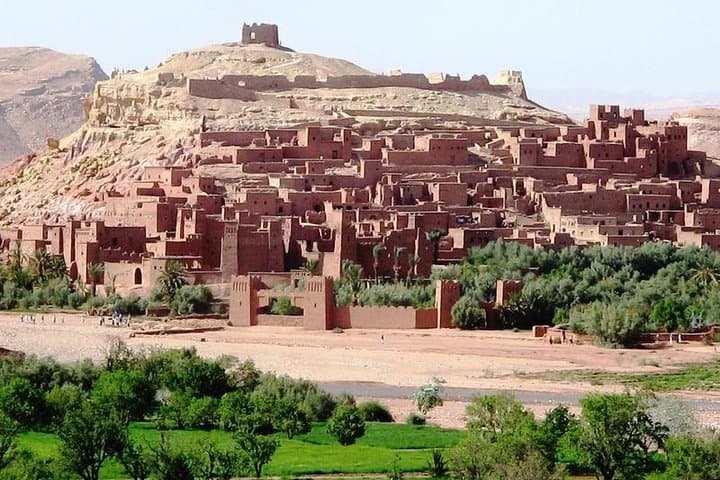
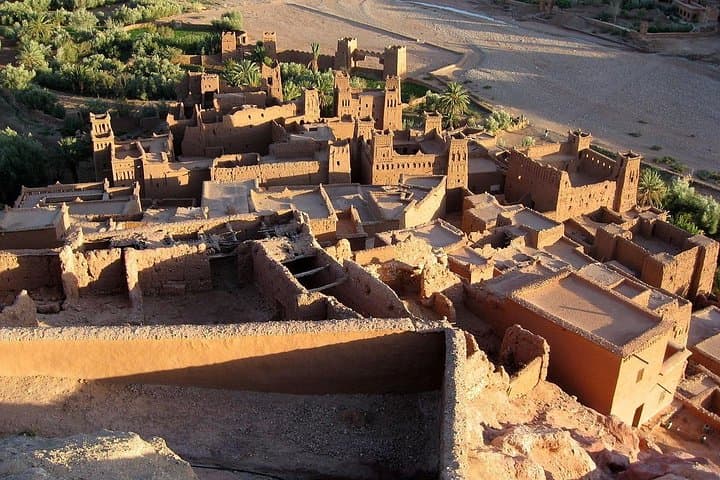
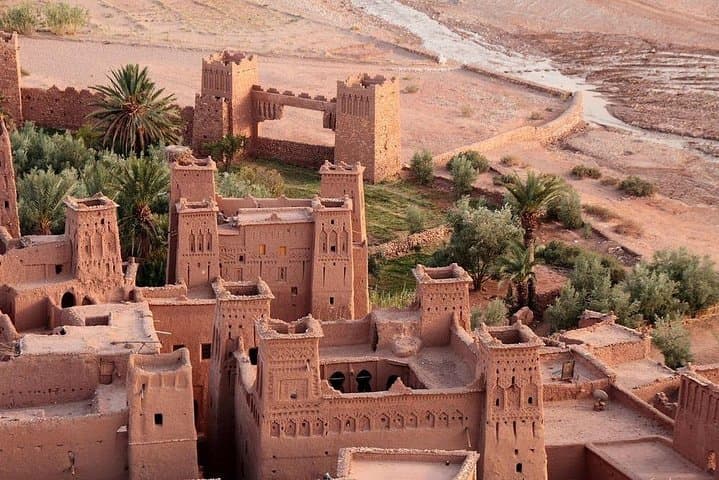
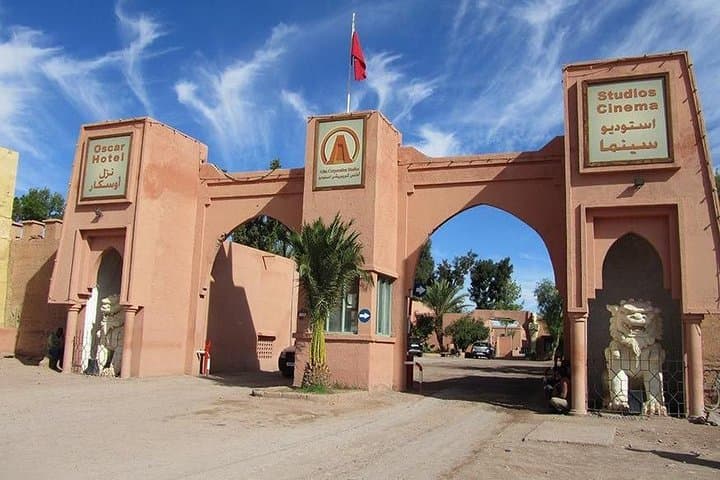
Aït Ben Haddou is a fortified ksar on the old caravan routes and a UNESCO World Heritage Site since 1987. Its earthen towers and narrow alleys reflect centuries of southern Moroccan architecture; nearby Ouarzazate grew in the 20th century as a desert filming hub, its Taourirt Kasbah and studios forming a modest cinematic economy. Geologically the region is a junction of High Atlas uplift and eroded alluvial fans; the Ounila Valley cuts a rocky line of salt and clay that gives the approach a raw, desert edge.
Practically, expect a long but accessible day: roughly 10–12 hours door-to-door with two to three short walks on uneven stone and a 4 km stretch of rocky off-road near the valley. Bring sturdy shoes for steep kasbah steps, sun protection for exposed stretches, and water for the arid middle-day. Lunch is typically in Aït Ben Haddou with local tagines and mint tea.
Timing matters — morning light on the kasbah reveals textures; late afternoon returns over the Tizi n’Tichka can be cold. The trip balances cultural immersion, cinematic scenery and straightforward logistics: a driven day of high passes, red earth and storied walls.
easy.
10–12 hours.
Suitable for most fitness levels; involves short periods of walking on uneven ground and steps.
Most tours do not include site entrance fees; check your booking details and have local currency available for any admissions or guide fees.
Expect about 3.5–4.5 hours each way depending on traffic and stops; the full day is typically 10–12 hours including visits.
No technical skills required — walks involve uneven stone, short stair climbs and a 4 km rocky off-road approach; comfortable shoes recommended.
Infants are allowed but must sit on an adult’s lap during transport; plan for shade and frequent hydration for young children.
Aït Ben Haddou grew as a fortified caravan settlement at the crossroads of trans-Saharan trade; its earthen architecture represents centuries of southern Moroccan building techniques.
UNESCO-led restorations balance tourism and habitation; visitors are asked to respect fragile earthen surfaces and avoid climbing unrepaired structures to limit erosion.
Morocco Daily Trip operates guided outdoor trips and adventures with an emphasis on safety, stewardship, and memorable experiences.
You leave Marrakech before dawn, the city’s ochre walls shrinking behind you as the road climbs into the High Atlas. The air thins; mountain villages appear on ridgelines like stacked clay models. At the Tizi n’Tichka pass (about 2,260 m) the landscape opens — wind-ruffled plateaus, ochre riverbeds and the distant red silhouette of Aït Ben Haddou daring you to draw closer.
You leave Marrakech before dawn, the city’s ochre walls shrinking behind you as the road climbs into the High Atlas. The air thins; mountain villages appear on ridgelines like stacked clay models. At the Tizi n’Tichka pass (about 2,260 m) the landscape opens — wind-ruffled plateaus, ochre riverbeds and the distant red silhouette of Aït Ben Haddou daring you to draw closer.
Aït Ben Haddou is a fortified ksar on the old caravan routes and a UNESCO World Heritage Site since 1987. Its earthen towers and narrow alleys reflect centuries of southern Moroccan architecture; nearby Ouarzazate grew in the 20th century as a desert filming hub, its Taourirt Kasbah and studios forming a modest cinematic economy. Geologically the region is a junction of High Atlas uplift and eroded alluvial fans; the Ounila Valley cuts a rocky line of salt and clay that gives the approach a raw, desert edge.
Practically, expect a long but accessible day: roughly 10–12 hours door-to-door with two to three short walks on uneven stone and a 4 km stretch of rocky off-road near the valley. Bring sturdy shoes for steep kasbah steps, sun protection for exposed stretches, and water for the arid middle-day. Lunch is typically in Aït Ben Haddou with local tagines and mint tea.
Timing matters — morning light on the kasbah reveals textures; late afternoon returns over the Tizi n’Tichka can be cold. The trip balances cultural immersion, cinematic scenery and straightforward logistics: a driven day of high passes, red earth and storied walls.