THE ADVENTURE COLLECTIVE® · Independent discovery and booking for outdoor travel

Spend a full day trading Marrakech’s bustle for the high ridges of the Atlas. This private trip blends a guided walk in Imlil Valley, local tea and lunch, and panoramic stops in Toubkal National Park.
Spend a full day trading Marrakech’s bustle for the high ridges of the Atlas. This private trip blends a guided walk in Imlil Valley, local tea and lunch, and panoramic stops in Toubkal National Park.
You roll away from Marrakech’s ochre walls and into a landscape that tightens and climbs: olive groves give way to terraced orchards, and the road threads through a market at Asni before opening onto the Gorges of Moulay for a first wide view of the High Atlas.
Verified experiences and guided adventures in the surrounding area.
Operated by Morocco Mountain Guides · Imlil, Marrakesh-Safi
You roll away from Marrakech’s ochre walls and into a landscape that tightens and climbs: olive groves give way to terraced orchards, and the road threads through a market at Asni before opening onto the Gorges of Moulay for a first wide view of the High Atlas.
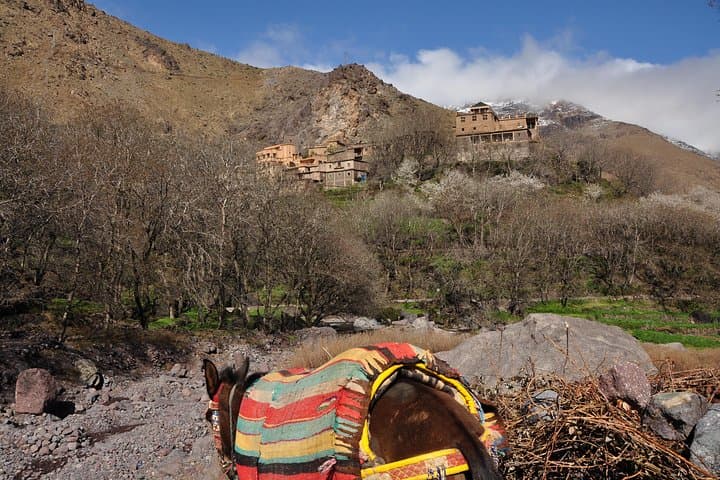
By midmorning the van drops you in Imlil Valley, a cluster of stone houses and mule tracks at roughly 1,740–1,860 m elevation, where a cup of mint tea is as routine as a map. This valley is the southern approach to Toubkal National Park — mountains shaped by the African and Eurasian plates, a mix of granite ridges, scree slopes and narrow river-cut valleys carved during glacial cycles.
The day walk follows orchard paths and mule tracks between villages, passing communal hammams and family-run rug cooperatives where Berber (Amazigh) traditions and agricultural rhythms remain central. You’ll see simple irrigation channels, walnut and apple terraces, and views that stretch to higher, craggy summits.
Expect a guided 3–6 km walk with roughly 200–400 m of elevation change, plenty of short, steep sections and uneven stone trails. Practicalities matter: sturdy footwear, sun protection, and 1–2 liters of water make the difference. Bring cash for cooperative visits and small tips, and allow time to acclimatize if you’ve come straight from lowland Marrakech.
The itinerary balances cultural contact—tea ceremonies, a local lunch and village visits—with manageable mountain time, returning to Marrakech in the evening after a full day of highland scenery and local hospitality.
moderate.
8 hours.
Requires a moderate level of fitness: comfortable walking on uneven ground, occasional short uphill sections, and stamina for several hours on foot.
The guided walk in Imlil Valley is typically 3–6 km with around 200–400 m of elevation change; the full experience is an 8-hour day including transfers and stops.
You’ll be around 1,700–1,900 m in the valley — most travelers won’t have issues, but those sensitive to altitude should take it easy and stay hydrated.
Lunch and tea are included according to the itinerary; small entry fees for local baths or optional cooperative purchases may require cash.
Guides commonly speak English and French; Berber (Amazigh) is spoken locally and translators or bilingual guides bridge cultural visits.
The High Atlas have been home to Amazigh (Berber) communities for millennia; many villages retain traditional irrigation and craft systems, including cooperative rug weaving.
Toubkal National Park is sensitive to erosion and water stress—stick to trails, minimize waste and support local cooperatives to channel tourism revenue into community conservation.
Morocco Mountain Guides operates guided outdoor trips and adventures with an emphasis on safety, stewardship, and memorable experiences.


You roll away from Marrakech’s ochre walls and into a landscape that tightens and climbs: olive groves give way to terraced orchards, and the road threads through a market at Asni before opening onto the Gorges of Moulay for a first wide view of the High Atlas.
You roll away from Marrakech’s ochre walls and into a landscape that tightens and climbs: olive groves give way to terraced orchards, and the road threads through a market at Asni before opening onto the Gorges of Moulay for a first wide view of the High Atlas.
By midmorning the van drops you in Imlil Valley, a cluster of stone houses and mule tracks at roughly 1,740–1,860 m elevation, where a cup of mint tea is as routine as a map. This valley is the southern approach to Toubkal National Park — mountains shaped by the African and Eurasian plates, a mix of granite ridges, scree slopes and narrow river-cut valleys carved during glacial cycles.
The day walk follows orchard paths and mule tracks between villages, passing communal hammams and family-run rug cooperatives where Berber (Amazigh) traditions and agricultural rhythms remain central. You’ll see simple irrigation channels, walnut and apple terraces, and views that stretch to higher, craggy summits.
Expect a guided 3–6 km walk with roughly 200–400 m of elevation change, plenty of short, steep sections and uneven stone trails. Practicalities matter: sturdy footwear, sun protection, and 1–2 liters of water make the difference. Bring cash for cooperative visits and small tips, and allow time to acclimatize if you’ve come straight from lowland Marrakech.
The itinerary balances cultural contact—tea ceremonies, a local lunch and village visits—with manageable mountain time, returning to Marrakech in the evening after a full day of highland scenery and local hospitality.