THE ADVENTURE COLLECTIVE® · Independent discovery and booking for outdoor travel

Three days of mountain biking from Marrakech into the High Atlas, linking Berber villages, high passes and singletrack descents. Ideal for riders with moderate fitness who want cultural contact and mountain terrain.
Three days of mountain biking from Marrakech into the High Atlas, linking Berber villages, high passes and singletrack descents. Ideal for riders with moderate fitness who want cultural contact and mountain terrain.
On the road out of Marrakech the city noise thins and the Atlas presses closer—stone houses step up the slopes, terraces cut into red earth, and snow-bright summits of Toubkal (4,167 m) watch the valley. By midmorning riders meet their bikes in Imlil and push toward Tizi n’Tamatert (≈2,280 m), a pass that opens long views over the Ait Mizane valley and the beehive clusters of Berber villages.
Verified experiences and guided adventures in the surrounding area.
Operated by Biking in Morocco day tours · Imlil, Marrakesh-Safi
On the road out of Marrakech the city noise thins and the Atlas presses closer—stone houses step up the slopes, terraces cut into red earth, and snow-bright summits of Toubkal (4,167 m) watch the valley. By midmorning riders meet their bikes in Imlil and push toward Tizi n’Tamatert (≈2,280 m), a pass that opens long views over the Ait Mizane valley and the beehive clusters of Berber villages.
The High Atlas is young in geological terms: uplifted by the collision of African and Eurasian plates, its ridges are raw, steep and carved by quick streams. Cultural history runs alongside the tracks—Amazigh (Berber) families have farmed these terraces for centuries, and mule tracks remain the backbone of local travel. Lodges and family-run guesthouses in Imsker and Asni offer simple, reliable hospitality and tagines that reset effort-worn legs.
Expect mixed terrain: paved valley roads, compact dirt tracks, rocky singletrack and fast descents. Elevation ranges roughly from 1,000–2,280 m over the three days; daily rides typically cover 25–45 km with 600–900 m of climbing on the harder days. Ride times in the itinerary run 5–7 hours including breaks.
Practical tips: carry 2–3 L of water, a well-fitting helmet and a tube/CO2 or pump for on-trail repairs. Start early to avoid heat on southern slopes, and leave room in your pack for a wind layer—the weather can shift quickly. Respect grazing livestock, support village businesses, and ride conservatively on technical descents.
moderate.
3 days (5–7 hours riding per day).
Good aerobic base and comfort with sustained climbs and technical descents; regular cyclists will find it manageable.
No — the operator provides a modern bike fleet for rental; you can request sizing and type when booking.
Moderate fitness is required: expect multiple hours of climbing and technical riding each day—regular cyclists or those who train on hills will be comfortable.
Rides reach ~2,280 m; most riders acclimatize fine but monitor for mild symptoms (headache, fatigue) and hydrate; notify guides of any concerns.
Simple guesthouses and Berber lodges are used—basic but comfortable, with communal meals and hot water typically available.
The High Atlas has long been inhabited by Amazigh (Berber) communities whose terraced farming and mule trails shaped trade and travel through the mountains.
Trails are vulnerable to erosion; stick to existing tracks, avoid shortcutting switchbacks, and support village economies to keep tourism sustainable.
Biking in Morocco day tours operates guided outdoor trips and adventures with an emphasis on safety, stewardship, and memorable experiences.
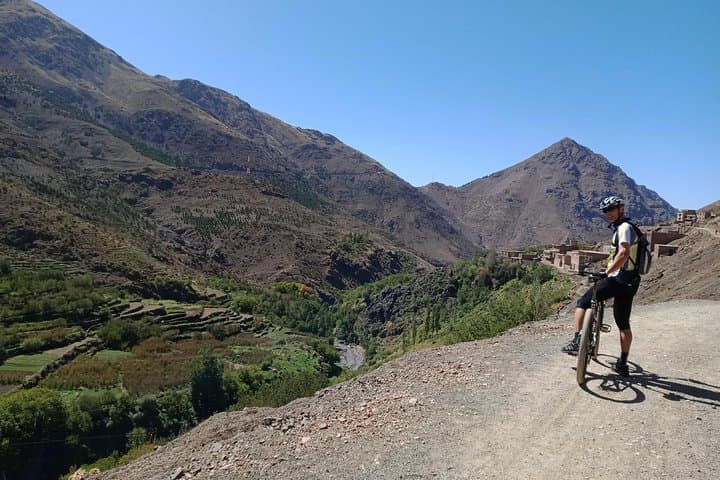
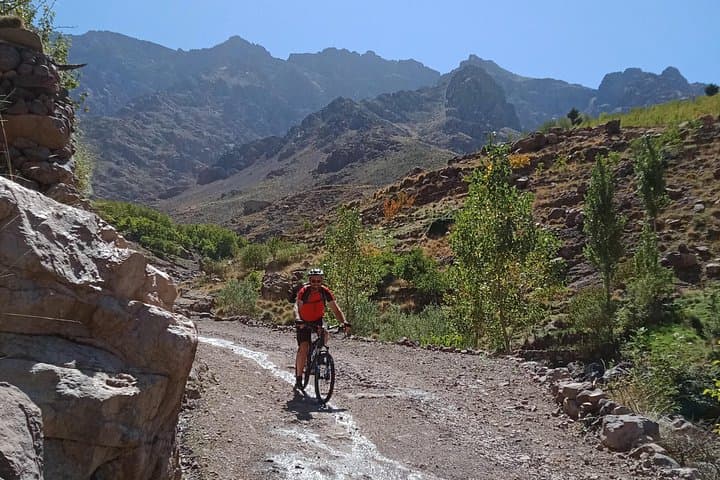
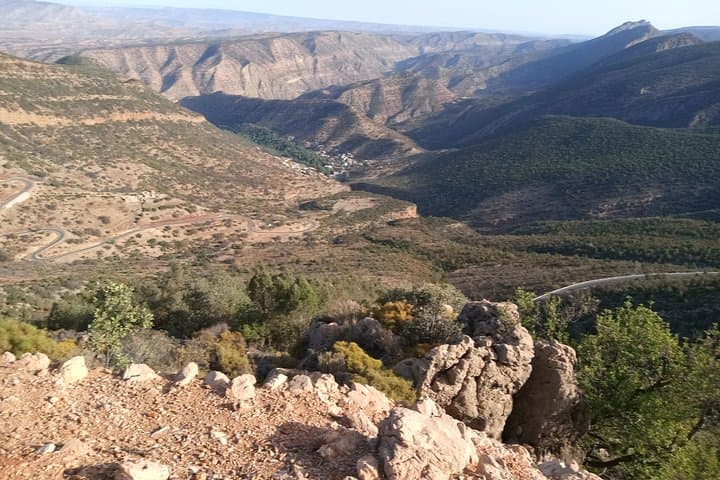
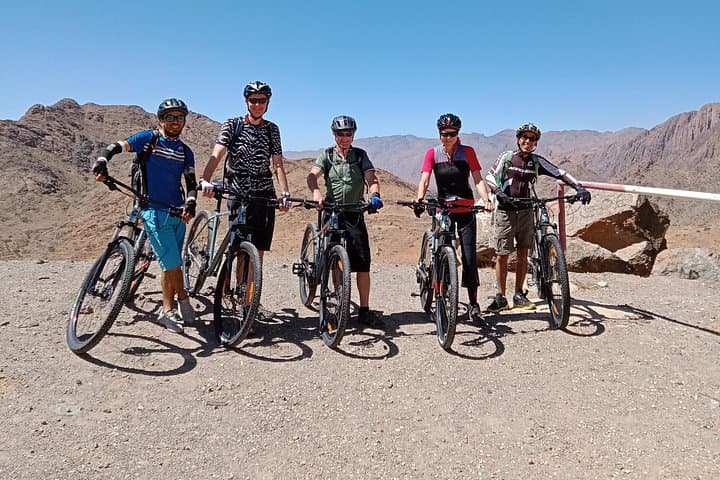
On the road out of Marrakech the city noise thins and the Atlas presses closer—stone houses step up the slopes, terraces cut into red earth, and snow-bright summits of Toubkal (4,167 m) watch the valley. By midmorning riders meet their bikes in Imlil and push toward Tizi n’Tamatert (≈2,280 m), a pass that opens long views over the Ait Mizane valley and the beehive clusters of Berber villages.
On the road out of Marrakech the city noise thins and the Atlas presses closer—stone houses step up the slopes, terraces cut into red earth, and snow-bright summits of Toubkal (4,167 m) watch the valley. By midmorning riders meet their bikes in Imlil and push toward Tizi n’Tamatert (≈2,280 m), a pass that opens long views over the Ait Mizane valley and the beehive clusters of Berber villages.
The High Atlas is young in geological terms: uplifted by the collision of African and Eurasian plates, its ridges are raw, steep and carved by quick streams. Cultural history runs alongside the tracks—Amazigh (Berber) families have farmed these terraces for centuries, and mule tracks remain the backbone of local travel. Lodges and family-run guesthouses in Imsker and Asni offer simple, reliable hospitality and tagines that reset effort-worn legs.
Expect mixed terrain: paved valley roads, compact dirt tracks, rocky singletrack and fast descents. Elevation ranges roughly from 1,000–2,280 m over the three days; daily rides typically cover 25–45 km with 600–900 m of climbing on the harder days. Ride times in the itinerary run 5–7 hours including breaks.
Practical tips: carry 2–3 L of water, a well-fitting helmet and a tube/CO2 or pump for on-trail repairs. Start early to avoid heat on southern slopes, and leave room in your pack for a wind layer—the weather can shift quickly. Respect grazing livestock, support village businesses, and ride conservatively on technical descents.