THE ADVENTURE COLLECTIVE® · Independent discovery and booking for outdoor travel

Experience high-Andean birding on an 8-hour tour from Cuenca through the lakes and paramo of El Cajas. Expect endemic hummingbirds, Polylepis pockets, and a bilingual guide with a local bird list.
Experience high-Andean birding on an 8-hour tour from Cuenca through the lakes and paramo of El Cajas. Expect endemic hummingbirds, Polylepis pockets, and a bilingual guide with a local bird list.
A chill wind pushes across the paramo as you step from the van onto a high plateau at roughly 3,800 m. Light splinters off small lagoons; the air is thin and bright, and every call seems closer because there are fewer sounds to drown it out. Guides unpack spotting scopes while the Polylepis trees stand like weathered sentries above the trail.
Verified experiences and guided adventures in the surrounding area.
Operated by Polylepis Tours · Cuenca, Azuay
A chill wind pushes across the paramo as you step from the van onto a high plateau at roughly 3,800 m. Light splinters off small lagoons; the air is thin and bright, and every call seems closer because there are fewer sounds to drown it out. Guides unpack spotting scopes while the Polylepis trees stand like weathered sentries above the trail.
El Cajas National Park sits on a high Andean plateau west of Cuenca, carved by glaciers into more than 200 lagoons and a patchwork of ecosystems: paramo grasslands, cloud forest, and fragile Polylepis pockets. The park’s geology—glacially scoured basins and rocky ridgelines—creates microhabitats that support species found nowhere else, including the endemic Violet-throated Metaltail.
Local culture around Cuenca has long linked to highland grazing and artisanal markets; park access was formalized to protect water supplies that feed downstream communities. Modern guides combine that cultural knowledge with bird-list discipline: you’ll get a bilingual guide, a regional bird list, and, if requested, binoculars.
Practical edges: expect an 8-hour loop with hotel pickup and drop-off in Cuenca, alternating short walks and roadside scopes across 3,200–3,800 m elevations. Dress in warm, windproof layers, bring sun protection and water, and pace yourself to mitigate altitude effects. Trails vary from flat grassy tundra to uneven forest tracks—footing can be slick after rain. With patience and focused listening, the park rewards observers with hummingbirds, toucans, antpittas and highland specialties that make the ascent worth every breath.
moderate.
8 hours.
Moderate cardiovascular fitness recommended due to sustained high elevation and several short hikes; walkers should handle uneven terrain.
The tour is approximately 8 hours and includes hotel pickup and drop-off from Cuenca, a bilingual guide, box lunch, private transportation and a local bird list.
Minimum age is 12; the tour is not recommended for those with serious cardiovascular conditions due to high altitude and possible exertion.
The Violet-throated Metaltail is endemic to the region and commonly targeted on this route, but sightings cannot be guaranteed—patience and good conditions improve chances.
Binoculars can be provided if requested in advance—notify the operator when booking to secure a pair.
The park was established to protect highland watersheds and unique Andean habitats; indigenous and local communities historically used surrounding highlands for grazing and peat extraction.
El Cajas is a crucial water source for Cuenca and conservation focuses on limiting grazing pressure, protecting Polylepis stands, and controlling invasive species to preserve avian habitat.
Polylepis Tours operates guided outdoor trips and adventures with an emphasis on safety, stewardship, and memorable experiences.


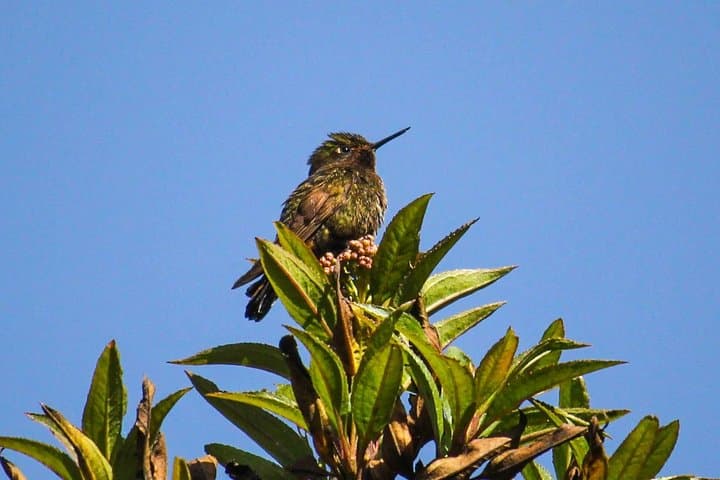

A chill wind pushes across the paramo as you step from the van onto a high plateau at roughly 3,800 m. Light splinters off small lagoons; the air is thin and bright, and every call seems closer because there are fewer sounds to drown it out. Guides unpack spotting scopes while the Polylepis trees stand like weathered sentries above the trail.
A chill wind pushes across the paramo as you step from the van onto a high plateau at roughly 3,800 m. Light splinters off small lagoons; the air is thin and bright, and every call seems closer because there are fewer sounds to drown it out. Guides unpack spotting scopes while the Polylepis trees stand like weathered sentries above the trail.
El Cajas National Park sits on a high Andean plateau west of Cuenca, carved by glaciers into more than 200 lagoons and a patchwork of ecosystems: paramo grasslands, cloud forest, and fragile Polylepis pockets. The park’s geology—glacially scoured basins and rocky ridgelines—creates microhabitats that support species found nowhere else, including the endemic Violet-throated Metaltail.
Local culture around Cuenca has long linked to highland grazing and artisanal markets; park access was formalized to protect water supplies that feed downstream communities. Modern guides combine that cultural knowledge with bird-list discipline: you’ll get a bilingual guide, a regional bird list, and, if requested, binoculars.
Practical edges: expect an 8-hour loop with hotel pickup and drop-off in Cuenca, alternating short walks and roadside scopes across 3,200–3,800 m elevations. Dress in warm, windproof layers, bring sun protection and water, and pace yourself to mitigate altitude effects. Trails vary from flat grassy tundra to uneven forest tracks—footing can be slick after rain. With patience and focused listening, the park rewards observers with hummingbirds, toucans, antpittas and highland specialties that make the ascent worth every breath.