THE ADVENTURE COLLECTIVE® · Independent discovery and booking for outdoor travel

Launch off a platform above Inca terraces and feel the Sacred Valley slide beneath you. The Chinchero ziplines pack six runs into a high-altitude, culturally rich outing that pairs adrenaline with sweeping Andean views.
Launch off a platform above Inca terraces and feel the Sacred Valley slide beneath you. The Chinchero ziplines pack six runs into a high-altitude, culturally rich outing that pairs adrenaline with sweeping Andean views.
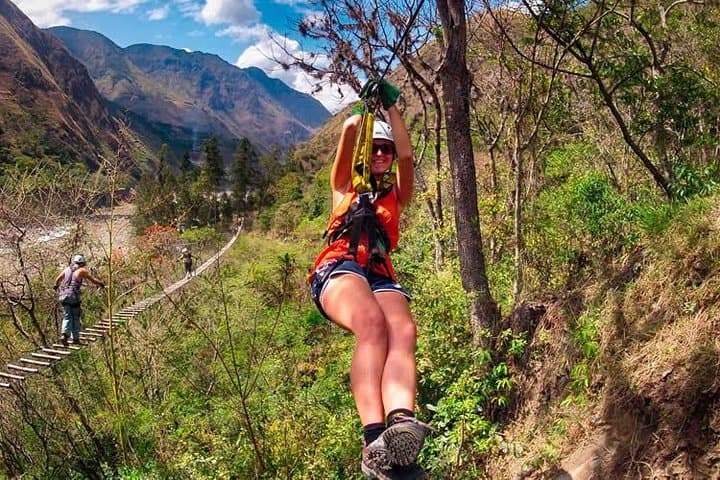
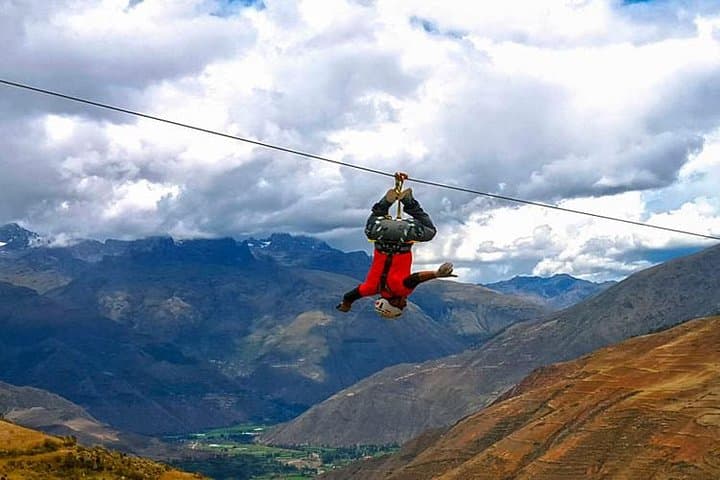
You clip in at a wooden platform, the Andes catching the early light like a line drawn across the sky. Cold mountain air pushes at your face while the valley below seems to breathe — terraces stepping down toward distant rivers, stone walls mended by hands that predate the conquistadors. From the first run on the Chinchero ziplines you feel the landscape working on you: wind that wants you to go faster, ridge-lines that dare you to look down.
Verified experiences and guided adventures in the surrounding area.
Operated by P'isaqa Trek Adventure · Chinchero, Cusco
You clip in at a wooden platform, the Andes catching the early light like a line drawn across the sky. Cold mountain air pushes at your face while the valley below seems to breathe — terraces stepping down toward distant rivers, stone walls mended by hands that predate the conquistadors. From the first run on the Chinchero ziplines you feel the landscape working on you: wind that wants you to go faster, ridge-lines that dare you to look down.
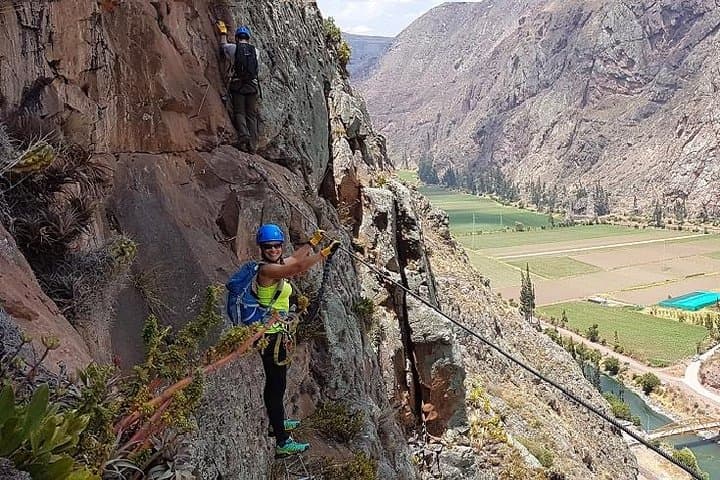
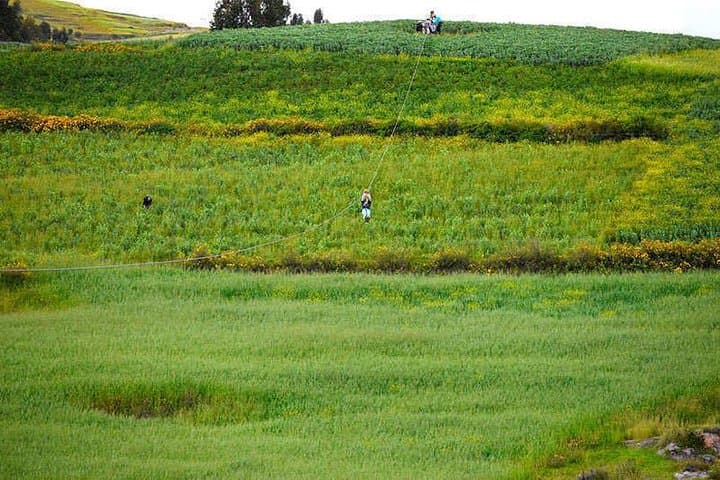
This is not a theme-park rush. The course sits above the high-altitude fields around Chinchero, a short drive from Cusco, in the heart of the Sacred Valley of the Incas. Chinchero itself was an important Inca royal estate and remains a living place of Andean agriculture and textile craft. Geologically, you’re riding along folds of uplifted volcanic rock and terraced soils carved for centuries into steep slopes. The ziplines — six lines arranged across varying lengths and heights — offer a physics lesson in gravity and perspective: the longest runs stretch you out over terraces and pasture, the shortest deliver an immediate, chest-tight thrill.
Locals run the operation; guides are trained in standard safety protocols and fit riders with harnesses, helmets, and dual braking systems. Cultural color is never far away — you’ll pass fields where women in woven hats tend llamas and alpacas, and the town’s textile cooperative sits within view, its bright dyes a visual counterpoint to the mountain stone.
Practically: the full activity is about 3.5 hours including round-trip transportation from Cusco (roughly 35–40 minutes each way). It’s suitable for anyone in moderate shape with no serious back, heart, or pregnancy-related restrictions. Expect short walks between platforms on uneven ground and several moments of weightlessness as you move from tower to tower. Helmets and harnesses are provided.
Timing matters. Mid-morning reduces the chances of gusty thermals and gives clearer views; afternoons can bring brief showers during the wet season (December–March). Wear closed-toe shoes with grip, a windproof layer, and sunscreen — at 3,700–3,900 meters altitude the sun is sharper and weather shifts fast. If you’re prone to altitude effects, spend a day in Cusco before heading out and hydrate steadily.
Beyond the adrenaline, the zipline is a tidy way to see the Sacred Valley’s scale: agricultural engineering, living textile traditions, and the Andean skyline all make cameo appearances during the runs. Guides will share local history and point out terraces and colonial ruins on the descent back to the meeting point.
If you go: book a morning slot, tell the operator about any health issues ahead of time, and bring a small daypack with water, layered clothing, and a phone or small camera secured on a tether for action shots. The zipline is fast, clean, and focused on giving you a precise, mountain-shaped thrill without compromising the landscape that makes it possible.
moderate.
3–4 hours.
Moderate fitness: comfortable walking on uneven ground and handling short bursts of exertion at high altitude
The total experience is about 3.5 hours (210 minutes), including round-trip transport from Cusco and time for gearing and instruction.
Limits vary by operator; most require riders to be at least 10–12 years old and enforce a weight range for safety—confirm during booking.
Yes — helmets, harnesses, and safety lines are provided and guides manage all clipping/unclipping procedures.
Acclimatize in Cusco for a day or two before the activity, hydrate well, and inform staff if you feel unwell; the operator will advise or deny participation if necessary.
Round-trip transportation from Cusco is typically included; pickup logistics are arranged at booking and may require early pickup times.
Yes, but cameras must be secured with a tether; some operators restrict loose items for safety reasons.
Chinchero was an important Inca royal estate and remains a center for traditional weaving—many terraces and stonework visible from the lines date to pre-Columbian land use.
Operators emphasize minimal impact practices: fixed platforms, defined walking routes, and local-hire guides help protect fragile highland soils and cultural sites.
P'isaqa Trek Adventure operates guided outdoor trips and adventures with an emphasis on safety, stewardship, and memorable experiences.
You clip in at a wooden platform, the Andes catching the early light like a line drawn across the sky. Cold mountain air pushes at your face while the valley below seems to breathe — terraces stepping down toward distant rivers, stone walls mended by hands that predate the conquistadors. From the first run on the Chinchero ziplines you feel the landscape working on you: wind that wants you to go faster, ridge-lines that dare you to look down.
You clip in at a wooden platform, the Andes catching the early light like a line drawn across the sky. Cold mountain air pushes at your face while the valley below seems to breathe — terraces stepping down toward distant rivers, stone walls mended by hands that predate the conquistadors. From the first run on the Chinchero ziplines you feel the landscape working on you: wind that wants you to go faster, ridge-lines that dare you to look down.
This is not a theme-park rush. The course sits above the high-altitude fields around Chinchero, a short drive from Cusco, in the heart of the Sacred Valley of the Incas. Chinchero itself was an important Inca royal estate and remains a living place of Andean agriculture and textile craft. Geologically, you’re riding along folds of uplifted volcanic rock and terraced soils carved for centuries into steep slopes. The ziplines — six lines arranged across varying lengths and heights — offer a physics lesson in gravity and perspective: the longest runs stretch you out over terraces and pasture, the shortest deliver an immediate, chest-tight thrill.
Locals run the operation; guides are trained in standard safety protocols and fit riders with harnesses, helmets, and dual braking systems. Cultural color is never far away — you’ll pass fields where women in woven hats tend llamas and alpacas, and the town’s textile cooperative sits within view, its bright dyes a visual counterpoint to the mountain stone.
Practically: the full activity is about 3.5 hours including round-trip transportation from Cusco (roughly 35–40 minutes each way). It’s suitable for anyone in moderate shape with no serious back, heart, or pregnancy-related restrictions. Expect short walks between platforms on uneven ground and several moments of weightlessness as you move from tower to tower. Helmets and harnesses are provided.
Timing matters. Mid-morning reduces the chances of gusty thermals and gives clearer views; afternoons can bring brief showers during the wet season (December–March). Wear closed-toe shoes with grip, a windproof layer, and sunscreen — at 3,700–3,900 meters altitude the sun is sharper and weather shifts fast. If you’re prone to altitude effects, spend a day in Cusco before heading out and hydrate steadily.
Beyond the adrenaline, the zipline is a tidy way to see the Sacred Valley’s scale: agricultural engineering, living textile traditions, and the Andean skyline all make cameo appearances during the runs. Guides will share local history and point out terraces and colonial ruins on the descent back to the meeting point.
If you go: book a morning slot, tell the operator about any health issues ahead of time, and bring a small daypack with water, layered clothing, and a phone or small camera secured on a tether for action shots. The zipline is fast, clean, and focused on giving you a precise, mountain-shaped thrill without compromising the landscape that makes it possible.