THE ADVENTURE COLLECTIVE® · Independent discovery and booking for outdoor travel

A full-day loop from Oaxaca City that pairs the petrified cliffs and thermal pools of Hierve el Agua with Mitla’s stone mosaics, Teotitlán del Valle weaving demonstrations and an artisan mezcal tasting. Expect light walking, cultural immersion, and photogenic viewpoints.
A full-day loop from Oaxaca City that pairs the petrified cliffs and thermal pools of Hierve el Agua with Mitla’s stone mosaics, Teotitlán del Valle weaving demonstrations and an artisan mezcal tasting. Expect light walking, cultural immersion, and photogenic viewpoints.
Morning light strips the city’s heat as your minivan eases onto highland ruts, and by midmorning the landscape opens: a scrubby, limestone range where mineral-rich springs have been forced over cliff edges for millennia. At Hierve el Agua the cliffs sit like frozen waves—white carbonate curtains over the valley—and shallow, warm pools offer a shock of turquoise against sunbaked stone.
Verified experiences and guided adventures in the surrounding area.
Operated by Encuentro T · Oaxaca de Juárez, Oaxaca
Morning light strips the city’s heat as your minivan eases onto highland ruts, and by midmorning the landscape opens: a scrubby, limestone range where mineral-rich springs have been forced over cliff edges for millennia. At Hierve el Agua the cliffs sit like frozen waves—white carbonate curtains over the valley—and shallow, warm pools offer a shock of turquoise against sunbaked stone.
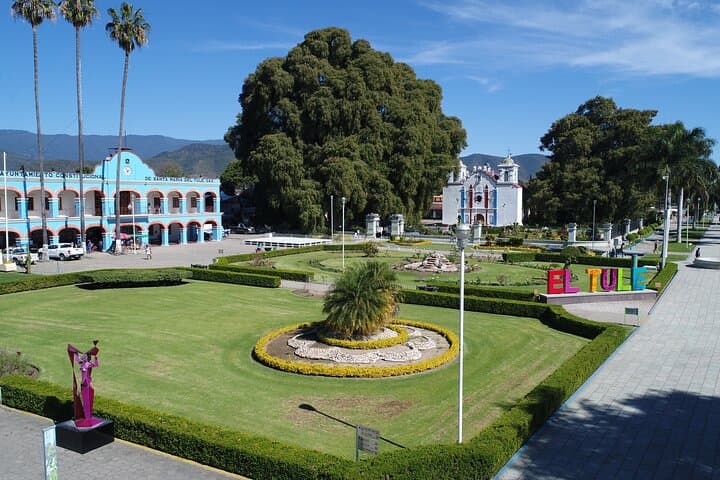
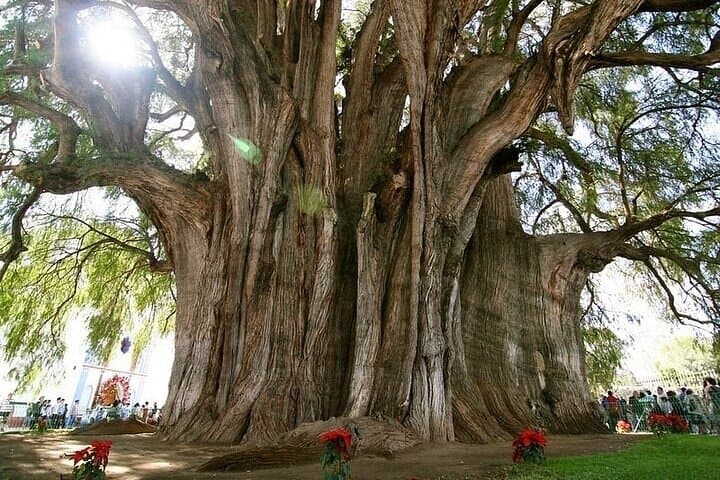
The day moves fast: a stop at the 2,000-year-old Árbol del Tule introduces Zapotec reverence for landmark trees, then Mitla’s geometric friezes recall pre-Hispanic funerary practices—its name meaning “place of the dead.” Geologically, Hierve’s “falls” formed when spring water deposited travertine over time; culturally, nearby villages like Teotitlán del Valle maintain centuries-old loom and dye traditions using cochineal and indigo. A local mezcal palenque on the route explains artisanal distillation and offers a tempered tasting.
Practical side: expect a full 9–10 hour day with 30–60 minutes of gentle walking at each stop; pools at Hierve el Agua require short uneven trails and loose gravel. Bring cash for small purchases and park fees, sun protection and at least 1.5 liters of water. Wear sturdy shoes with traction and a lightweight layer for breezy highland afternoons. If visiting in the rainy season, allocate extra time for dirt roads and bring a rain shell. Responsible travelers should avoid climbing the travertine formations and support local artisans by buying directly from workshops.
This itinerary blends easy cultural stops with a short, scenic walk into some of Oaxaca’s most elemental landscapes. Bring patience, curiosity, always.
moderate.
9–10 hours.
Suitable for anyone with basic mobility; be prepared for a full day of sitting, short walks, and brief uneven terrain.
Yes, there are shallow warm pools used by visitors, but access is via short rocky trails and some pools have limited space—swim at your own risk and follow local guidance.
The tour includes guide and transport; entrance to Hierve el Agua and specific tasting purchases at a mezcal palenque may require a small additional fee or cash purchase—confirm with the operator.
Pickups are offered from hotels and Airbnbs in Oaxaca downtown; exact pickup time is confirmed beforehand and can vary by location.
The itinerary is family-friendly but involves walking on uneven ground at Hierve el Agua and steps at archaeological sites—children should be supervised and those with mobility limits should notify the operator prior to booking.
Mitla was an important Zapotec ceremonial center; Mitla’s intricate stone mosaics reflect indigenous funerary architecture. The Árbol del Tule is an ahuehuete estimated over 2,000 years old and central to local identity.
The travertine formations are fragile—avoid walking on the deposits, pack out trash, and choose vendors who follow sustainable harvest and distillation practices.
Encuentro T operates guided outdoor trips and adventures with an emphasis on safety, stewardship, and memorable experiences.
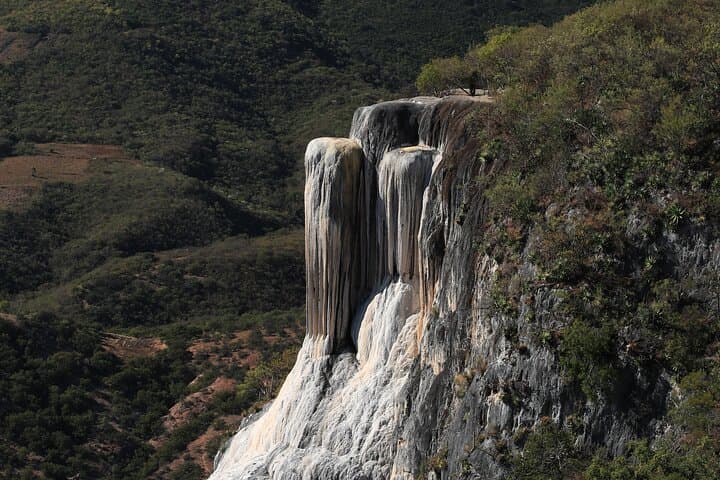
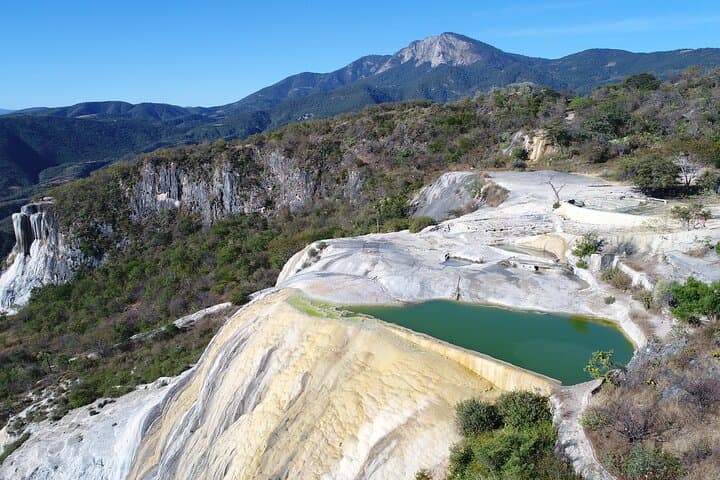
Morning light strips the city’s heat as your minivan eases onto highland ruts, and by midmorning the landscape opens: a scrubby, limestone range where mineral-rich springs have been forced over cliff edges for millennia. At Hierve el Agua the cliffs sit like frozen waves—white carbonate curtains over the valley—and shallow, warm pools offer a shock of turquoise against sunbaked stone.
Morning light strips the city’s heat as your minivan eases onto highland ruts, and by midmorning the landscape opens: a scrubby, limestone range where mineral-rich springs have been forced over cliff edges for millennia. At Hierve el Agua the cliffs sit like frozen waves—white carbonate curtains over the valley—and shallow, warm pools offer a shock of turquoise against sunbaked stone.
The day moves fast: a stop at the 2,000-year-old Árbol del Tule introduces Zapotec reverence for landmark trees, then Mitla’s geometric friezes recall pre-Hispanic funerary practices—its name meaning “place of the dead.” Geologically, Hierve’s “falls” formed when spring water deposited travertine over time; culturally, nearby villages like Teotitlán del Valle maintain centuries-old loom and dye traditions using cochineal and indigo. A local mezcal palenque on the route explains artisanal distillation and offers a tempered tasting.
Practical side: expect a full 9–10 hour day with 30–60 minutes of gentle walking at each stop; pools at Hierve el Agua require short uneven trails and loose gravel. Bring cash for small purchases and park fees, sun protection and at least 1.5 liters of water. Wear sturdy shoes with traction and a lightweight layer for breezy highland afternoons. If visiting in the rainy season, allocate extra time for dirt roads and bring a rain shell. Responsible travelers should avoid climbing the travertine formations and support local artisans by buying directly from workshops.
This itinerary blends easy cultural stops with a short, scenic walk into some of Oaxaca’s most elemental landscapes. Bring patience, curiosity, always.