THE ADVENTURE COLLECTIVE® · Independent discovery and booking for outdoor travel

Descend into Moorgate’s forgotten corridors on an 80‑minute guided walk through Victorian tiles, abandoned tracks and the Barbican catacombs. Ideal for history and rail enthusiasts, this tour reveals how London’s subterranean network evolved from the 19th century to today.
Descend into Moorgate’s forgotten corridors on an 80‑minute guided walk through Victorian tiles, abandoned tracks and the Barbican catacombs. Ideal for history and rail enthusiasts, this tour reveals how London’s subterranean network evolved from the 19th century to today.
You step off the pavement into the hush of Moorgate and the city’s surface noise seems to tilt away as the guide opens a heavy door. For the next 80 minutes the tour threads through corridors that resisted redevelopment: tiled passenger ways from 1865, poster fragments clinging to curved walls, and the silent sweep of unused tracks on the City Widened Line.
Verified experiences and guided adventures in the surrounding area.
Operated by London Transport Museum · London, Greater London
You step off the pavement into the hush of Moorgate and the city’s surface noise seems to tilt away as the guide opens a heavy door. For the next 80 minutes the tour threads through corridors that resisted redevelopment: tiled passenger ways from 1865, poster fragments clinging to curved walls, and the silent sweep of unused tracks on the City Widened Line.
Moorgate has always been a junction between eras. Opened as Moorgate Street in 1865 and later connected to the City and South London Railway (the world’s first deep tube, 1890), the station shows Victorian engineering grafted onto 20th‑century freight ramparts. Beneath the Barbican, the so‑called catacombs reveal how changing freight and passenger priorities reshaped inner‑London railways.
Geology and brickwork speak quietly here — London Clay enabled deep tunneling but also produces narrow, intimate passageways lined in glazed tiles. Culturally, these spaces chart the capital’s shift from steam and goods to electric commuters and urban renewal.
Practical guidance: expect uneven surfaces, low lighting and staircases — the tour is not step‑free. Photo ID is required, open‑toed shoes are forbidden and large bags are discouraged. Wear sturdy, closed shoes, bring a small torch if you prefer extra light, and use public transport to arrive; the meeting point is easy to reach by Tube.
The experience suits history and rail enthusiasts who appreciate compact, layered stories told in tight spaces — an urban archaeology walk that rewards attention to detail and a steady pair of feet.
moderate.
1–1.5 hours.
Moderate; guests should be comfortable walking, climbing stairs, and moving through low‑lit, uneven spaces.
No — the route includes stairs and is not step‑free; it is not suitable for wheelchair users.
Children under 10 are not permitted; there is a limit of four children (ages 10–15) per accompanying adult.
Photography is generally permitted, but follow the guide’s directions; flash or tripods may be restricted in certain areas.
No — food and drinks are not allowed, and large bags or luggage must be left behind as there is no cloakroom.
Moorgate opened in 1865 as part of the Metropolitan extension; later connections include the City and South London Railway (1890), making it a focal point in early deep‑tube development.
These tours encourage preservation by spotlighting disused spaces; visitors should stick to paths, avoid touching fragile tiling and report graffiti to help protect historic fabric.
London Transport Museum operates guided outdoor trips and adventures with an emphasis on safety, stewardship, and memorable experiences.
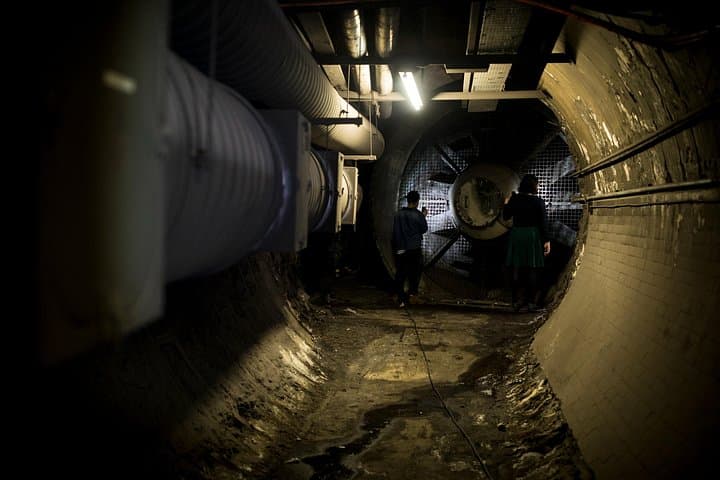
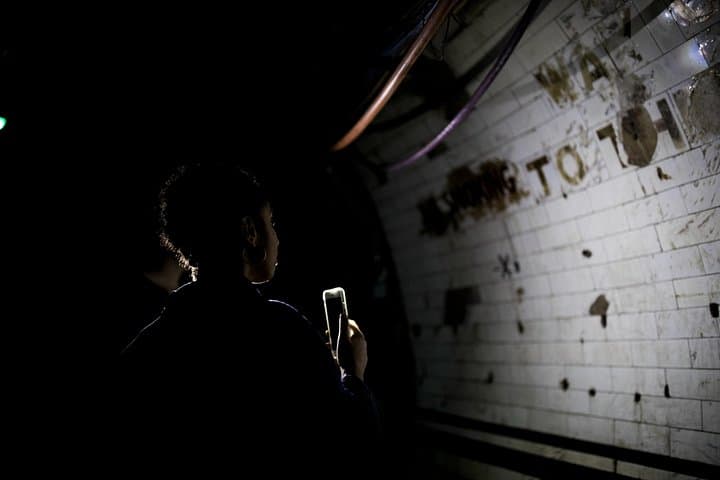
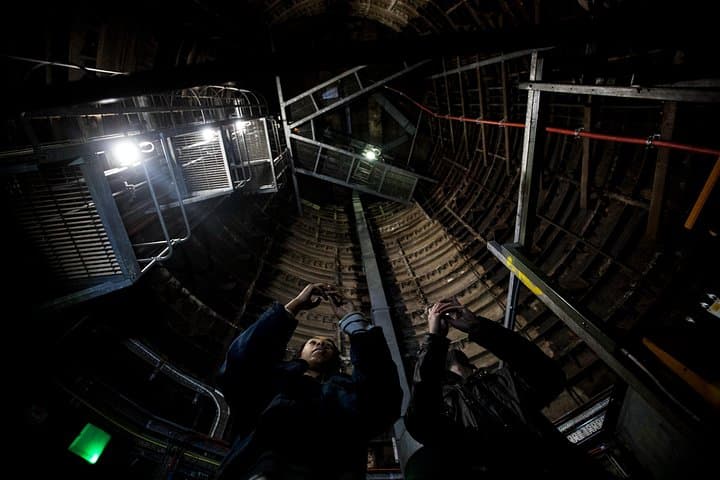
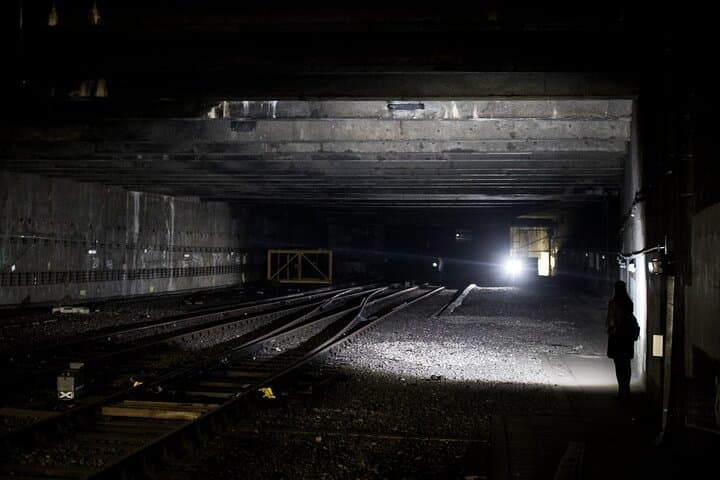
You step off the pavement into the hush of Moorgate and the city’s surface noise seems to tilt away as the guide opens a heavy door. For the next 80 minutes the tour threads through corridors that resisted redevelopment: tiled passenger ways from 1865, poster fragments clinging to curved walls, and the silent sweep of unused tracks on the City Widened Line.
You step off the pavement into the hush of Moorgate and the city’s surface noise seems to tilt away as the guide opens a heavy door. For the next 80 minutes the tour threads through corridors that resisted redevelopment: tiled passenger ways from 1865, poster fragments clinging to curved walls, and the silent sweep of unused tracks on the City Widened Line.
Moorgate has always been a junction between eras. Opened as Moorgate Street in 1865 and later connected to the City and South London Railway (the world’s first deep tube, 1890), the station shows Victorian engineering grafted onto 20th‑century freight ramparts. Beneath the Barbican, the so‑called catacombs reveal how changing freight and passenger priorities reshaped inner‑London railways.
Geology and brickwork speak quietly here — London Clay enabled deep tunneling but also produces narrow, intimate passageways lined in glazed tiles. Culturally, these spaces chart the capital’s shift from steam and goods to electric commuters and urban renewal.
Practical guidance: expect uneven surfaces, low lighting and staircases — the tour is not step‑free. Photo ID is required, open‑toed shoes are forbidden and large bags are discouraged. Wear sturdy, closed shoes, bring a small torch if you prefer extra light, and use public transport to arrive; the meeting point is easy to reach by Tube.
The experience suits history and rail enthusiasts who appreciate compact, layered stories told in tight spaces — an urban archaeology walk that rewards attention to detail and a steady pair of feet.