THE ADVENTURE COLLECTIVE® · Independent discovery and booking for outdoor travel

Walk beyond Savannah’s famous plazas into its quieter squares and little-known histories. This two-hour guided tour uncovers architectural oddities, community stories, and preservation efforts across the historic district.
Walk beyond Savannah’s famous plazas into its quieter squares and little-known histories. This two-hour guided tour uncovers architectural oddities, community stories, and preservation efforts across the historic district.
The tour begins on a sun-warmed cobblestone street, Spanish moss swaying above as your guide leads a small group into a map of green rooms — Savannah’s hidden squares. Footsteps slow to the city’s rhythm; shutters creak, fountains murmur, and the guide points out an unmarked plaque that turns a familiar façade into a doorway to an old story.
Verified experiences and guided adventures in the surrounding area.
Operated by Noble Jones Tours, LLC · Savannah, Georgia
The tour begins on a sun-warmed cobblestone street, Spanish moss swaying above as your guide leads a small group into a map of green rooms — Savannah’s hidden squares. Footsteps slow to the city’s rhythm; shutters creak, fountains murmur, and the guide points out an unmarked plaque that turns a familiar façade into a doorway to an old story.
Savannah’s grid was laid out by General James Oglethorpe in the 18th century and later refined by architects like William Jay. The walk threads through late-eighteenth- and nineteenth-century homes — Kehoe House, Davenport House — and passes sites tied to the Revolutionary period and the city’s role in the antebellum cotton economy. Geologically the city sits on the Atlantic coastal plain: low, flat, and shaped by tidal creeks that fed its early prosperity. Culturally you’ll hear about religious institutions, the influence of local Black congregations like the Second African Baptist Church, and literary ties to Flannery O’Connor.
Expect a two-hour, moderately paced outing that emphasizes local anecdotes, preservation efforts, and neighborhood details — from landscape architect Clermont Lee’s plantings to Rainbow Row’s color palette. Practical notes: bring comfortable, broken-in shoes for uneven sidewalks, a refillable water bottle, and sun protection during summer. The tour is small-group and wheelchair accessible, making it suitable for many travelers, though a moderate fitness level helps for standing and walking. Morning and late-afternoon departures avoid the midday heat and offer better light for photos. This tour is for curious travelers who want stories the guidebooks often skip — close to the river, close to the past, and easily reached from downtown Savannah.
moderate.
2 hours.
Moderate — you should be able to stand and walk for two hours with short breaks.
The tour runs approximately two hours and covers several blocks of the historic district at a leisurely pace.
Yes — the tour is listed as wheelchair and stroller accessible, though some historic sidewalks may be uneven; contact the operator for specific accommodations.
Wear comfortable closed-toe shoes, bring a refillable water bottle, sun protection in summer, and a light jacket for spring or rainy days.
You can receive a full refund by canceling at least 24 hours before the scheduled departure time; check booking terms for details.
Savannah’s grid was established in 1733; expansion through the 18th and 19th centuries produced the compact historic district and many preserved homes you’ll see on the walk.
Local preservation groups actively maintain historic facades and public squares; visitors are asked to respect plantings and avoid trampling green spaces.
Noble Jones Tours, LLC operates guided outdoor trips and adventures with an emphasis on safety, stewardship, and memorable experiences.
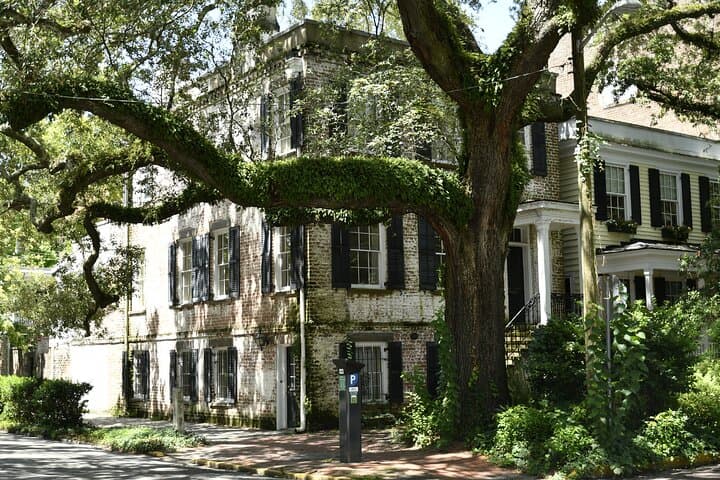
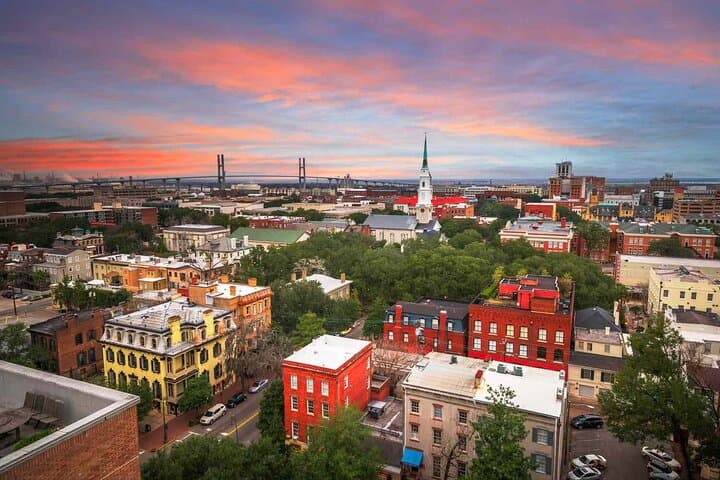
The tour begins on a sun-warmed cobblestone street, Spanish moss swaying above as your guide leads a small group into a map of green rooms — Savannah’s hidden squares. Footsteps slow to the city’s rhythm; shutters creak, fountains murmur, and the guide points out an unmarked plaque that turns a familiar façade into a doorway to an old story.
The tour begins on a sun-warmed cobblestone street, Spanish moss swaying above as your guide leads a small group into a map of green rooms — Savannah’s hidden squares. Footsteps slow to the city’s rhythm; shutters creak, fountains murmur, and the guide points out an unmarked plaque that turns a familiar façade into a doorway to an old story.
Savannah’s grid was laid out by General James Oglethorpe in the 18th century and later refined by architects like William Jay. The walk threads through late-eighteenth- and nineteenth-century homes — Kehoe House, Davenport House — and passes sites tied to the Revolutionary period and the city’s role in the antebellum cotton economy. Geologically the city sits on the Atlantic coastal plain: low, flat, and shaped by tidal creeks that fed its early prosperity. Culturally you’ll hear about religious institutions, the influence of local Black congregations like the Second African Baptist Church, and literary ties to Flannery O’Connor.
Expect a two-hour, moderately paced outing that emphasizes local anecdotes, preservation efforts, and neighborhood details — from landscape architect Clermont Lee’s plantings to Rainbow Row’s color palette. Practical notes: bring comfortable, broken-in shoes for uneven sidewalks, a refillable water bottle, and sun protection during summer. The tour is small-group and wheelchair accessible, making it suitable for many travelers, though a moderate fitness level helps for standing and walking. Morning and late-afternoon departures avoid the midday heat and offer better light for photos. This tour is for curious travelers who want stories the guidebooks often skip — close to the river, close to the past, and easily reached from downtown Savannah.