THE ADVENTURE COLLECTIVE® · Independent discovery and booking for outdoor travel

Escape the busiest corridors of Fushimi Inari with a local guide who leads an alternative route through cedar groves, secret shrines and a summit viewpoint, ending with a traditional soba lunch. Practical tips and cultural context make this a compact, immersive half-day adventure.
Escape the busiest corridors of Fushimi Inari with a local guide who leads an alternative route through cedar groves, secret shrines and a summit viewpoint, ending with a traditional soba lunch. Practical tips and cultural context make this a compact, immersive half-day adventure.
You step through the first torii and the city noise thins — the vermilion gates line a corridor that leads into cedar shade and a quieter, older Kyoto.
Verified experiences and guided adventures in the surrounding area.
Operated by Japan Exploration Tours JIN-仁 · Kyoto, Kyoto Prefecture
You step through the first torii and the city noise thins — the vermilion gates line a corridor that leads into cedar shade and a quieter, older Kyoto.
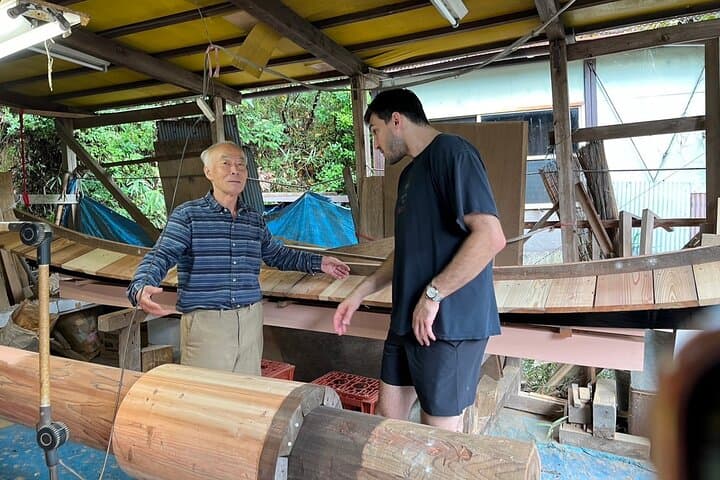
This local-led route bypasses the busiest alleys, threading through bamboo and cedar tracks, past worship stones and a small waterfall before a short ascent to the summit shrine at 233 m. The path alternates stone steps, packed-earth trails and occasional factory-front glimpses where makers still craft miniature gates. From the viewpoint you get a clear, low-lying sweep of Kyoto, the city reclining beneath the mountain.
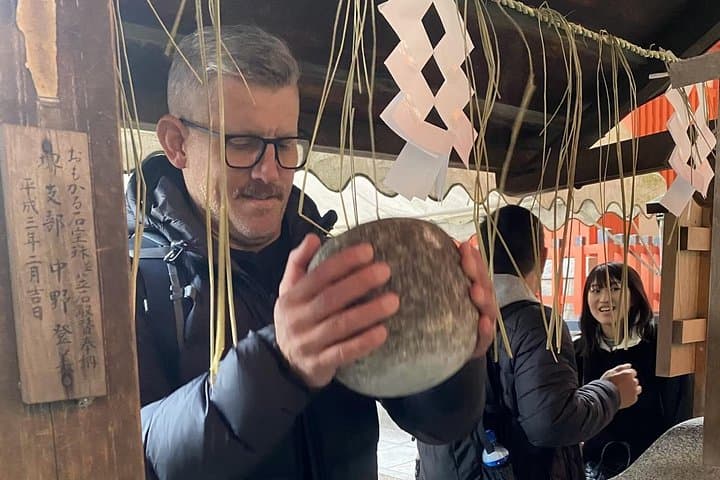
Fushimi Inari Taisha dates to the early 8th century and grew as a center for rice-and-prosperity worship; the thousands of torii are donations from businesses and families. The geology here is modest — low volcanic hills with erosion-carved gullies — but the long line of gates and the cedar groves shape a spiritual landscape as much as a physical one. Local guides layer in cultural context: how to approach a shrine, the symbolism of foxes, and the traditional tea stop in a mountain hut.
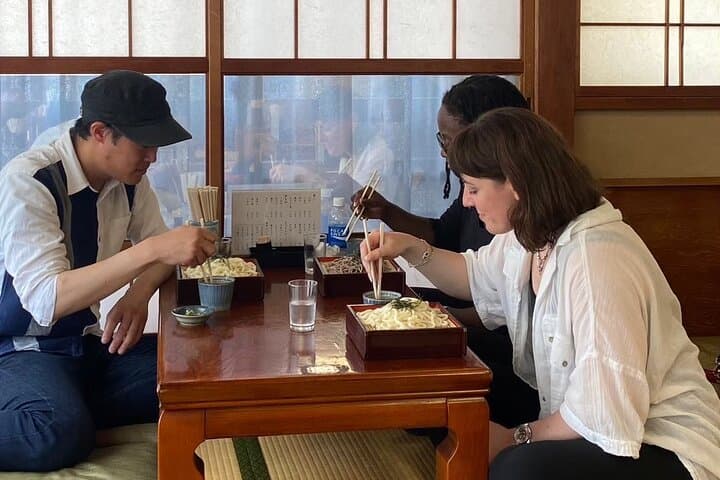
Practical rhythm: allow about 3.5–4 hours, wear grippy shoes for stone steps, and expect short steep sections on the approach to the summit. The tour finishes with a sit-down soba lunch at a family-run restaurant — vegan options available if requested in advance. Bring water, a light rain layer, and a charged camera; timing mornings or late afternoons eases crowds and improves light for photos.
moderate.
3–4 hours.
Moderate fitness — able to walk uneven steps and sustain a steady uphill for short periods
Meet at the stone pillar at the first gate across from JR Inari Station (about a 10-minute walk from the Keihan line station).
The route is family-friendly but involves stairs and short steep sections; children and older guests should be comfortable with moderate uphill walking.
Yes — vegan and gluten-free options are available but must be requested in advance when booking.
Public restrooms are available near the shrine and at the trailhead; facilities on the mountain are limited, so use them before the ascent.
Fushimi Inari Taisha has roots in the 8th century as a guardian of rice and commerce; the dense rows of torii are modern donations continuing a long patronage tradition.
Traffic management and visitor routing protect fragile shrine structures and forest understory; stick to paths and avoid climbing on shrine features.
Japan Exploration Tours JIN-仁 operates guided outdoor trips and adventures with an emphasis on safety, stewardship, and memorable experiences.
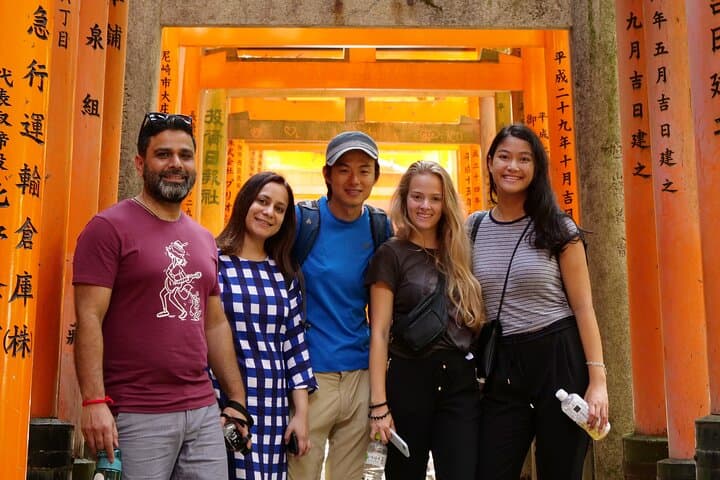
You step through the first torii and the city noise thins — the vermilion gates line a corridor that leads into cedar shade and a quieter, older Kyoto.
You step through the first torii and the city noise thins — the vermilion gates line a corridor that leads into cedar shade and a quieter, older Kyoto.
This local-led route bypasses the busiest alleys, threading through bamboo and cedar tracks, past worship stones and a small waterfall before a short ascent to the summit shrine at 233 m. The path alternates stone steps, packed-earth trails and occasional factory-front glimpses where makers still craft miniature gates. From the viewpoint you get a clear, low-lying sweep of Kyoto, the city reclining beneath the mountain.
Fushimi Inari Taisha dates to the early 8th century and grew as a center for rice-and-prosperity worship; the thousands of torii are donations from businesses and families. The geology here is modest — low volcanic hills with erosion-carved gullies — but the long line of gates and the cedar groves shape a spiritual landscape as much as a physical one. Local guides layer in cultural context: how to approach a shrine, the symbolism of foxes, and the traditional tea stop in a mountain hut.
Practical rhythm: allow about 3.5–4 hours, wear grippy shoes for stone steps, and expect short steep sections on the approach to the summit. The tour finishes with a sit-down soba lunch at a family-run restaurant — vegan options available if requested in advance. Bring water, a light rain layer, and a charged camera; timing mornings or late afternoons eases crowds and improves light for photos.