THE ADVENTURE COLLECTIVE® · Independent discovery and booking for outdoor travel

Explore Osaka’s offbeat streets on a small-group walking tour through Tobita Shinchi and Shinsekai. Taste bold local dishes while a local guide links the area’s charged history to its modern food culture.
Explore Osaka’s offbeat streets on a small-group walking tour through Tobita Shinchi and Shinsekai. Taste bold local dishes while a local guide links the area’s charged history to its modern food culture.
The lamps of Shinsekai cut through humid Osaka air as your small group steps out from Dobutsuenmae Station. Neon colors reflect on wet pavement; the scent of frying oil and dashi pulls you down narrow alleys where arcade machines clack and locals talk shop. This is a walking tour that moves at street level—up close to the neighborhoods that shaped Osaka's working-class character.
Verified experiences and guided adventures in the surrounding area.
Operated by DEEPEXPLORERSJP · Osaka, Osaka
The lamps of Shinsekai cut through humid Osaka air as your small group steps out from Dobutsuenmae Station. Neon colors reflect on wet pavement; the scent of frying oil and dashi pulls you down narrow alleys where arcade machines clack and locals talk shop. This is a walking tour that moves at street level—up close to the neighborhoods that shaped Osaka's working-class character.
Tobita Shinchi is a district with a charged past: a 20th-century yukaku that remains one of Japan's last traditional red-light quarters. Nearby Shinsekai was born from early 1900s urban ambition—Luna Park and Tsutenkaku gave the area its eccentric skyline. The tour connects these histories to present-day food culture, where kushikatsu, doteyaki, and offal-forward izakaya plates reflect Osaka’s reputation as Japan’s kitchen.
Expect a mix of history, urban sociology, and hands-on tasting. Guides—local and multilingual—explain social norms in sensitive areas while introducing dishes that many visitors skip. Group size stays small out of respect for residents and venues; cash is commonly needed for smaller izakaya tabs.
Practical guidance: wear comfortable shoes for several short walks and standing at food stalls, bring cash and a translation app for ingredient checks, and be prepared to decline unfamiliar items politely if you have allergies. Evening timing gives the best atmosphere, but the neighborhoods are active by day. Above all, move quietly and follow your guide’s cues—these districts invite curiosity, not disruption.
easy.
3.5 hours.
Suitable for most fitness levels; involves walking on flat urban streets and standing while sampling food.
The tour covers historically adult neighborhoods; families with older teens may participate but organizers caution discretion due to the nature of Tobita Shinchi.
Guides can advise and help translate requests, but the tour includes adventurous dishes and participants should notify the operator of allergies before booking.
The listed duration is 210 minutes (about 3.5 hours); exact start times are given at booking and the meeting point is Dobutsuenmae Station Exit 2 (Family Mart).
The route uses urban sidewalks and includes standing at food stops; it may not be suitable for wheelchairs or limited mobility without advance consultation.
Shinsekai was created in the early 1900s around Luna Park and Tsutenkaku, while Tobita Shinchi evolved as a licensed yukaku district in the 20th century and remains culturally significant.
Respect locals by keeping noise low, following photography guidelines, and supporting small businesses responsibly; small-group tours help reduce neighborhood impact.
DEEPEXPLORERSJP operates guided outdoor trips and adventures with an emphasis on safety, stewardship, and memorable experiences.
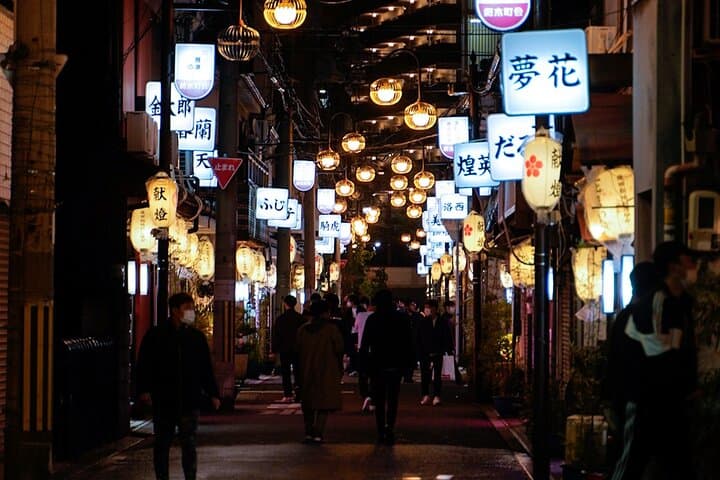


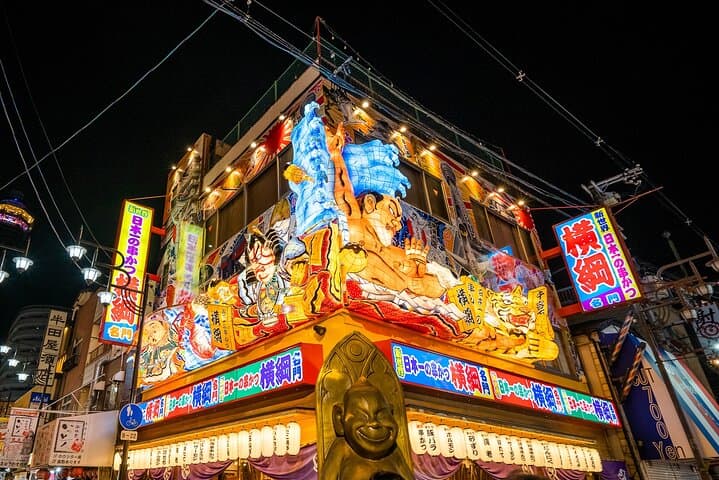
The lamps of Shinsekai cut through humid Osaka air as your small group steps out from Dobutsuenmae Station. Neon colors reflect on wet pavement; the scent of frying oil and dashi pulls you down narrow alleys where arcade machines clack and locals talk shop. This is a walking tour that moves at street level—up close to the neighborhoods that shaped Osaka's working-class character.
The lamps of Shinsekai cut through humid Osaka air as your small group steps out from Dobutsuenmae Station. Neon colors reflect on wet pavement; the scent of frying oil and dashi pulls you down narrow alleys where arcade machines clack and locals talk shop. This is a walking tour that moves at street level—up close to the neighborhoods that shaped Osaka's working-class character.
Tobita Shinchi is a district with a charged past: a 20th-century yukaku that remains one of Japan's last traditional red-light quarters. Nearby Shinsekai was born from early 1900s urban ambition—Luna Park and Tsutenkaku gave the area its eccentric skyline. The tour connects these histories to present-day food culture, where kushikatsu, doteyaki, and offal-forward izakaya plates reflect Osaka’s reputation as Japan’s kitchen.
Expect a mix of history, urban sociology, and hands-on tasting. Guides—local and multilingual—explain social norms in sensitive areas while introducing dishes that many visitors skip. Group size stays small out of respect for residents and venues; cash is commonly needed for smaller izakaya tabs.
Practical guidance: wear comfortable shoes for several short walks and standing at food stalls, bring cash and a translation app for ingredient checks, and be prepared to decline unfamiliar items politely if you have allergies. Evening timing gives the best atmosphere, but the neighborhoods are active by day. Above all, move quietly and follow your guide’s cues—these districts invite curiosity, not disruption.