THE ADVENTURE COLLECTIVE® · Independent discovery and booking for outdoor travel

Swap sunbaked beaches for a cool plunge into Mallorca’s limestone caves. This guided sea-caving outing from Cala Romántica combines a coastal hike, a sheltered swim and guided exploration of underground galleries and freshwater pools.
Swap sunbaked beaches for a cool plunge into Mallorca’s limestone caves. This guided sea-caving outing from Cala Romántica combines a coastal hike, a sheltered swim and guided exploration of underground galleries and freshwater pools.
Rock-smoothed cliffs fall away to a small pebble inlet and the Mediterranean presses cold against your wetsuit. You follow a narrow path through scrubby mastic and pine, breath smelling of rosemary, until a quiet cove offers neoprene, fins and a gap in the rock. A short, sheltered swim ushers you into a cave chamber where shafts of light pick out stalactites and a glassy freshwater pool—an underground room shaped by sea, stone and time.
Verified experiences and guided adventures in the surrounding area.
Operated by Mallorca Mountains · Porto Cristo, Balearic Islands
Rock-smoothed cliffs fall away to a small pebble inlet and the Mediterranean presses cold against your wetsuit. You follow a narrow path through scrubby mastic and pine, breath smelling of rosemary, until a quiet cove offers neoprene, fins and a gap in the rock. A short, sheltered swim ushers you into a cave chamber where shafts of light pick out stalactites and a glassy freshwater pool—an underground room shaped by sea, stone and time.
Mallorca’s eastern coastline sits on fractured limestone, its caves carved by changing sea levels and slow chemical weathering. Local guides link these formations to centuries of island life: fisherman’s coves, smuggler routes, and the small harbors that fed nearby villages. When the sea is rough guides will pivot to dry caverns such as Cova de Cala Falcó or Sa Cova Tancada, sites that reveal the island’s karst story without a swim.
Practically, expect about five hours from meeting to return, with a short coastal hike and roughly 300 meters of escorted swimming inside the cave. Guides supply neoprene, mask and snorkel and manage technical rigging; swimmers should be comfortable in open water and able to follow hands-on instruction. Hydrate before you start, wear closed water shoes with good grip, and bring a towel and warm layer for after the swim. Tours run best in calm seas—book mornings for flatter water and cooler light. The experience balances close-up geology, saltwater navigation and the clean, quiet thrill of stepping into an undersea cavern.
moderate.
4–5 hours.
Moderate fitness: able to hike short coastal trails and swim ~300 m in open, sheltered cave water
Guides indicate roughly a 300-meter swim through sheltered passages to reach the main cavern; flotation and instruction are provided.
Participants should be comfortable in open water and able to swim modest distances; guides stay close and provide safety gear.
If sea conditions are unsafe the operator switches to dry cave alternatives such as Cova de Cala Falcó, Cala Barques or Sa Cova Tancada.
Not recommended for non-swimmers; children may join if they meet the operator’s age and swimming ability requirements—check at booking.
Coastal caves in eastern Mallorca formed in soluble limestone during Pleistocene sea-level shifts and were later used as sheltered fishing and landing spots by locals.
Tours operate under local coastal regulations—avoid touching formations, take all trash back to shore, and respect marine life and nesting seabirds.
Mallorca Mountains operates guided outdoor trips and adventures with an emphasis on safety, stewardship, and memorable experiences.
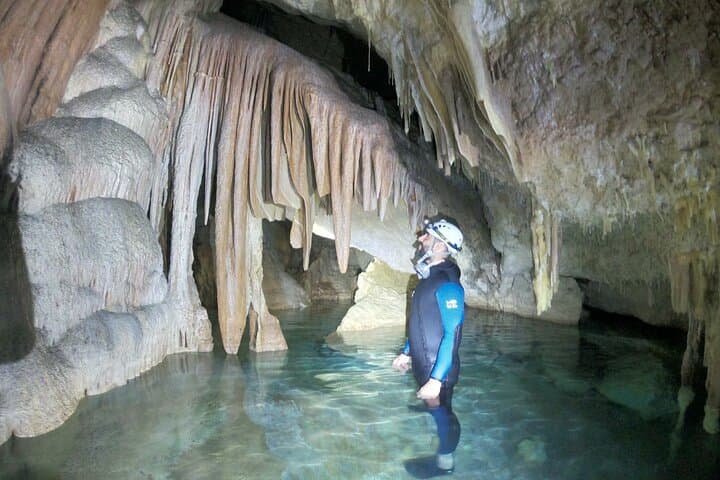
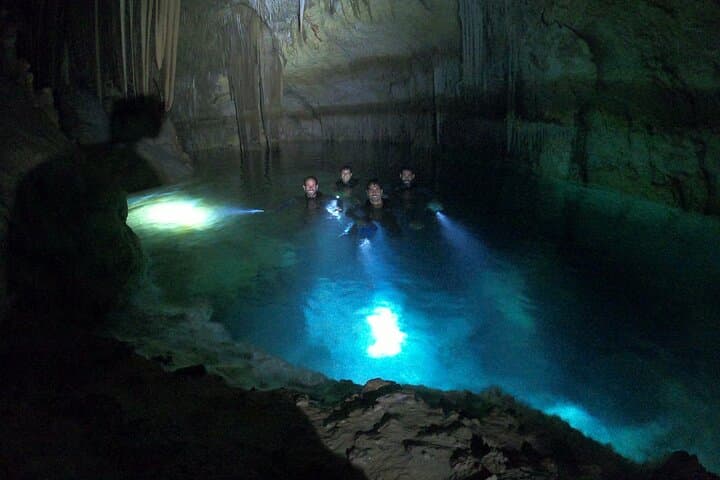
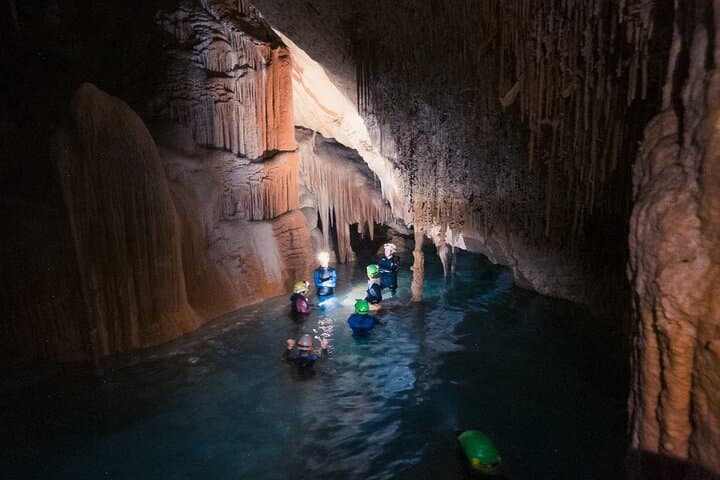
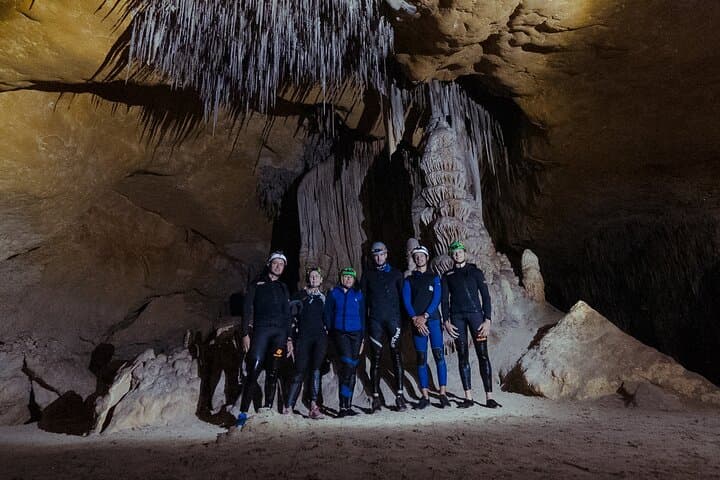
Rock-smoothed cliffs fall away to a small pebble inlet and the Mediterranean presses cold against your wetsuit. You follow a narrow path through scrubby mastic and pine, breath smelling of rosemary, until a quiet cove offers neoprene, fins and a gap in the rock. A short, sheltered swim ushers you into a cave chamber where shafts of light pick out stalactites and a glassy freshwater pool—an underground room shaped by sea, stone and time.
Rock-smoothed cliffs fall away to a small pebble inlet and the Mediterranean presses cold against your wetsuit. You follow a narrow path through scrubby mastic and pine, breath smelling of rosemary, until a quiet cove offers neoprene, fins and a gap in the rock. A short, sheltered swim ushers you into a cave chamber where shafts of light pick out stalactites and a glassy freshwater pool—an underground room shaped by sea, stone and time.
Mallorca’s eastern coastline sits on fractured limestone, its caves carved by changing sea levels and slow chemical weathering. Local guides link these formations to centuries of island life: fisherman’s coves, smuggler routes, and the small harbors that fed nearby villages. When the sea is rough guides will pivot to dry caverns such as Cova de Cala Falcó or Sa Cova Tancada, sites that reveal the island’s karst story without a swim.
Practically, expect about five hours from meeting to return, with a short coastal hike and roughly 300 meters of escorted swimming inside the cave. Guides supply neoprene, mask and snorkel and manage technical rigging; swimmers should be comfortable in open water and able to follow hands-on instruction. Hydrate before you start, wear closed water shoes with good grip, and bring a towel and warm layer for after the swim. Tours run best in calm seas—book mornings for flatter water and cooler light. The experience balances close-up geology, saltwater navigation and the clean, quiet thrill of stepping into an undersea cavern.