THE ADVENTURE COLLECTIVE® · Independent discovery and booking for outdoor travel

Explore Luxor’s West Bank with a private guide—visit Hatshepsut’s striking mortuary temple, descend into select tombs in the Valley of the Kings, and pause at the Colossi of Memnon. Flexible timing and a private driver let you move at your pace while avoiding large groups.
Explore Luxor’s West Bank with a private guide—visit Hatshepsut’s striking mortuary temple, descend into select tombs in the Valley of the Kings, and pause at the Colossi of Memnon. Flexible timing and a private driver let you move at your pace while avoiding large groups.
You step off the air-conditioned car onto the sun-baked limestone of the West Bank and the air seems to hold millennia. Dust lifts from the road as your guide gestures toward the terraced façade of Deir el-Bahari, Hatshepsut’s mortuary temple—clean lines of stone that still stage the ambition of a queen who moved mountains of tradition.
Verified experiences and guided adventures in the surrounding area.
Operated by Eyes of Egypt · Luxor, Luxor Governorate
You step off the air-conditioned car onto the sun-baked limestone of the West Bank and the air seems to hold millennia. Dust lifts from the road as your guide gestures toward the terraced façade of Deir el-Bahari, Hatshepsut’s mortuary temple—clean lines of stone that still stage the ambition of a queen who moved mountains of tradition.
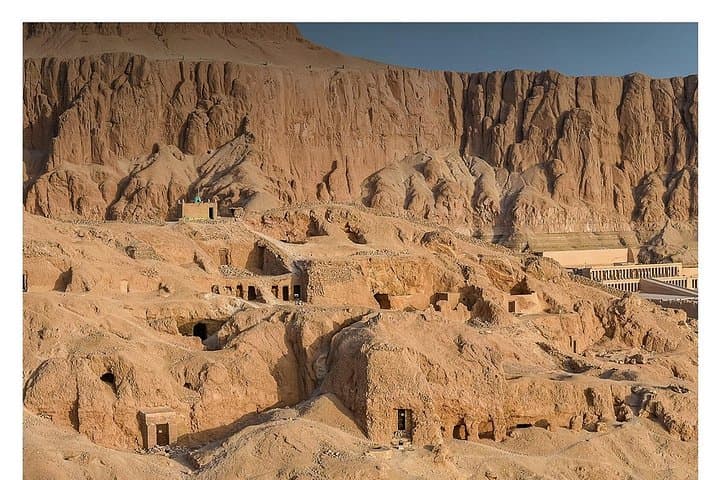
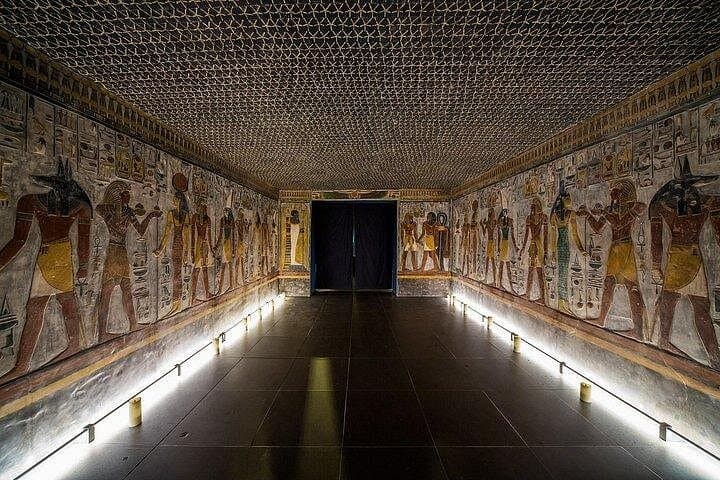
This private day tour threads together Luxor’s funerary landscape: Hatshepsut’s colonnades, the carved corridors of the Valley of the Kings with their painted tomb chambers, and the hulking Colossi of Memnon watching the plain. Geology matters here — the Valley is cut into the limestone scarps of the Theban hills, where ancient builders tunneled shafts and chambers into soft strata. Culturally, you’ll hear how royal burial practices and temple architecture evolved through the New Kingdom, and how modern archaeology and local communities interact with those legacies.
Practically, expect 4–5 hours on a private itinerary with an English-speaking guide and driver, flexible time inside sites (entrance fees extra). Bring at least 2 liters of water, a breathable hat, and good shoes for uneven steps and inclined ramps inside tombs. Start early to beat heat and crowds; midday the sun will press on the stone and your guide will suggest shaded breaks.
Photograph details but respect restricted tomb interiors, tip your guide if service was helpful, and carry small change for on-site tickets and vendor purchases. This is a compact, intense day of history and landscape—comfort and local expertise make the ruins readable and immediate.
easy.
4–5 hours.
Suitable for most fitness levels; involves short walks, climbing stairs and uneven surfaces inside tombs
No—entrance to the Valley of the Kings, Hatshepsut Temple, and specific tombs are paid on-site; prices vary and some tombs cost extra.
Yes—this private tour typically includes hotel pickup and drop-off within Luxor; confirm your pickup location at booking.
Your guide can advise; you select which tombs to pay for on arrival based on interest, preservation and availability.
The tour is listed as suitable for all fitness levels, but some tombs have narrow passages and many sites require walking; contact the operator about accessibility needs.
The West Bank served as the necropolis for Thebes during Egypt’s New Kingdom; Hatshepsut’s temple marked an architectural shift and the Valley contains tombs of 18th–20th Dynasty pharaohs.
Tour operators and sites encourage limiting flash photography and following marked paths to protect fragile pigments and prevent erosion of tomb surfaces.
Eyes of Egypt operates guided outdoor trips and adventures with an emphasis on safety, stewardship, and memorable experiences.
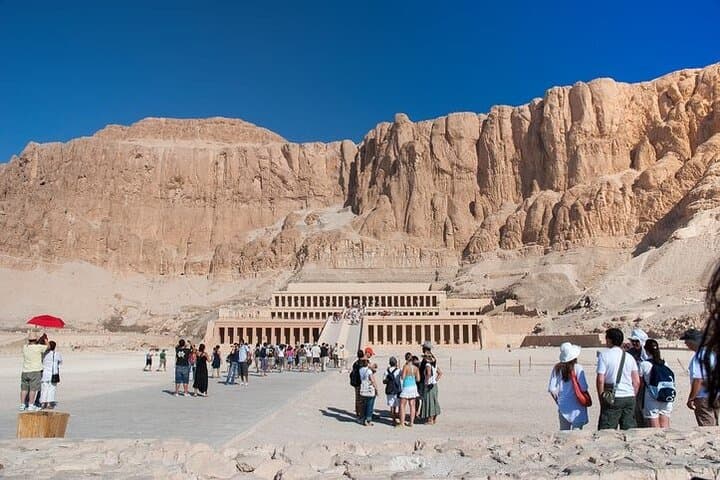
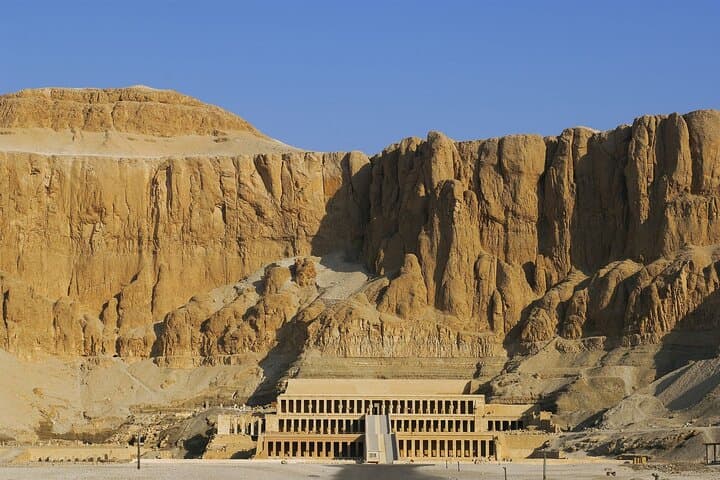
You step off the air-conditioned car onto the sun-baked limestone of the West Bank and the air seems to hold millennia. Dust lifts from the road as your guide gestures toward the terraced façade of Deir el-Bahari, Hatshepsut’s mortuary temple—clean lines of stone that still stage the ambition of a queen who moved mountains of tradition.
You step off the air-conditioned car onto the sun-baked limestone of the West Bank and the air seems to hold millennia. Dust lifts from the road as your guide gestures toward the terraced façade of Deir el-Bahari, Hatshepsut’s mortuary temple—clean lines of stone that still stage the ambition of a queen who moved mountains of tradition.
This private day tour threads together Luxor’s funerary landscape: Hatshepsut’s colonnades, the carved corridors of the Valley of the Kings with their painted tomb chambers, and the hulking Colossi of Memnon watching the plain. Geology matters here — the Valley is cut into the limestone scarps of the Theban hills, where ancient builders tunneled shafts and chambers into soft strata. Culturally, you’ll hear how royal burial practices and temple architecture evolved through the New Kingdom, and how modern archaeology and local communities interact with those legacies.
Practically, expect 4–5 hours on a private itinerary with an English-speaking guide and driver, flexible time inside sites (entrance fees extra). Bring at least 2 liters of water, a breathable hat, and good shoes for uneven steps and inclined ramps inside tombs. Start early to beat heat and crowds; midday the sun will press on the stone and your guide will suggest shaded breaks.
Photograph details but respect restricted tomb interiors, tip your guide if service was helpful, and carry small change for on-site tickets and vendor purchases. This is a compact, intense day of history and landscape—comfort and local expertise make the ruins readable and immediate.