THE ADVENTURE COLLECTIVE® · Independent discovery and booking for outdoor travel

A compact two-day trek from Cusco to the Sacred Valley that visits Huchuy Qosqo and ends in the valley—an immersive alternative to long drives, combining archaeological sites, community homestays and high-Andean scenery.
A compact two-day trek from Cusco to the Sacred Valley that visits Huchuy Qosqo and ends in the valley—an immersive alternative to long drives, combining archaeological sites, community homestays and high-Andean scenery.
Dawn breaks over Cusco as a small group files out of the city, packs heavy with anticipation and steps onto a rough path that angles up into the high Andes. The trail climbs through cornfields, hamlets and stone terraces; wind skims the ridge and the valley below opens like a map. By midday the ruined platforms of Huchuy Qosqo come into view—compact, severe, and far quieter than the better-known sites.
Verified experiences and guided adventures in the surrounding area.
Operated by Cultural Immersion Travel Peru E.I.R.L. · Cusco, Cusco
Dawn breaks over Cusco as a small group files out of the city, packs heavy with anticipation and steps onto a rough path that angles up into the high Andes. The trail climbs through cornfields, hamlets and stone terraces; wind skims the ridge and the valley below opens like a map. By midday the ruined platforms of Huchuy Qosqo come into view—compact, severe, and far quieter than the better-known sites.
The route follows ancient Inca causeways and colonial-era mule tracks. Huchuy Qosqo, an imperial estate and agricultural complex, sits on a shelf of volcanic and sedimentary rock carved by Andean uplift; the surrounding Sacred Valley has been farmed for centuries and still supports weaving and terracing traditions. Local communities welcome visitors into a family home for the night, offering a direct encounter with Andean foodways and daily life.
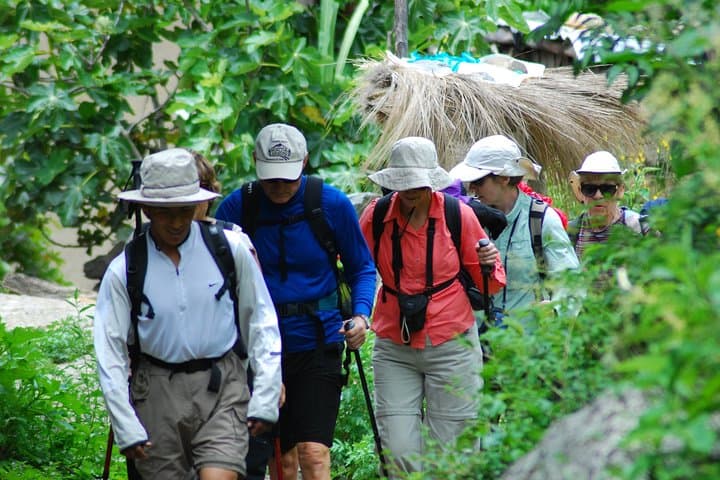
Expect two days of steady walking: roughly 8 hours on day one and 4 hours on day two, with total hiking around 10–12 km and altitude ranging from about 3,400–3,700 m. Trails are a mix of dirt, stone steps and narrow singletrack; moderate fitness and acclimatization are important. Practicals: start early to avoid afternoon weather, bring sun protection and layered insulation, carry water and snacks, and use trekking poles for loose descents. The itinerary finishes in the Sacred Valley around midday, providing onward options to Ollantaytambo or a return to Cusco by bus or train. This is a compact, culturally rich trek that rewards travelers who prefer walking and local hospitality over long vehicle transfers.
moderate.
2 days (approx. 10–12 hours hiking).
Good aerobic fitness and experience with day hikes at altitude; comfortable walking 4–8 hours a day.
The route is moderate but altitude is the main challenge; allow time to acclimatize in Cusco and monitor symptoms—consider consulting a doctor if you have prior altitude issues.
You stay in a local community home with basic facilities intended to provide cultural immersion rather than hotel comforts; expect simple bedding and shared spaces.
Meals listed include lunch, dinner (day 1) and breakfast (day 2); special diets are usually accommodated if requested in advance.
The itinerary finishes in the Sacred Valley around midday; travelers can take public or private buses to Cusco or Ollantaytambo, or arrange onward train connections from Aguas Calientes if included in the booking.
Huchuy Qosqo was an Inca agricultural and administrative site linked to imperial estates; the Sacred Valley has served as a cultivation and trade corridor since pre-Columbian times.
Visitors should stick to established paths and avoid removing stones or plants; support community stays that invest in local conservation and sustainable tourism.
Cultural Immersion Travel Peru E.I.R.L. operates guided outdoor trips and adventures with an emphasis on safety, stewardship, and memorable experiences.
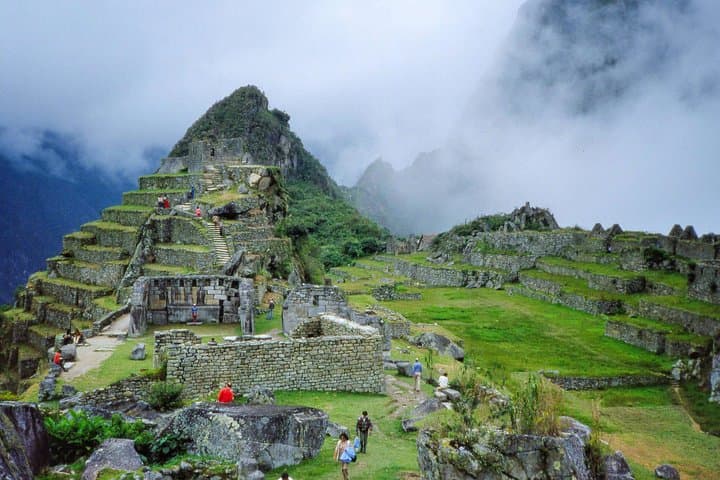
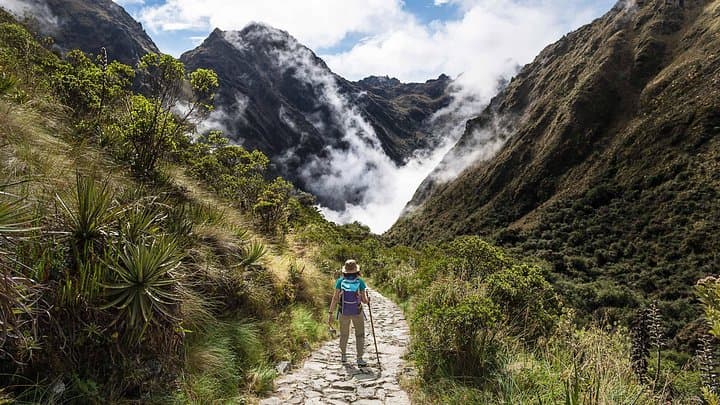
Dawn breaks over Cusco as a small group files out of the city, packs heavy with anticipation and steps onto a rough path that angles up into the high Andes. The trail climbs through cornfields, hamlets and stone terraces; wind skims the ridge and the valley below opens like a map. By midday the ruined platforms of Huchuy Qosqo come into view—compact, severe, and far quieter than the better-known sites.
Dawn breaks over Cusco as a small group files out of the city, packs heavy with anticipation and steps onto a rough path that angles up into the high Andes. The trail climbs through cornfields, hamlets and stone terraces; wind skims the ridge and the valley below opens like a map. By midday the ruined platforms of Huchuy Qosqo come into view—compact, severe, and far quieter than the better-known sites.
The route follows ancient Inca causeways and colonial-era mule tracks. Huchuy Qosqo, an imperial estate and agricultural complex, sits on a shelf of volcanic and sedimentary rock carved by Andean uplift; the surrounding Sacred Valley has been farmed for centuries and still supports weaving and terracing traditions. Local communities welcome visitors into a family home for the night, offering a direct encounter with Andean foodways and daily life.
Expect two days of steady walking: roughly 8 hours on day one and 4 hours on day two, with total hiking around 10–12 km and altitude ranging from about 3,400–3,700 m. Trails are a mix of dirt, stone steps and narrow singletrack; moderate fitness and acclimatization are important. Practicals: start early to avoid afternoon weather, bring sun protection and layered insulation, carry water and snacks, and use trekking poles for loose descents. The itinerary finishes in the Sacred Valley around midday, providing onward options to Ollantaytambo or a return to Cusco by bus or train. This is a compact, culturally rich trek that rewards travelers who prefer walking and local hospitality over long vehicle transfers.