THE ADVENTURE COLLECTIVE® · Independent discovery and booking for outdoor travel

A full-day, small-group glacier hike across Vatnajökull that leads to a rarely visited ice cave. Expect technical sections, naturalist-led glaciology lessons, and dramatic blue ice formations — with safety-led flexibility for weather.
A full-day, small-group glacier hike across Vatnajökull that leads to a rarely visited ice cave. Expect technical sections, naturalist-led glaciology lessons, and dramatic blue ice formations — with safety-led flexibility for weather.
The day begins before the road has warmed: a small group gathers at the black-and-pink Freysnes gas station opposite Hotel Skaftafell, breath visible in the cold air, guides in yellow-gold checking harnesses. A short drive drops the party at a gravel car park, and a twenty-minute trek across moraine brings the glacier into view — a living, moving field of blue and white that seems to breathe.
Verified experiences and guided adventures in the surrounding area.
Operated by Ice Guardians Iceland · Skaftafell, Southern Region
The day begins before the road has warmed: a small group gathers at the black-and-pink Freysnes gas station opposite Hotel Skaftafell, breath visible in the cold air, guides in yellow-gold checking harnesses. A short drive drops the party at a gravel car park, and a twenty-minute trek across moraine brings the glacier into view — a living, moving field of blue and white that seems to breathe.
On Vatnajökull, Europe’s largest ice cap, the ice is an archive of fire and water. Underfoot you'll find layers of compressed snow, volcanic ash from periodic eruptions, and the sculpted surfaces where melt and pressure have cut channels and caves. Guides on this remote full-day hike teach how to read those layers: crevasses opened like knives, seracs leaning like frozen cliffs, and the slow flow pushing the glacier seaward.
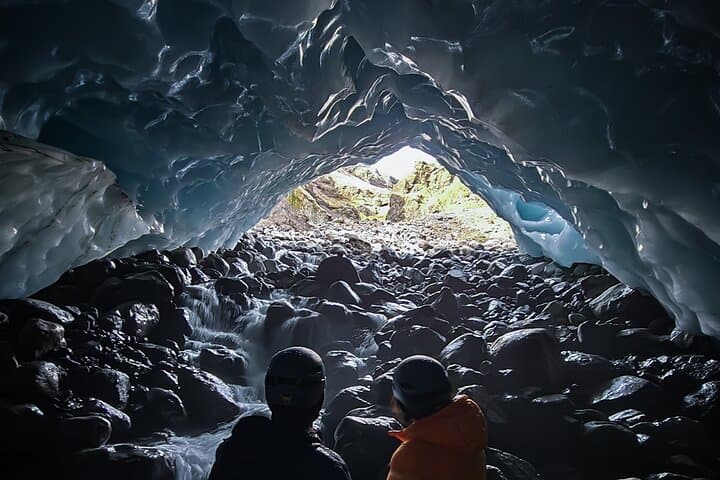
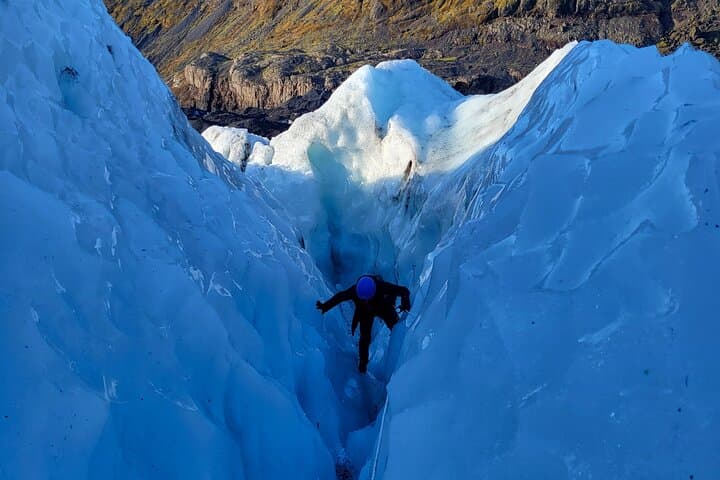
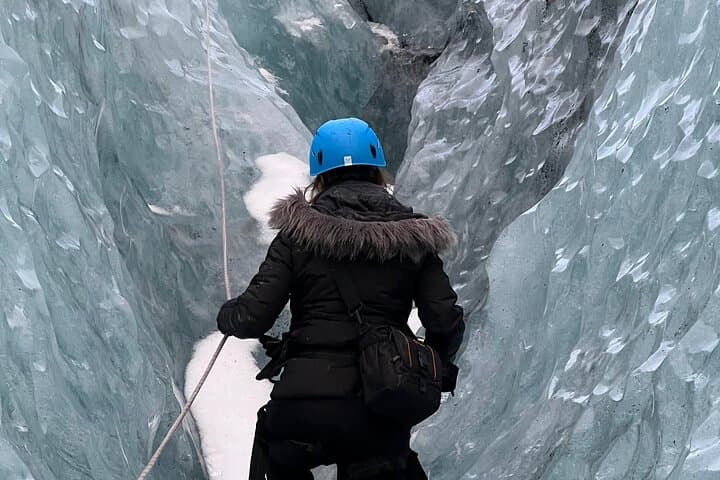
The route begins on broad, low-angle ice where crampons and ice axes are practiced. Progression moves to steeper, more technical ground — fixed anchors, rope teams, and the careful cutting of steps when needed. The reward is a large, seldom-visited ice cave. Here, light filters through dense blue ice, refracting into saturated cobalt; the cave interior is cool, hushed, and oddly luminous. Guides limit how far groups descend and point out striations that speak to centuries of accumulation and melt.
Beyond the spectacle, the day is an education in glaciology and climate: why Vatnajökull bulges and calves, how subglacial rivers carve tunnels, and what rapid warming means for Iceland’s landscape and communities. Expect wind, sudden weather shifts, and the possibility that the operators will cancel or change plans for safety; conditions on the ice rule the schedule.
Practically: wear stiff, crampon-compatible boots and a waterproof shell, bring snacks and layered insulation, and be prepared to be outdoors for 8–10 hours with frequent stops for instruction and photography. The operator keeps group sizes small (4:1), provides helmets, harnesses, crampons and ice axes, and offers tea and coffee at breaks. Fitness should be at least moderate; participants should be comfortable with uneven terrain, exposure to cold, and basic ropework instruction.
For photographers, the cave interior rewards patient framing; for curious travelers, the guides’ naturalist commentary turns striking panoramas into a lesson in forces — volcanic heat below, glacial pressure above. In a place where ice continues to move and change, the experience is both immediate and ephemeral: stunning now, altered by the next season’s melt.
Booking advice: reserve early in summer and shoulder seasons, arrive with waterproof layers, and accept that safety-driven changes are part of a responsible glacier-day itinerary.
challenging.
8–10 hours.
Moderately fit — able to hike on uneven terrain, ascend steep ice sections, and carry a daypack for several hours.
No — previous glacier travel isn’t required; guides will teach crampon and ice‑axe basics and oversee rope work, but participants should be comfortable on steep, icy terrain.
Guided instruction, helmet, harness, crampons, ice axe, headlamp (if needed), an experienced hard-ice guide with rescue kit, and hot drinks are included.
Expect several hours of walking on uneven moraine and ice with technical sections; a moderate fitness level is required and the operator does not recommend participants with serious cardiovascular or spinal conditions.
Age restrictions may apply; capacity and safety considerations make this tour best suited to older teens and adults—check with the operator when booking.
The operator may cancel or alter the itinerary for safety; you’ll receive a weather report 1–2 days beforehand and full refunds if canceled at least 24 hours out.
Yes — photography is encouraged, but guides limit access for safety, manage group movement, and may restrict flash to protect ice formations and visitor safety.
Vatnajökull owes its shape to centuries of snowfall atop volcanic bedrock; pulses of magma and long-term ice flow have carved the present landscape.
Glacier retreat is visible year-to-year; stick to established routes, respect seasonal closures, and follow guides’ instructions to minimize impact and avoid unstable ice.
Ice Guardians Iceland operates guided outdoor trips and adventures with an emphasis on safety, stewardship, and memorable experiences.
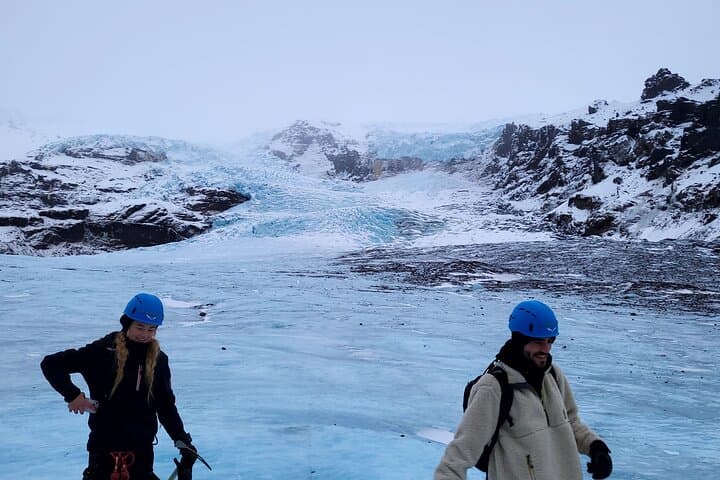
The day begins before the road has warmed: a small group gathers at the black-and-pink Freysnes gas station opposite Hotel Skaftafell, breath visible in the cold air, guides in yellow-gold checking harnesses. A short drive drops the party at a gravel car park, and a twenty-minute trek across moraine brings the glacier into view — a living, moving field of blue and white that seems to breathe.
The day begins before the road has warmed: a small group gathers at the black-and-pink Freysnes gas station opposite Hotel Skaftafell, breath visible in the cold air, guides in yellow-gold checking harnesses. A short drive drops the party at a gravel car park, and a twenty-minute trek across moraine brings the glacier into view — a living, moving field of blue and white that seems to breathe.
On Vatnajökull, Europe’s largest ice cap, the ice is an archive of fire and water. Underfoot you'll find layers of compressed snow, volcanic ash from periodic eruptions, and the sculpted surfaces where melt and pressure have cut channels and caves. Guides on this remote full-day hike teach how to read those layers: crevasses opened like knives, seracs leaning like frozen cliffs, and the slow flow pushing the glacier seaward.
The route begins on broad, low-angle ice where crampons and ice axes are practiced. Progression moves to steeper, more technical ground — fixed anchors, rope teams, and the careful cutting of steps when needed. The reward is a large, seldom-visited ice cave. Here, light filters through dense blue ice, refracting into saturated cobalt; the cave interior is cool, hushed, and oddly luminous. Guides limit how far groups descend and point out striations that speak to centuries of accumulation and melt.
Beyond the spectacle, the day is an education in glaciology and climate: why Vatnajökull bulges and calves, how subglacial rivers carve tunnels, and what rapid warming means for Iceland’s landscape and communities. Expect wind, sudden weather shifts, and the possibility that the operators will cancel or change plans for safety; conditions on the ice rule the schedule.
Practically: wear stiff, crampon-compatible boots and a waterproof shell, bring snacks and layered insulation, and be prepared to be outdoors for 8–10 hours with frequent stops for instruction and photography. The operator keeps group sizes small (4:1), provides helmets, harnesses, crampons and ice axes, and offers tea and coffee at breaks. Fitness should be at least moderate; participants should be comfortable with uneven terrain, exposure to cold, and basic ropework instruction.
For photographers, the cave interior rewards patient framing; for curious travelers, the guides’ naturalist commentary turns striking panoramas into a lesson in forces — volcanic heat below, glacial pressure above. In a place where ice continues to move and change, the experience is both immediate and ephemeral: stunning now, altered by the next season’s melt.
Booking advice: reserve early in summer and shoulder seasons, arrive with waterproof layers, and accept that safety-driven changes are part of a responsible glacier-day itinerary.