THE ADVENTURE COLLECTIVE® · Independent discovery and booking for outdoor travel

Leave Mérida for a private, five‑hour expedition to Homún’s less-visited cenotes and nearby villages. Combine geology and local history with a home-cooked Yucatecan meal and a bilingual guide for a relaxed, off-the-beaten-path experience.
Leave Mérida for a private, five‑hour expedition to Homún’s less-visited cenotes and nearby villages. Combine geology and local history with a home-cooked Yucatecan meal and a bilingual guide for a relaxed, off-the-beaten-path experience.
You step off the air-conditioned van and humidity folds around you like an old blanket. A narrow dirt lane leads under a low canopy of ceiba and gumbo-limbo; sunlight spears through leaves and lights pockets of turquoise water below. This is Homún—karst country where cenotes open like wells into the groundwater, their limestone walls carved over millennia.
Verified experiences and guided adventures in the surrounding area.
Operated by Felipe · Homún, Yucatán
You step off the air-conditioned van and humidity folds around you like an old blanket. A narrow dirt lane leads under a low canopy of ceiba and gumbo-limbo; sunlight spears through leaves and lights pockets of turquoise water below. This is Homún—karst country where cenotes open like wells into the groundwater, their limestone walls carved over millennia.
The route briefly passes Cuzamá’s creaking henequén rails, reminders of the 19th-century sisal economy that once powered Yucatán. Geologically, these sinkholes are collapsed sections of porous limestone fed by an underground river network; archaeologists and locals have retrieved pottery and offerings from their depths, linking them to Maya ritual and daily life.
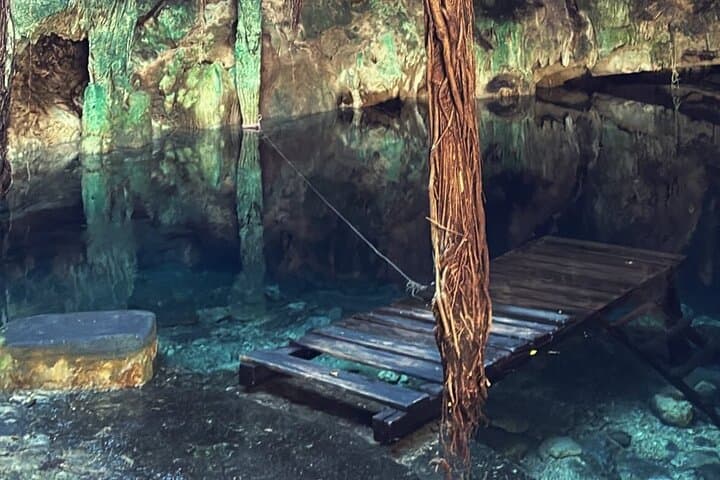
You'll visit a private, semi-enclosed cenote with warm, clear waters, stalactites, and fossilized coral—places that feel more like private caverns than tourist sites. Expect a bilingual guide who explains local practices, points out native plants, and finishes the day with a home-style Yucatecan meal of slow-cooked cochinita or vegetarian alternatives.
Practical notes: the tour lasts about five hours on mostly flat ground with short stairs and ladders at cenote accesses—suitable for most fitness levels. Bring quick-dry swimwear, water shoes with grip, and a refillable bottle; insect repellent and reef-safe sunscreen are essential. Midday is hottest—plan swims and photography for morning or late afternoon light. The operator provides private transport and entrance fees; the small-group pace means fewer crowds and more time at each cenote.
easy.
5 hours.
Suitable for most fitness levels; involves short stairs, ladder entries into cenotes, and light walking.
Yes—the cenotes on this itinerary permit swimming, but some areas may be roped off for safety or conservation; your guide will advise where to enter.
Most private cenote sites include palapas, restroom facilities, and a place to change; amenities vary by site and are generally basic but clean.
Yes—the operator offers local meal options and can accommodate common dietary restrictions if informed at booking.
Drive time is roughly 45–75 minutes each way depending on traffic and the chosen cenote sites; private transport is included.
The region’s cenotes were important to the Maya for water and ritual; the nearby Cuzamá henequén rails recall the 19th-century sisal industry that shaped local towns.
Operators encourage biodegradable products, limited group sizes, and no-touch rules in cenotes to protect water quality and archaeological deposits.
Felipe operates guided outdoor trips and adventures with an emphasis on safety, stewardship, and memorable experiences.
You step off the air-conditioned van and humidity folds around you like an old blanket. A narrow dirt lane leads under a low canopy of ceiba and gumbo-limbo; sunlight spears through leaves and lights pockets of turquoise water below. This is Homún—karst country where cenotes open like wells into the groundwater, their limestone walls carved over millennia.
You step off the air-conditioned van and humidity folds around you like an old blanket. A narrow dirt lane leads under a low canopy of ceiba and gumbo-limbo; sunlight spears through leaves and lights pockets of turquoise water below. This is Homún—karst country where cenotes open like wells into the groundwater, their limestone walls carved over millennia.
The route briefly passes Cuzamá’s creaking henequén rails, reminders of the 19th-century sisal economy that once powered Yucatán. Geologically, these sinkholes are collapsed sections of porous limestone fed by an underground river network; archaeologists and locals have retrieved pottery and offerings from their depths, linking them to Maya ritual and daily life.
You'll visit a private, semi-enclosed cenote with warm, clear waters, stalactites, and fossilized coral—places that feel more like private caverns than tourist sites. Expect a bilingual guide who explains local practices, points out native plants, and finishes the day with a home-style Yucatecan meal of slow-cooked cochinita or vegetarian alternatives.
Practical notes: the tour lasts about five hours on mostly flat ground with short stairs and ladders at cenote accesses—suitable for most fitness levels. Bring quick-dry swimwear, water shoes with grip, and a refillable bottle; insect repellent and reef-safe sunscreen are essential. Midday is hottest—plan swims and photography for morning or late afternoon light. The operator provides private transport and entrance fees; the small-group pace means fewer crowds and more time at each cenote.