THE ADVENTURE COLLECTIVE® · Independent discovery and booking for outdoor travel

Walk Lower Manhattan with a licensed historian who reveals the buried stories of slavery in New York City — from the slave-built wall that named Wall Street to the African Burial Ground. Choose a 2- or 3-hour private option to deepen your understanding.
Walk Lower Manhattan with a licensed historian who reveals the buried stories of slavery in New York City — from the slave-built wall that named Wall Street to the African Burial Ground. Choose a 2- or 3-hour private option to deepen your understanding.
You step onto the flagstones opposite Pace University and the city exhales — taxi horns and distant ferry engines folding into the background as a guide lowers the voice, and the past steps forward.
Verified experiences and guided adventures in the surrounding area.
Operated by New York City Tours · New York, NY
You step onto the flagstones opposite Pace University and the city exhales — taxi horns and distant ferry engines folding into the background as a guide lowers the voice, and the past steps forward.
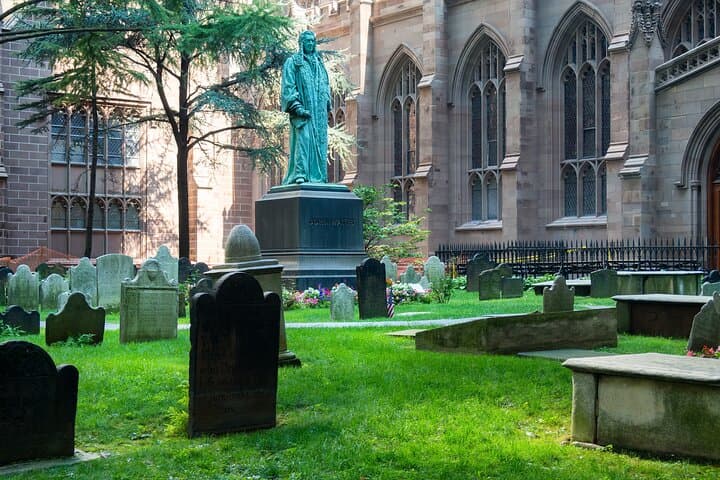
This private walking tour threads through Lower Manhattan’s colonial streets, stopping where a slave-built wall once divided a young settlement, where frail pews in Trinity and St. Paul’s Chapel held congregations that relied on enslaved labor, and where the African Burial Ground records the lives erased from early maps. The route moves at walking pace: City Hall’s granite, the narrow alleys off Pearl Street, and the sober façade of Fraunces Tavern, each place a physical clue to the economic systems that built New York.
Geology here is urban: filled land, reclaimed shoreline and cobbles that remember the tides. Culture and memory are layered — Dutch, British, African; the stories told on this route correct common classroom omissions and connect streets to legislation, resistance and daily life.
Practical details: choose the 2-hour option for a focused downtown primer or the 3-hour to include the African Burial Ground National Monument exhibits. Expect mostly flat walking on paved and cobbled surfaces; the pace allows for questions and stops. Bring a charged phone for maps and photos, comfortable footwear, and a MetroCard for easy arrival. Morning tours avoid peak crowds and allow clearer viewing at memorials. The guide is licensed and works to make difficult histories tangible, accurate and respectful — and this walk reframes familiar stone and steel as sites of lived experience rather than mere backdrop.
easy.
2–3 hours.
Suitable for most fitness levels—requires walking on paved city streets for up to three hours with frequent stops
Yes—routes are chosen for accessibility; please notify the operator ahead so the guide can plan a fully accessible path.
No—the 3-hour option includes time inside the African Burial Ground National Monument and its visitor center exhibits.
The tour is private for your group; standard guidance is one licensed guide per up to 25 guests, with additional guides for larger groups.
Admission to the African Burial Ground visitor center is free, but the 2-hour option does not include an in-depth visit; check the booking details for inclusions.
During the colonial period as many as 20% of New Yorkers were enslaved; Lower Manhattan’s built environment and economy were deeply connected to enslaved labor and Atlantic trade.
Visitor respect at memorial sites and staying on paved paths protect fragile archaeological deposits; choose certified guides who support preservation efforts.
New York City Tours operates guided outdoor trips and adventures with an emphasis on safety, stewardship, and memorable experiences.



You step onto the flagstones opposite Pace University and the city exhales — taxi horns and distant ferry engines folding into the background as a guide lowers the voice, and the past steps forward.
You step onto the flagstones opposite Pace University and the city exhales — taxi horns and distant ferry engines folding into the background as a guide lowers the voice, and the past steps forward.
This private walking tour threads through Lower Manhattan’s colonial streets, stopping where a slave-built wall once divided a young settlement, where frail pews in Trinity and St. Paul’s Chapel held congregations that relied on enslaved labor, and where the African Burial Ground records the lives erased from early maps. The route moves at walking pace: City Hall’s granite, the narrow alleys off Pearl Street, and the sober façade of Fraunces Tavern, each place a physical clue to the economic systems that built New York.
Geology here is urban: filled land, reclaimed shoreline and cobbles that remember the tides. Culture and memory are layered — Dutch, British, African; the stories told on this route correct common classroom omissions and connect streets to legislation, resistance and daily life.
Practical details: choose the 2-hour option for a focused downtown primer or the 3-hour to include the African Burial Ground National Monument exhibits. Expect mostly flat walking on paved and cobbled surfaces; the pace allows for questions and stops. Bring a charged phone for maps and photos, comfortable footwear, and a MetroCard for easy arrival. Morning tours avoid peak crowds and allow clearer viewing at memorials. The guide is licensed and works to make difficult histories tangible, accurate and respectful — and this walk reframes familiar stone and steel as sites of lived experience rather than mere backdrop.