THE ADVENTURE COLLECTIVE® · Independent discovery and booking for outdoor travel

Walk through 23 hectares of restored coastal forest to observe free‑roaming rescued primates and native wildlife. This guided, no‑touch experience blends species-focused interpretation with local conservation work—ideal for families and wildlife enthusiasts.
Walk through 23 hectares of restored coastal forest to observe free‑roaming rescued primates and native wildlife. This guided, no‑touch experience blends species-focused interpretation with local conservation work—ideal for families and wildlife enthusiasts.
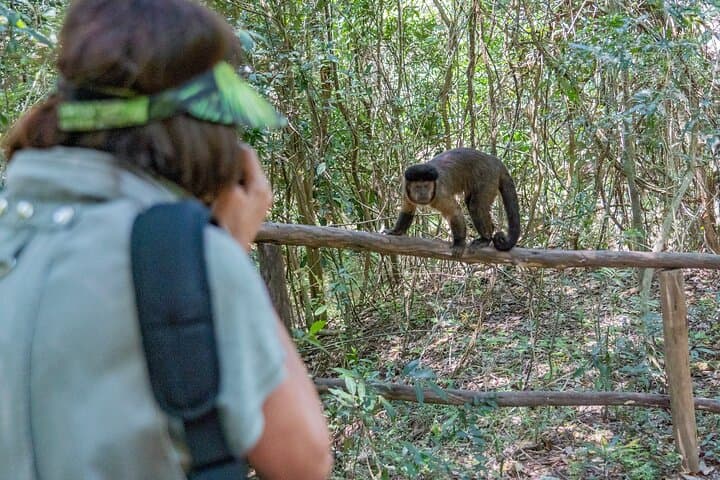
You step off the safari vehicle onto a loamy path and the forest closes around you—ferns brushing your calves, tall trees leaning in as if to whisper. The air smells of damp earth and bird song; a capuchin’s chitter slips through the canopy and the walk begins.
Verified experiences and guided adventures in the surrounding area.
Operated by Monkeyland · Durban, KwaZulu-Natal
You step off the safari vehicle onto a loamy path and the forest closes around you—ferns brushing your calves, tall trees leaning in as if to whisper. The air smells of damp earth and bird song; a capuchin’s chitter slips through the canopy and the walk begins.
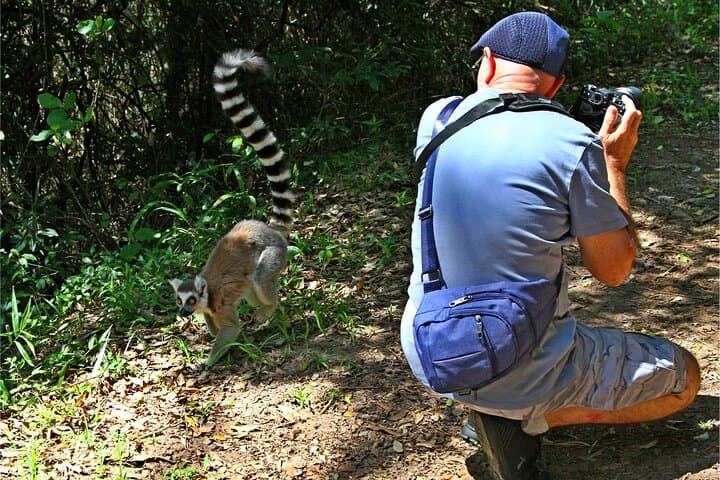
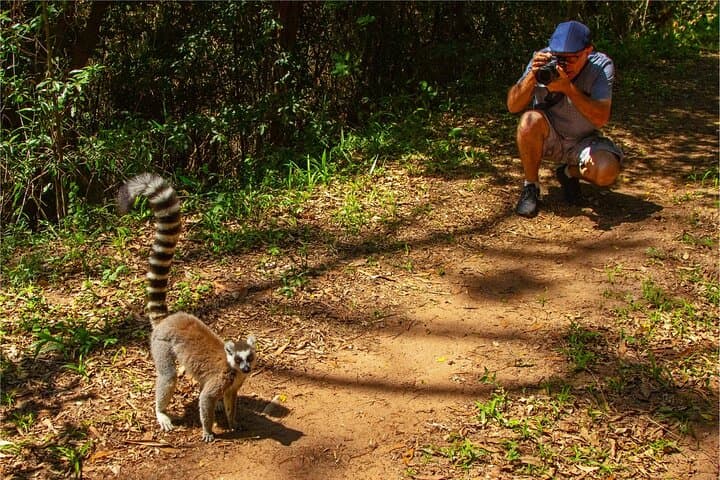
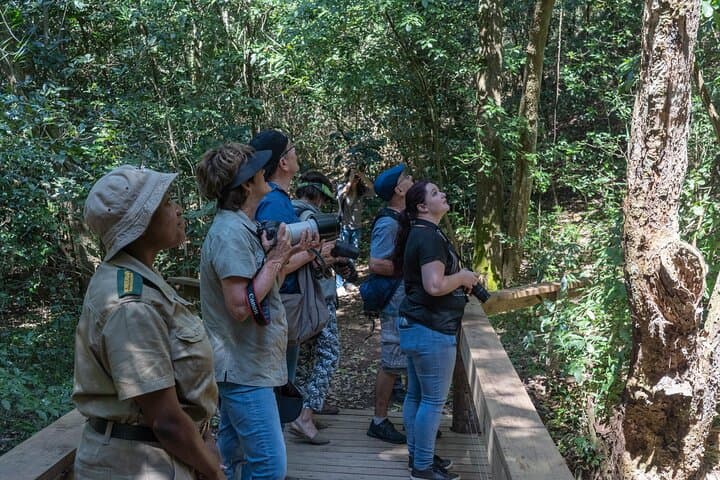
This hour-long guided circuit crosses 23 hectares of reclaimed coastal forest in KwaZulu‑Natal. The sanctuary specializes in rescued exotic primates—capuchins, squirrel monkeys, black howlers and several lemur species—living free-range under a strict no-touch policy. Guides pair species ID with conservation context: why these primates arrived here, the legal and welfare issues that brought them to sanctuary status, and how forest restoration supports native mammals like Natal and Blue duiker.
Geologically the park sits on Natal coastal plain soils with pockets of shale and sandstone outcrops; the relief is gentle, paths mostly flat with the occasional boardwalk over damp hollows. Culturally, tours are delivered in English and isiZulu, and the sanctuary collaborates with local communities through education and employment—expect a human story as much as a natural one.
Practical points: tours depart every 30 minutes and run about 60 minutes; facilities include a pizza café, souvenir shop and a children’s play area. Wear closed-toe shoes, bring insect repellent and binoculars, and book language-specific tours 48 hours ahead. Respect the no-touch rules and follow the guide’s route—sighting is never guaranteed, but the habitat and species-focused interpretation make each visit worthwhile.
easy.
1 hour.
Suitable for most fitness levels; minimal walking on mostly flat, well‑maintained paths.
No — the sanctuary enforces a strict no‑touch policy to protect animal welfare and human safety.
Yes — facilities note stroller access and the one-hour guided walks are suitable for children, with infant policies in place.
Walks depart every 30 minutes but booking secures your preferred time and language; German tours need 48 hours’ notice.
Guided tours are offered in English and isiZulu, with German available on request if scheduled in advance.
The sanctuary is part of regional rescue and rehabilitation efforts under the South African Animal Sanctuary Alliance (SAASA), caring for primates surrendered from captivity and rehabilitating forest habitat.
Operations prioritize animal welfare and habitat restoration; visitors help through low‑impact behavior and entrance fees that fund care and rewilding.
Monkeyland operates guided outdoor trips and adventures with an emphasis on safety, stewardship, and memorable experiences.
You step off the safari vehicle onto a loamy path and the forest closes around you—ferns brushing your calves, tall trees leaning in as if to whisper. The air smells of damp earth and bird song; a capuchin’s chitter slips through the canopy and the walk begins.
You step off the safari vehicle onto a loamy path and the forest closes around you—ferns brushing your calves, tall trees leaning in as if to whisper. The air smells of damp earth and bird song; a capuchin’s chitter slips through the canopy and the walk begins.
This hour-long guided circuit crosses 23 hectares of reclaimed coastal forest in KwaZulu‑Natal. The sanctuary specializes in rescued exotic primates—capuchins, squirrel monkeys, black howlers and several lemur species—living free-range under a strict no-touch policy. Guides pair species ID with conservation context: why these primates arrived here, the legal and welfare issues that brought them to sanctuary status, and how forest restoration supports native mammals like Natal and Blue duiker.
Geologically the park sits on Natal coastal plain soils with pockets of shale and sandstone outcrops; the relief is gentle, paths mostly flat with the occasional boardwalk over damp hollows. Culturally, tours are delivered in English and isiZulu, and the sanctuary collaborates with local communities through education and employment—expect a human story as much as a natural one.
Practical points: tours depart every 30 minutes and run about 60 minutes; facilities include a pizza café, souvenir shop and a children’s play area. Wear closed-toe shoes, bring insect repellent and binoculars, and book language-specific tours 48 hours ahead. Respect the no-touch rules and follow the guide’s route—sighting is never guaranteed, but the habitat and species-focused interpretation make each visit worthwhile.