THE ADVENTURE COLLECTIVE® · Independent discovery and booking for outdoor travel

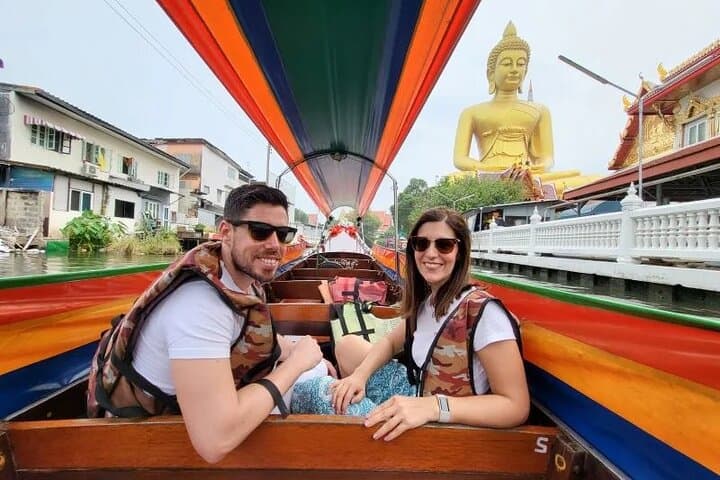
Glide off the Chao Phraya and into Thonburi’s quiet canals on a 2‑hour longtail boat ride. Visit Baan Silapin and photograph the towering Wat Paknam from the water while sampling everyday riverside life.
Glide off the Chao Phraya and into Thonburi’s quiet canals on a 2‑hour longtail boat ride. Visit Baan Silapin and photograph the towering Wat Paknam from the water while sampling everyday riverside life.
The longtail’s engine burbles and the Chao Phraya falls away as you slip into a network of canals where daily life moves at river pace. Wooden houses lean toward the water, laundry flutters like small flags, and temple roofs catch light while the river nudges you along—this is Thonburi seen from its veins.
Verified experiences and guided adventures in the surrounding area.
Operated by Classic Tourist · Bangkok, Bangkok
The longtail’s engine burbles and the Chao Phraya falls away as you slip into a network of canals where daily life moves at river pace. Wooden houses lean toward the water, laundry flutters like small flags, and temple roofs catch light while the river nudges you along—this is Thonburi seen from its veins.
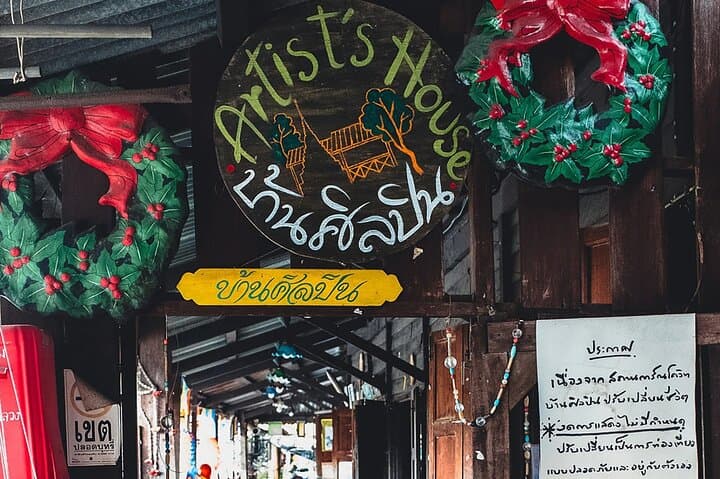
These canals (khlongs) were Bangkok’s original streets, carved and settled in the 18th and 19th centuries when waterways were the city’s arteries. Geologically the area is alluvial plain—soft soil shaped by the river—so communities adapted with stilted homes and floating markets. Culture shows up in small acts: monks walking to morning alms, elders repairing nets, and artists preserving folk crafts at Baan Silapin (The Artist’s House).
Your 2‑hour cruise combines slow photography stops and short shore visits. Expect a pause at the Artist’s House, where century‑old wooden walkways and shadow‑puppet shows illustrate local tradition, and a photo run‑by of Wat Paknam Phasi Charoen’s soaring Buddha statue from the water.
Practicalities are straightforward. The ride is easygoing but open to sun, spray, and narrow gangways—bring sun protection, decent footwear, and a small change of cash for snacks. Tours often run in the morning or late afternoon to avoid the hottest light; mornings give softer river air and quieter canals. If rain is in the forecast, boats continue in light showers but operators may cancel in heavy weather—check ahead.
This is a short, sensory slice of Bangkok that trades traffic for tides and offers immediate, human-scale encounters with river life.
easy.
2 hours.
Suitable for most fitness levels; requires getting on/off a low boat and walking short wooden piers.
Yes—families commonly take this cruise; infants should sit on laps and operators can advise on safety at boarding.
Canal walkways and traditional houses often have steps and narrow piers; accessibility is limited—contact the operator for specifics.
The boat pauses for a photo opportunity from the water; there is typically no extensive shore visit to the temple on this short tour.
The listed guide is a licensed English‑speaking guide; multilingual guides may be available on request.
Thonburi served as Thailand’s capital briefly after 1767; its canals are remnants of a once‑dominant waterborne city layout and still sustain neighborhood economies and crafts.
River health depends on reduced plastic use and responsible waste disposal—support operators and vendors who limit single‑use plastics and respect local waterways.
Classic Tourist operates guided outdoor trips and adventures with an emphasis on safety, stewardship, and memorable experiences.


The longtail’s engine burbles and the Chao Phraya falls away as you slip into a network of canals where daily life moves at river pace. Wooden houses lean toward the water, laundry flutters like small flags, and temple roofs catch light while the river nudges you along—this is Thonburi seen from its veins.
The longtail’s engine burbles and the Chao Phraya falls away as you slip into a network of canals where daily life moves at river pace. Wooden houses lean toward the water, laundry flutters like small flags, and temple roofs catch light while the river nudges you along—this is Thonburi seen from its veins.
These canals (khlongs) were Bangkok’s original streets, carved and settled in the 18th and 19th centuries when waterways were the city’s arteries. Geologically the area is alluvial plain—soft soil shaped by the river—so communities adapted with stilted homes and floating markets. Culture shows up in small acts: monks walking to morning alms, elders repairing nets, and artists preserving folk crafts at Baan Silapin (The Artist’s House).
Your 2‑hour cruise combines slow photography stops and short shore visits. Expect a pause at the Artist’s House, where century‑old wooden walkways and shadow‑puppet shows illustrate local tradition, and a photo run‑by of Wat Paknam Phasi Charoen’s soaring Buddha statue from the water.
Practicalities are straightforward. The ride is easygoing but open to sun, spray, and narrow gangways—bring sun protection, decent footwear, and a small change of cash for snacks. Tours often run in the morning or late afternoon to avoid the hottest light; mornings give softer river air and quieter canals. If rain is in the forecast, boats continue in light showers but operators may cancel in heavy weather—check ahead.
This is a short, sensory slice of Bangkok that trades traffic for tides and offers immediate, human-scale encounters with river life.