THE ADVENTURE COLLECTIVE® · Independent discovery and booking for outdoor travel

Spend two days inside Asuka Village’s living history: kofun, family soy-breweries, sutra copying, plant dyeing, and a farm stay in a restored folk house. This private tour blends quiet archaeology with hands-on craft and local hospitality.
Spend two days inside Asuka Village’s living history: kofun, family soy-breweries, sutra copying, plant dyeing, and a farm stay in a restored folk house. This private tour blends quiet archaeology with hands-on craft and local hospitality.
On a low morning, rice terraces hold the mist like a shallow bowl and stone mounds rise from green fields—this is Asuka. The two-day private tour moves at a measured pace: inspect the hulking stones of Ishibutai kofun, feel the creak of wooden barrels at a century-old soy sauce kura, and sit quietly to copy a sutra while a breeze nudges the temple eaves.
Verified experiences and guided adventures in the surrounding area.
Operated by Asuka Tourism Association · Asuka, Nara Prefecture
On a low morning, rice terraces hold the mist like a shallow bowl and stone mounds rise from green fields—this is Asuka. The two-day private tour moves at a measured pace: inspect the hulking stones of Ishibutai kofun, feel the creak of wooden barrels at a century-old soy sauce kura, and sit quietly to copy a sutra while a breeze nudges the temple eaves.
Asuka was a crucible of early Japan during the Asuka period (6th–8th centuries), when court systems, Buddhism, and statecraft crystallized. The landscape is archaeological as much as agricultural: kofun tumuli and reconstructed octagonal imperial mounds sit beside terraces and narrow lanes. Geologically the area is gentle sedimentary hills and tuff stone chambers, which sheltered ornate mural work later conserved in purpose-built facilities like Kitora.
Culturally, the trip pairs hands-on craft with lived-in tradition—plant dyeing with locally foraged inks, soy-sauce squeezing by hand, and a farm visit that explains satoyama stewardship. Accommodation in a restored 150-year-old farmhouse gives a sense of domestic rhythm: low doors, polished floors, modern comforts threaded into old beams.
Practical notes: travel from Nara or Osaka by train then local bus or e-bike; much of the touring is low-impact walking on lanes and compacted soil. Bring modest clothing for temple visits, cash for small purchases, waterproof layers for sudden rain, and a comfortable pair of shoes for uneven paths. Plan for quiet mornings to catch light on kofun stones and book this private itinerary early—the experiences are hands-on and limited in group size.
easy.
2 days.
Suitable for most fitness levels; involves light walking on uneven village lanes and short steps.
Take a regional train to the nearest station (Asuka or nearby) then transfer to local bus or an e-bike for final access; guides typically advise exact timings when you book.
This private itinerary notes admissions and experiential fees are included where specified; check booking details for any optional extras.
The program is low-impact and family-friendly, but not recommended for those with serious spinal, heart, or pregnancy-related restrictions per provider guidance.
An English-speaking guide is provided, often with Japanese language support on site at small businesses.
Asuka was the political and cultural center during the Asuka period, when Buddhism and centralized government institutions first took shape in Japan.
Local communities practice satoyama stewardship—sustainable rice terraces and careful archaeological preservation are priorities; visitors should stick to paths and avoid disturbing sites.
Asuka Tourism Association operates guided outdoor trips and adventures with an emphasis on safety, stewardship, and memorable experiences.
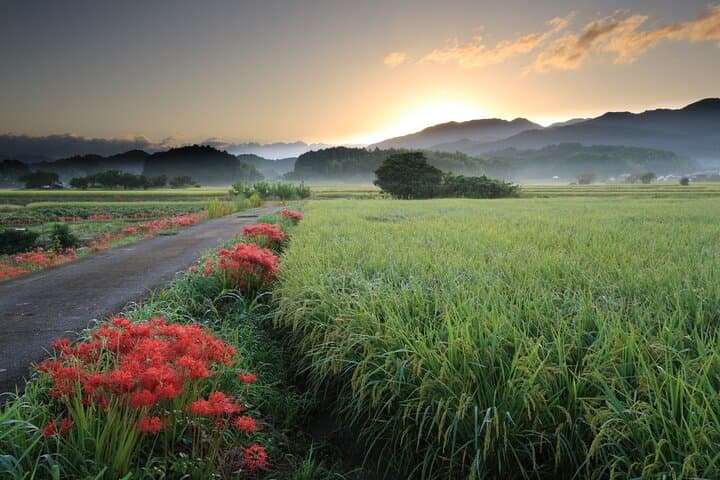


On a low morning, rice terraces hold the mist like a shallow bowl and stone mounds rise from green fields—this is Asuka. The two-day private tour moves at a measured pace: inspect the hulking stones of Ishibutai kofun, feel the creak of wooden barrels at a century-old soy sauce kura, and sit quietly to copy a sutra while a breeze nudges the temple eaves.
On a low morning, rice terraces hold the mist like a shallow bowl and stone mounds rise from green fields—this is Asuka. The two-day private tour moves at a measured pace: inspect the hulking stones of Ishibutai kofun, feel the creak of wooden barrels at a century-old soy sauce kura, and sit quietly to copy a sutra while a breeze nudges the temple eaves.
Asuka was a crucible of early Japan during the Asuka period (6th–8th centuries), when court systems, Buddhism, and statecraft crystallized. The landscape is archaeological as much as agricultural: kofun tumuli and reconstructed octagonal imperial mounds sit beside terraces and narrow lanes. Geologically the area is gentle sedimentary hills and tuff stone chambers, which sheltered ornate mural work later conserved in purpose-built facilities like Kitora.
Culturally, the trip pairs hands-on craft with lived-in tradition—plant dyeing with locally foraged inks, soy-sauce squeezing by hand, and a farm visit that explains satoyama stewardship. Accommodation in a restored 150-year-old farmhouse gives a sense of domestic rhythm: low doors, polished floors, modern comforts threaded into old beams.
Practical notes: travel from Nara or Osaka by train then local bus or e-bike; much of the touring is low-impact walking on lanes and compacted soil. Bring modest clothing for temple visits, cash for small purchases, waterproof layers for sudden rain, and a comfortable pair of shoes for uneven paths. Plan for quiet mornings to catch light on kofun stones and book this private itinerary early—the experiences are hands-on and limited in group size.