THE ADVENTURE COLLECTIVE® · Independent discovery and booking for outdoor travel

A private full-day tour from Prague that traces the arc from Reinhard Heydrich’s reign of terror to the villages and memorials shaped by resistance and reprisal. Visit Terezín Small Fortress, Lidice Museum, the Anthropoid crypt and the assassination site with an expert guide.
A private full-day tour from Prague that traces the arc from Reinhard Heydrich’s reign of terror to the villages and memorials shaped by resistance and reprisal. Visit Terezín Small Fortress, Lidice Museum, the Anthropoid crypt and the assassination site with an expert guide.
You step out of Prague’s morning hush into a modern van and the road unwinds north toward low, flat floodplains where history sits visibly on the land.
Verified experiences and guided adventures in the surrounding area.
Operated by Michal Pohl · Prague, Prague
You step out of Prague’s morning hush into a modern van and the road unwinds north toward low, flat floodplains where history sits visibly on the land.
At Terezín, the Small Fortress’s stone walls close in with a bureaucratic calm. Corridors and prison yards still speak in measured silences; your guide threads archival detail with personal stories so the place’s administrative cruelty and the quiet acts of resistance become tangible. Later, the “model ghetto” exhibits—children’s drawings, clandestine lessons—reveal culture preserved under coercion.
In Lidice the mood shifts again: a cleared village, sculpted memorials and open meadows that force a different kind of listening. The Anthropoid crypt and assassination site bring the narrative full circle, showing how a single wartime act provoked both violent reprisal and enduring remembrance.
Geology here is unflashy—river plains and loess soils that made the area agriculturally valuable and strategically exposed. Culturally, these sites are maintained by Czech institutions and foundations; visitors encounter museums that balance documentary detail with respectful commemoration.
Practical guidance: the day is long (about 9–10 hours) but physically easy—short walks, paved and unpaved surfaces, and timed museum visits. Dress in layers for variable spring-to-autumn weather, bring comfortable shoes, and leave loud behavior at the door: these are working memorials. Allow time to reflect; benches and small gardens offer quiet spaces. Photographs are allowed in some areas but follow signage and guide instructions. Expect thoughtful storytelling, accessible pacing, and an emotionally serious itinerary that rewards preparation and respect.
easy.
9–10 hours.
Minimal fitness required—short, gentle walks and standing during museum tours; suitable for most travelers
The tour runs about 9–10 hours and includes private pickup and drop-off from central Prague locations.
Yes—walking is limited and optional, and the tour notes accessibility for wheelchairs and strollers, though some historic buildings have steps or low lighting.
Entrance fees to Terezín and Lidice are included; lunch is flexible with options discussed during booking and the vehicle carries bottled water.
Guiding language depends on your booking; confirm your preferred language at reservation to ensure an expert narrator is provided.
The tour traces the arc from Reinhard Heydrich’s assassination in 1942, which prompted deadly reprisals including the destruction of Lidice, to the wartime uses of Terezín as a transit camp and fortress prison.
These sites are stewarded by national and local institutions; visitors help preservation by following paths, avoiding litter, and considering donations to museum funds.
Michal Pohl operates guided outdoor trips and adventures with an emphasis on safety, stewardship, and memorable experiences.
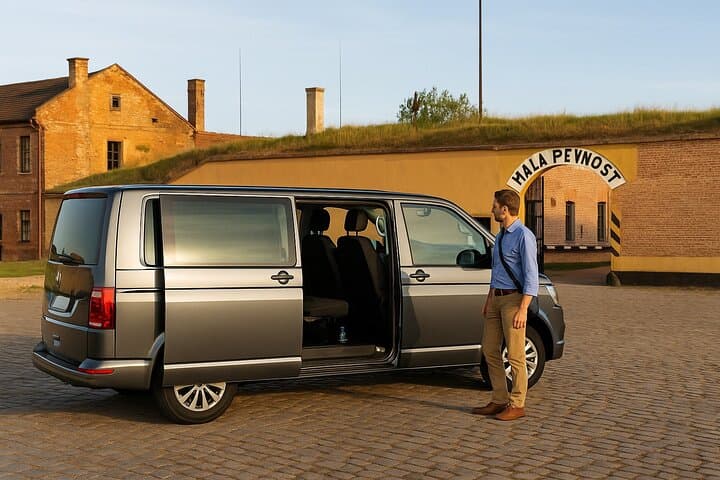


You step out of Prague’s morning hush into a modern van and the road unwinds north toward low, flat floodplains where history sits visibly on the land.
You step out of Prague’s morning hush into a modern van and the road unwinds north toward low, flat floodplains where history sits visibly on the land.
At Terezín, the Small Fortress’s stone walls close in with a bureaucratic calm. Corridors and prison yards still speak in measured silences; your guide threads archival detail with personal stories so the place’s administrative cruelty and the quiet acts of resistance become tangible. Later, the “model ghetto” exhibits—children’s drawings, clandestine lessons—reveal culture preserved under coercion.
In Lidice the mood shifts again: a cleared village, sculpted memorials and open meadows that force a different kind of listening. The Anthropoid crypt and assassination site bring the narrative full circle, showing how a single wartime act provoked both violent reprisal and enduring remembrance.
Geology here is unflashy—river plains and loess soils that made the area agriculturally valuable and strategically exposed. Culturally, these sites are maintained by Czech institutions and foundations; visitors encounter museums that balance documentary detail with respectful commemoration.
Practical guidance: the day is long (about 9–10 hours) but physically easy—short walks, paved and unpaved surfaces, and timed museum visits. Dress in layers for variable spring-to-autumn weather, bring comfortable shoes, and leave loud behavior at the door: these are working memorials. Allow time to reflect; benches and small gardens offer quiet spaces. Photographs are allowed in some areas but follow signage and guide instructions. Expect thoughtful storytelling, accessible pacing, and an emotionally serious itinerary that rewards preparation and respect.