THE ADVENTURE COLLECTIVE® · Independent discovery and booking for outdoor travel

A full-day loop from Sarajevo that stitches together Mostar’s iconic bridge, Konjic’s Ottoman charm, wartime memorials and the serene Blagaj Tekija beside the Buna spring. Expect scenic drives, short walks on cobblestones, and accessible cultural sites with plenty of photo opportunities.
A full-day loop from Sarajevo that stitches together Mostar’s iconic bridge, Konjic’s Ottoman charm, wartime memorials and the serene Blagaj Tekija beside the Buna spring. Expect scenic drives, short walks on cobblestones, and accessible cultural sites with plenty of photo opportunities.
You step onto Latin Bridge in Sarajevo as morning light runs along the Miljacka; the van hums, maps unfold and the road south begins. Over low hills and through river gorges the landscape shifts—karst walls, pine-scrub slopes and the emerald sweep of the Neretva beckon.
Verified experiences and guided adventures in the surrounding area.
Operated by Balkan Tours · Sarajevo, Federation of Bosnia and Herzegovina
You step onto Latin Bridge in Sarajevo as morning light runs along the Miljacka; the van hums, maps unfold and the road south begins. Over low hills and through river gorges the landscape shifts—karst walls, pine-scrub slopes and the emerald sweep of the Neretva beckon.
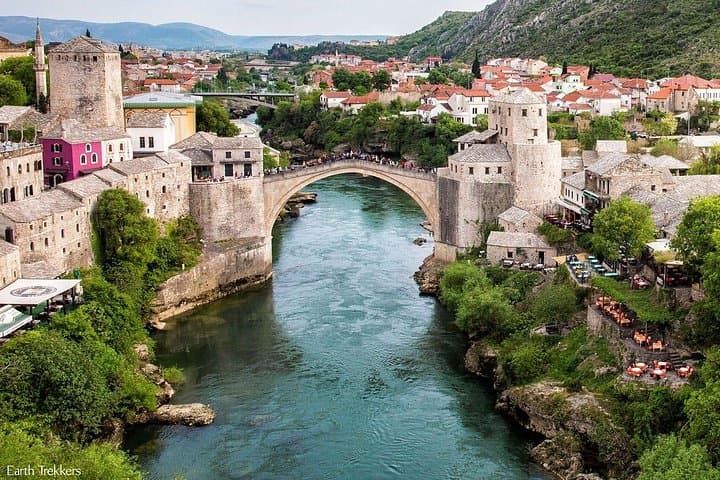
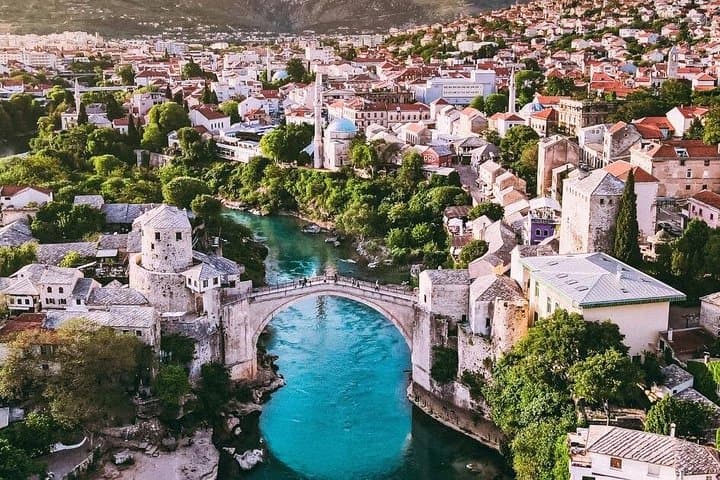
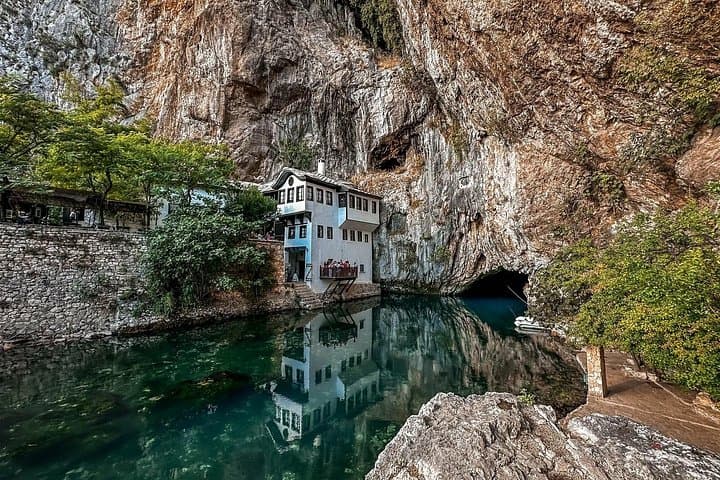
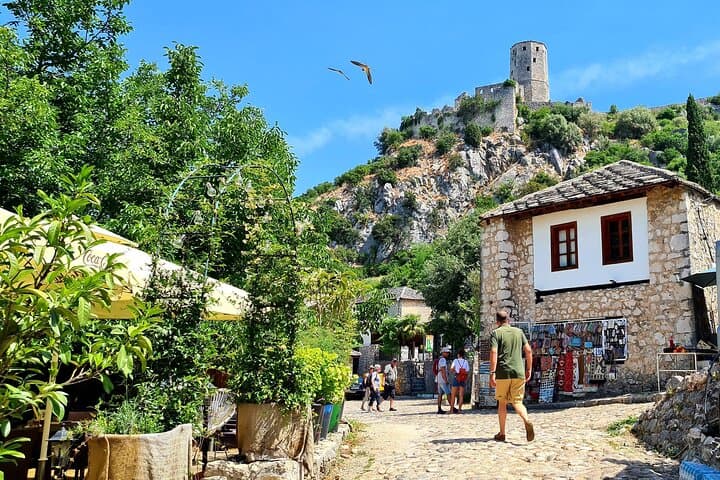
This full-day loop threads Ottoman, Austro-Hungarian and wartime histories: Konjic’s Ottoman-era bridge and riverside stories, Jablanica’s WWII Partisan monument, the medieval ramparts of Počitelj, and Mostar’s reconstructed Stari Most that arched into global attention during the 1990s conflicts. Blagaj Tekija sits at the Buna spring—limestone fountains create a cool, constant flow that has supported settlement and spiritual practice since the 16th century.
Geology is visible at every turn: river-carved gorges, karst springs that force crystal-clear water from limestone, and terraces of olive and fig where soil and microclimate allow. Local culture is tactile—stone streets, minarets puncturing the skyline, cafés serving strong Bosnian coffee and ćevapi beside riverside restaurants.
Practical guidance: this is a mostly seated day with multiple short stops for walking and photos; wear grippy shoes for cobblestones and a light jacket for spring or evening wind. Bring cash for small museums and lunch in Blagaj, and a refillable bottle—the region’s springs are safe and refreshing. Expect 7–9 hours including transit; camera, comfortable layers, and patience for narrow town streets make the day smoother. The route blends easy cultural walking with the sensation of moving through landscape shaped by water and history—engaging, grounded, and vivid.
easy.
7–9 hours.
Suitable for travelers who can handle a day of sitting interspersed with short walks over uneven surfaces; minimal endurance required.
The tour runs about 7–9 hours (420–540 minutes) including several hours of driving between sites and multiple short stops of 30–90 minutes each.
The tour is rated easy and family-friendly, but many sites have uneven cobblestones and stairs; travelers with limited mobility should check accessibility at specific stops like Počitelj and Blagaj.
Admission to Blagaj Tekija is included, while other small museums or optional activities and lunch at riverside restaurants are generally at your own expense—bring some cash.
Pickup and drop-off are arranged in Sarajevo, with the standard meeting point at Latin Bridge (where Franz Ferdinand’s assassination occurred).
The route threads Ottoman-era settlements and 20th-century wartime sites; Stari Most was rebuilt after conflict in the 1990s and symbolizes postwar restoration.
Karst springs and river habitats are sensitive—avoid littering, stay on paths to protect riparian vegetation, and support local businesses that adhere to sustainable tourism practices.
Balkan Tours operates guided outdoor trips and adventures with an emphasis on safety, stewardship, and memorable experiences.
You step onto Latin Bridge in Sarajevo as morning light runs along the Miljacka; the van hums, maps unfold and the road south begins. Over low hills and through river gorges the landscape shifts—karst walls, pine-scrub slopes and the emerald sweep of the Neretva beckon.
You step onto Latin Bridge in Sarajevo as morning light runs along the Miljacka; the van hums, maps unfold and the road south begins. Over low hills and through river gorges the landscape shifts—karst walls, pine-scrub slopes and the emerald sweep of the Neretva beckon.
This full-day loop threads Ottoman, Austro-Hungarian and wartime histories: Konjic’s Ottoman-era bridge and riverside stories, Jablanica’s WWII Partisan monument, the medieval ramparts of Počitelj, and Mostar’s reconstructed Stari Most that arched into global attention during the 1990s conflicts. Blagaj Tekija sits at the Buna spring—limestone fountains create a cool, constant flow that has supported settlement and spiritual practice since the 16th century.
Geology is visible at every turn: river-carved gorges, karst springs that force crystal-clear water from limestone, and terraces of olive and fig where soil and microclimate allow. Local culture is tactile—stone streets, minarets puncturing the skyline, cafés serving strong Bosnian coffee and ćevapi beside riverside restaurants.
Practical guidance: this is a mostly seated day with multiple short stops for walking and photos; wear grippy shoes for cobblestones and a light jacket for spring or evening wind. Bring cash for small museums and lunch in Blagaj, and a refillable bottle—the region’s springs are safe and refreshing. Expect 7–9 hours including transit; camera, comfortable layers, and patience for narrow town streets make the day smoother. The route blends easy cultural walking with the sensation of moving through landscape shaped by water and history—engaging, grounded, and vivid.