THE ADVENTURE COLLECTIVE® · Independent discovery and booking for outdoor travel

Spend a long day exploring Herzegovina’s highlights from Sarajevo — Mostar’s Old Bridge, the Blagaj Tekija by the Buna spring, medieval Počitelj and the swimming pools of Kravice Falls. This guided circuit blends history, karst geology and easy walks into one full-day outing.
Spend a long day exploring Herzegovina’s highlights from Sarajevo — Mostar’s Old Bridge, the Blagaj Tekija by the Buna spring, medieval Počitelj and the swimming pools of Kravice Falls. This guided circuit blends history, karst geology and easy walks into one full-day outing.
Morning light breaks over Sarajevo and the minarets fade in the rearview as the bus threads south into Herzegovina. By midday the Neretva River carves a green cleft through limestone and the air tastes of river spray and grilled ćevapi; each stop folds into the next like chapters of a regional story.
Verified experiences and guided adventures in the surrounding area.
Operated by Torus Tours · Sarajevo, Federation of Bosnia and Herzegovina
Morning light breaks over Sarajevo and the minarets fade in the rearview as the bus threads south into Herzegovina. By midday the Neretva River carves a green cleft through limestone and the air tastes of river spray and grilled ćevapi; each stop folds into the next like chapters of a regional story.
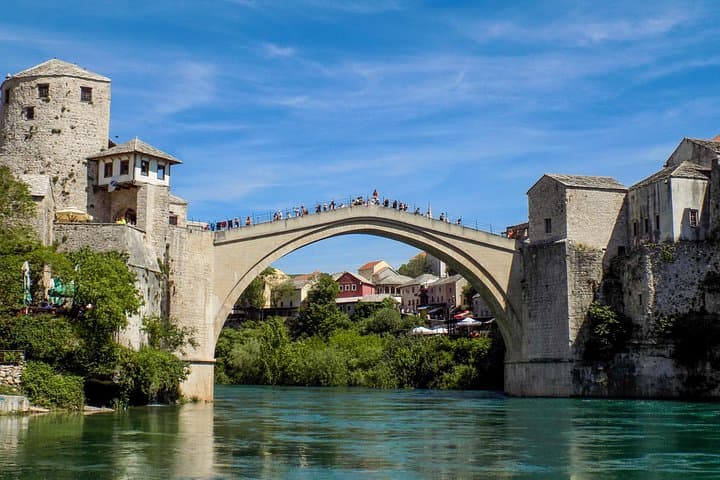
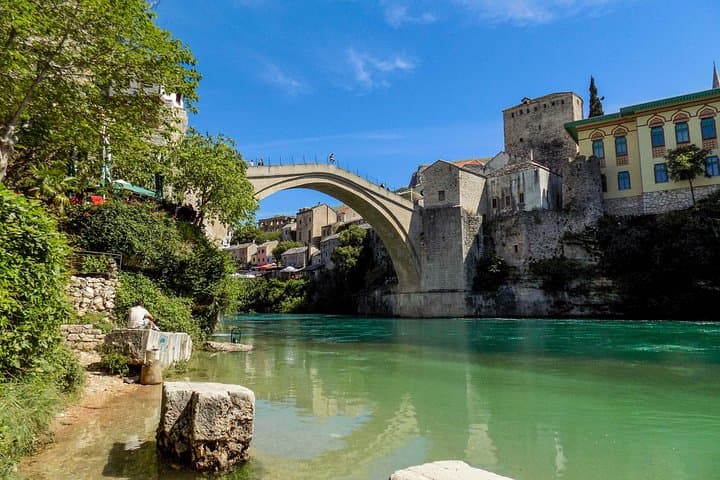
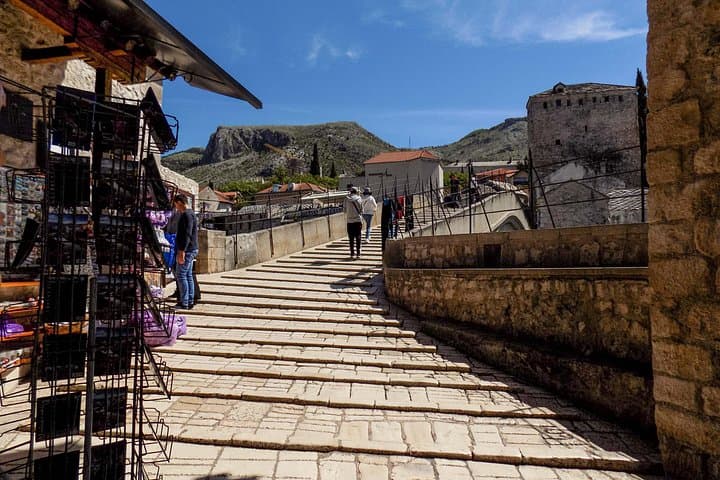
Mostar’s Old Bridge stands at the center of that story — a 16th-century Ottoman design rebuilt after the 1990s conflict, its silhouette drawing visitors to the cobbled old town and the market that lines the river. Downstream, Blagaj’s Dervish monastery perches at the Buna spring, where cold karst water surges from the cliff and dares visitors to linger over lunch on the terraces.
Počitelj offers a different pace: a medieval fortress-town with Ottoman-era houses and narrow streets that recall Bosnian kings and borderland defenses. The day's finale is Kravice Falls, where tuff limestone shelves spill into broad pools; in summer the falls invite swimmers, in shoulder seasons they hum with fewer people but the same force of water.
Practically, expect a long but low-impact day: roughly 11–13 hours including driving and short guided walks at each site. Wear grippy shoes for uneven paving and cliffside paths, bring a refillable bottle for karst springs, and budget ~10 EUR for Kravice entrance in season. The tour balances cultural highlights with geology — karst springs, travertine deposits, Ottoman stonework — making it a compact introduction to Herzegovina’s landscapes and layered history.
easy.
11–13 hours.
Suitable for most fitness levels; involves short walks, standing, and light uneven terrain at viewpoints
The tour runs about 11–13 hours from a morning departure in Sarajevo with return in the evening; exact start times depend on the operator's schedule.
Yes, swimming is generally allowed in the summer when the entrance is open; water is cold and currents can be present near the falls—exercise caution.
Admissions to most towns are free; Kravice typically charges ~10 EUR per person in season and meals are not included—plan to pay for lunch at Blagaj by the Buna spring.
The tour is low-impact but involves walking on uneven surfaces and some steps; it’s generally family-friendly but may be challenging for travelers with limited mobility.
Mostar developed as an Ottoman frontier town in the 15th–16th centuries; Počitelj’s fortified complex reflects medieval Bosnian and later Ottoman influences.
Kravice and surrounding karst features are protected; visitors should avoid stepping on travertine deposits and take all trash with them to minimize impact.
Torus Tours operates guided outdoor trips and adventures with an emphasis on safety, stewardship, and memorable experiences.
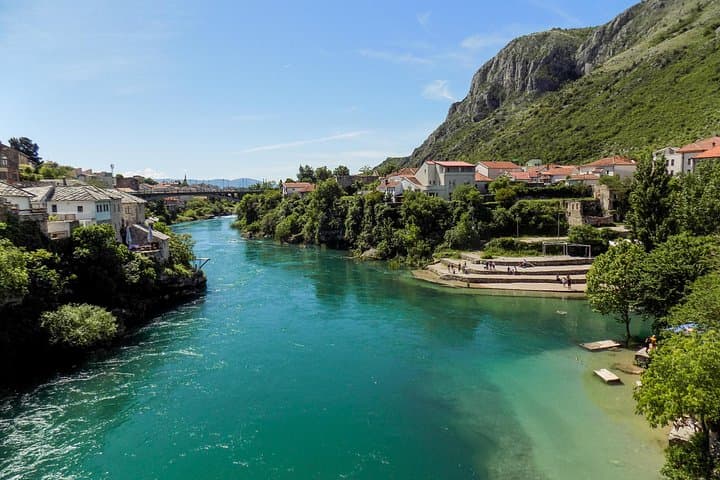
Morning light breaks over Sarajevo and the minarets fade in the rearview as the bus threads south into Herzegovina. By midday the Neretva River carves a green cleft through limestone and the air tastes of river spray and grilled ćevapi; each stop folds into the next like chapters of a regional story.
Morning light breaks over Sarajevo and the minarets fade in the rearview as the bus threads south into Herzegovina. By midday the Neretva River carves a green cleft through limestone and the air tastes of river spray and grilled ćevapi; each stop folds into the next like chapters of a regional story.
Mostar’s Old Bridge stands at the center of that story — a 16th-century Ottoman design rebuilt after the 1990s conflict, its silhouette drawing visitors to the cobbled old town and the market that lines the river. Downstream, Blagaj’s Dervish monastery perches at the Buna spring, where cold karst water surges from the cliff and dares visitors to linger over lunch on the terraces.
Počitelj offers a different pace: a medieval fortress-town with Ottoman-era houses and narrow streets that recall Bosnian kings and borderland defenses. The day's finale is Kravice Falls, where tuff limestone shelves spill into broad pools; in summer the falls invite swimmers, in shoulder seasons they hum with fewer people but the same force of water.
Practically, expect a long but low-impact day: roughly 11–13 hours including driving and short guided walks at each site. Wear grippy shoes for uneven paving and cliffside paths, bring a refillable bottle for karst springs, and budget ~10 EUR for Kravice entrance in season. The tour balances cultural highlights with geology — karst springs, travertine deposits, Ottoman stonework — making it a compact introduction to Herzegovina’s landscapes and layered history.