THE ADVENTURE COLLECTIVE® · Independent discovery and booking for outdoor travel

See Herzegovina’s limestone cliffs, karst springs and Ottoman towns in one full‑day loop from Sarajevo. Visit Blagaj’s Dervish house, Počitelj’s hilltop fort, Jablanica’s memorial and Mostar’s iconic Old Bridge.
See Herzegovina’s limestone cliffs, karst springs and Ottoman towns in one full‑day loop from Sarajevo. Visit Blagaj’s Dervish house, Počitelj’s hilltop fort, Jablanica’s memorial and Mostar’s iconic Old Bridge.
A chill morning in Sarajevo—the minarets still silver with dawn—the van eases onto the highway and the capital slips behind you. By midday the landscape has changed: limestone cliffs shear down into emerald water, the Neretva threads cold and fast, and small Ottoman towns perch where slope meets river. This full‑day circuit stitches together Konjic’s 17th‑century stone bridge, the partisan memorials at Jablanica, the cliff‑hugging Dervish house at Blagaj, Počitelj’s fortified lanes, and Mostar’s reconstructed Stari Most.
Verified experiences and guided adventures in the surrounding area.
Operated by ID Bosnia Tours · Sarajevo, Federation of Bosnia and Herzegovina
A chill morning in Sarajevo—the minarets still silver with dawn—the van eases onto the highway and the capital slips behind you. By midday the landscape has changed: limestone cliffs shear down into emerald water, the Neretva threads cold and fast, and small Ottoman towns perch where slope meets river. This full‑day circuit stitches together Konjic’s 17th‑century stone bridge, the partisan memorials at Jablanica, the cliff‑hugging Dervish house at Blagaj, Počitelj’s fortified lanes, and Mostar’s reconstructed Stari Most.
The route is geology and history in motion. Karst springs feed the Buna—one of Europe’s strongest sources—while the Neretva valley has been a crossroads since Roman, Ottoman and Austro‑Hungarian times. Cultural layers are visible in architecture: Ottoman mosques and tekkes, Austro‑Hungarian façades and austere Yugoslav monuments recalling the Battle for the Neretva.
Expect mostly roadside travel with short guided walks and stairs at each stop; Mostar’s old town requires about two hours to explore on foot. Bring sturdy shoes for uneven stone streets and a light jacket for shade by the water—the Buna can feel icy even in summer. Photographers should time Mostar’s bridge for softer morning or late afternoon light and keep small change for cafés and entrance fees. If you’re interested in local craft, ask about Konjic woodcarving and try Bosnian coffee at a riverside cafe. The tour balances culture and terrain: it’s an approachable way to experience Herzegovina’s rivers, cliffs and living history in a single long, satisfying day.
easy.
10–12 hours.
Suitable for travelers in average condition who can handle several short walks and stairs; no long hikes.
The tour runs about 10–12 hours (approximately 600–720 minutes); start times vary by operator—confirm pick‑up time when booking.
Lunch is typically at a restaurant in Blagaj and may or may not be included—check the tour details and tell the operator about dietary needs.
Yes; the route is family‑friendly with vehicle transfers between sites. Infants often ride on laps or in provided seats—confirm at booking.
Vehicle transport is accessible for many, but historical sites have steps and uneven terrain; full accessibility is limited at some stops.
The region reflects Ottoman urban planning and Austro‑Hungarian influence; Jablanica hosts a major WWII memorial for the Battle for the Neretva.
Karst springs and the Neretva are sensitive to pollution and overuse—stick to paths, pack out trash and support local businesses that follow sustainable practices.
ID Bosnia Tours operates guided outdoor trips and adventures with an emphasis on safety, stewardship, and memorable experiences.
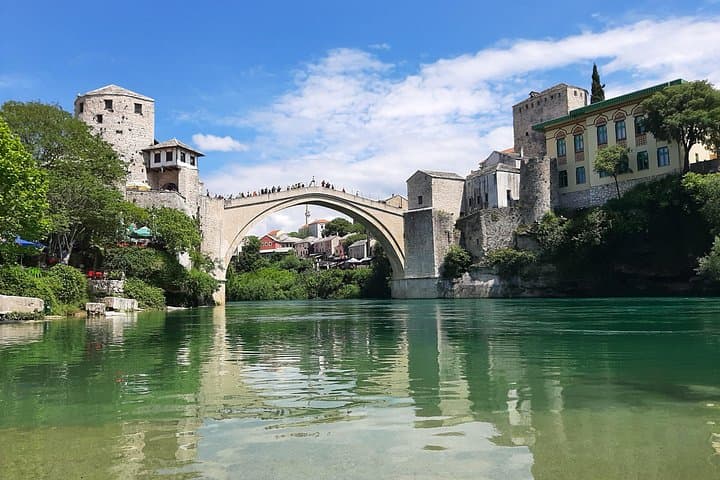
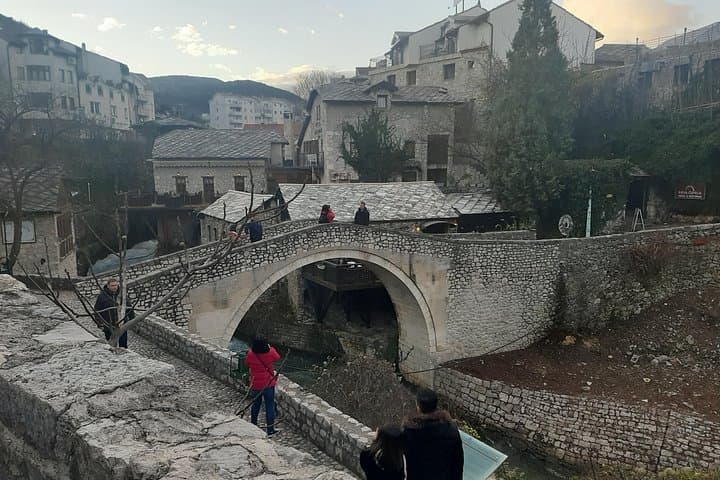
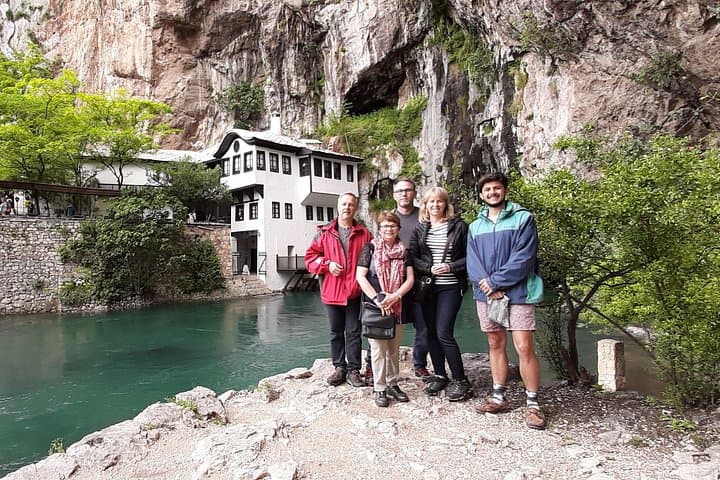
A chill morning in Sarajevo—the minarets still silver with dawn—the van eases onto the highway and the capital slips behind you. By midday the landscape has changed: limestone cliffs shear down into emerald water, the Neretva threads cold and fast, and small Ottoman towns perch where slope meets river. This full‑day circuit stitches together Konjic’s 17th‑century stone bridge, the partisan memorials at Jablanica, the cliff‑hugging Dervish house at Blagaj, Počitelj’s fortified lanes, and Mostar’s reconstructed Stari Most.
A chill morning in Sarajevo—the minarets still silver with dawn—the van eases onto the highway and the capital slips behind you. By midday the landscape has changed: limestone cliffs shear down into emerald water, the Neretva threads cold and fast, and small Ottoman towns perch where slope meets river. This full‑day circuit stitches together Konjic’s 17th‑century stone bridge, the partisan memorials at Jablanica, the cliff‑hugging Dervish house at Blagaj, Počitelj’s fortified lanes, and Mostar’s reconstructed Stari Most.
The route is geology and history in motion. Karst springs feed the Buna—one of Europe’s strongest sources—while the Neretva valley has been a crossroads since Roman, Ottoman and Austro‑Hungarian times. Cultural layers are visible in architecture: Ottoman mosques and tekkes, Austro‑Hungarian façades and austere Yugoslav monuments recalling the Battle for the Neretva.
Expect mostly roadside travel with short guided walks and stairs at each stop; Mostar’s old town requires about two hours to explore on foot. Bring sturdy shoes for uneven stone streets and a light jacket for shade by the water—the Buna can feel icy even in summer. Photographers should time Mostar’s bridge for softer morning or late afternoon light and keep small change for cafés and entrance fees. If you’re interested in local craft, ask about Konjic woodcarving and try Bosnian coffee at a riverside cafe. The tour balances culture and terrain: it’s an approachable way to experience Herzegovina’s rivers, cliffs and living history in a single long, satisfying day.