THE ADVENTURE COLLECTIVE® · Independent discovery and booking for outdoor travel

A single day that stitches Herzegovina’s highlights into a compact circuit: the Old Bridge of Mostar, the spring-fed Blagaj Tekija, medieval Počitelj and the swim-ready amphitheater at Kravica Waterfall. Expect a full 10–12 hour outing with short walks, photo stops, and a chance to cool off in summer.
A single day that stitches Herzegovina’s highlights into a compact circuit: the Old Bridge of Mostar, the spring-fed Blagaj Tekija, medieval Počitelj and the swim-ready amphitheater at Kravica Waterfall. Expect a full 10–12 hour outing with short walks, photo stops, and a chance to cool off in summer.
You step onto the Neretva valley with the morning light cutting across green river glass; buses roll away from Sarajevo and the road drops into limestone canyons where villages cling to cliffs. By midmorning the guide has already pointed out Konjic’s Austro-Hungarian bridge and the rippled surface where the Buna dares the Neretva to meet it.
Verified experiences and guided adventures in the surrounding area.
Operated by Adventure in Bosnia | Tour Agency | Tours and Excursions · Mostar, Herzegovina-Neretva Canton
You step onto the Neretva valley with the morning light cutting across green river glass; buses roll away from Sarajevo and the road drops into limestone canyons where villages cling to cliffs. By midmorning the guide has already pointed out Konjic’s Austro-Hungarian bridge and the rippled surface where the Buna dares the Neretva to meet it.
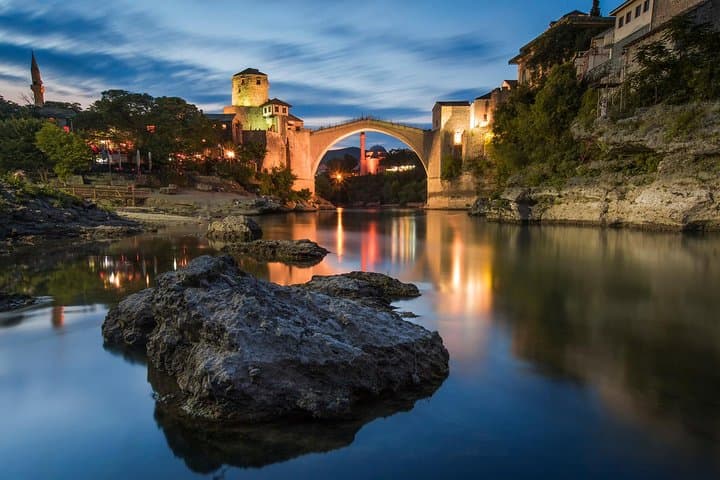
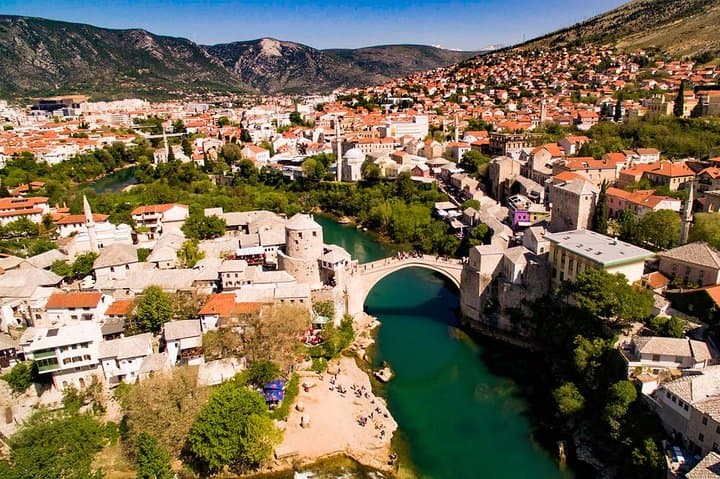
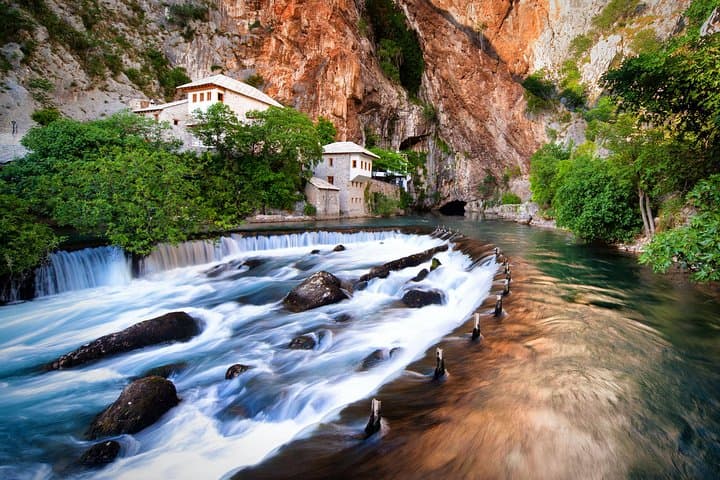
This loop stitches together Ottoman-era Mostar—home to the reconstructed 16th-century Stari Most—with Blagaj Tekija, a Dervish house wedged beside the Buna spring, and Počitelj’s stone fortifications that rise like a watchful spine above the plain. Geology here is karst: travertine terraces and underground springs sculpt the rivers, and the Trebižat pours into the 28 m amphitheater at Kravica, creating a wide curtain of water and natural pools.
Culturally the route traces Herzegovina’s crossroads of empires: Ottoman mosques and Austro-Hungarian facades sit within towns rebuilt after recent conflict, while local cafés still trade in strong coffee and ćevapi.
Practical side: expect a full 10–12 hour day with three substantial stops for photos, a swim at Kravica in summer, and short guided walks at Blagaj and Mostar. Wear sturdy walking shoes for cobbled streets and slippery river edges, carry cash for small vendors, and plan arrival times if you want quieter windows at Stari Most. Bring a swim kit if visiting in warm months and a light jacket for cliffside breezes. The day is a compact primer on Herzegovina—raw rivers, old stones, and easy-access nature that rewards simple preparation.
easy.
10–12 hours.
Suitable for most fitness levels—requires short walks, standing and some steps; not strenuous but expect a full-day out.
Yes—most departures include hotel pickup and drop-off; confirm your specific pickup point when booking.
Yes during warm months there is swimming in the natural pool below Kravica, but currents and local rules vary—follow guide instructions and posted signs.
Many historic areas have cobbled streets and steps; accessibility is limited at some viewpoints and at the Tekija’s cliffside paths—contact the operator for specific assistance.
The convertible mark (BAM) is used locally; cards are accepted in larger establishments but small vendors prefer cash—tipping guides and drivers a small amount is customary.
Mostar developed as an Ottoman frontier town in the 15th–16th centuries; Stari Most was built in the 1560s, destroyed in the 1990s conflict and meticulously reconstructed and reopened in 2004.
Kravica and Blagaj face seasonal crowding; follow marked paths, avoid single-use plastics, and support local entrance fees that fund site upkeep.
Adventure in Bosnia | Tour Agency | Tours and Excursions operates guided outdoor trips and adventures with an emphasis on safety, stewardship, and memorable experiences.
You step onto the Neretva valley with the morning light cutting across green river glass; buses roll away from Sarajevo and the road drops into limestone canyons where villages cling to cliffs. By midmorning the guide has already pointed out Konjic’s Austro-Hungarian bridge and the rippled surface where the Buna dares the Neretva to meet it.
You step onto the Neretva valley with the morning light cutting across green river glass; buses roll away from Sarajevo and the road drops into limestone canyons where villages cling to cliffs. By midmorning the guide has already pointed out Konjic’s Austro-Hungarian bridge and the rippled surface where the Buna dares the Neretva to meet it.
This loop stitches together Ottoman-era Mostar—home to the reconstructed 16th-century Stari Most—with Blagaj Tekija, a Dervish house wedged beside the Buna spring, and Počitelj’s stone fortifications that rise like a watchful spine above the plain. Geology here is karst: travertine terraces and underground springs sculpt the rivers, and the Trebižat pours into the 28 m amphitheater at Kravica, creating a wide curtain of water and natural pools.
Culturally the route traces Herzegovina’s crossroads of empires: Ottoman mosques and Austro-Hungarian facades sit within towns rebuilt after recent conflict, while local cafés still trade in strong coffee and ćevapi.
Practical side: expect a full 10–12 hour day with three substantial stops for photos, a swim at Kravica in summer, and short guided walks at Blagaj and Mostar. Wear sturdy walking shoes for cobbled streets and slippery river edges, carry cash for small vendors, and plan arrival times if you want quieter windows at Stari Most. Bring a swim kit if visiting in warm months and a light jacket for cliffside breezes. The day is a compact primer on Herzegovina—raw rivers, old stones, and easy-access nature that rewards simple preparation.