THE ADVENTURE COLLECTIVE® · Independent discovery and booking for outdoor travel

A two-and-a-half-hour guided walk along Hermanus’s cliff path gives one of the best land-based views of Southern Right Whales in Walker Bay. Local guide Dave de Beer pairs decades of field experience with photography tips and conservation context.
A two-and-a-half-hour guided walk along Hermanus’s cliff path gives one of the best land-based views of Southern Right Whales in Walker Bay. Local guide Dave de Beer pairs decades of field experience with photography tips and conservation context.
The cliff edge is a simple stage: scrubbed fynbos underfoot, a cool Atlantic wind pushing up from Walker Bay, and the patient arc of the ocean where white-backed Southern Right Whales come to feed and calve. Stand roughly 15 metres above the surf and the water drops to about 10 metres deep just below the cliffs — shallow enough that whales can come within a few dozen metres of shore, often appearing between 50 and 300 metres out.
Verified experiences and guided adventures in the surrounding area.
Operated by Dave de Beer - Hermanus Whales and Walks · Hermanus, Western Cape
The cliff edge is a simple stage: scrubbed fynbos underfoot, a cool Atlantic wind pushing up from Walker Bay, and the patient arc of the ocean where white-backed Southern Right Whales come to feed and calve. Stand roughly 15 metres above the surf and the water drops to about 10 metres deep just below the cliffs — shallow enough that whales can come within a few dozen metres of shore, often appearing between 50 and 300 metres out.
This land-based tour follows Hermanus’s famous cliff path, a route shaped by Cape geology and the fishing-town history of a place that once depended on whales for industry. Local guides like Dave de Beer bring two decades of observation, combining field knowledge with stories of the whaling era and the recovery of Southern Rights. The walk traces cultural touchpoints — a small museum stop explains past whaling practices and the modern shift toward conservation and eco-tourism — then moves into the rhythm of watching, reading whale behavior, and timing for breaching or fluke displays.
Expect vantage points rather than boat-level proximity: binoculars, patience, and a steady camera are essential. The route is low-elevation and accessible for most walkers but exposed to sun and wind; mornings and late afternoons offer the softest light and calmer seas. Practical tips: layer for coastal wind, bring water, and wear sturdy shoes for uneven cliff paths. With local insight and a clear understanding of whale behavior, this walk turns a short coastal hike into a focused wildlife encounter — high on observation, low on impact.
easy.
2–3 hours.
Suitable for most fitness levels; involves walking on uneven cliff paths and short stops.
Southern Right Whales regularly visit Walker Bay from about June through December, with peak sightings often between July and October.
From the cliff path whales are most commonly seen 50–300 metres offshore; the shallow bay allows them to come relatively close but viewing remains from land.
Yes — the route is low-elevation and the tour is described as suitable for all fitness levels, though care is needed on uneven sections of the cliff path.
No — Hermanus is famed for land-based whale watching; this guided walk specializes in spotting from cliffs, avoiding the need for a boat while offering expert interpretation.
Hermanus grew from a fishing and whaling past; protection and tourism transformed Walker Bay into one of the world’s notable land-based whale-watching destinations.
Local regulations protect breeding grounds and restrict shore disturbance; keep to paths and follow guide instructions to minimize impact on whales and coastal habitat.
Dave de Beer - Hermanus Whales and Walks operates guided outdoor trips and adventures with an emphasis on safety, stewardship, and memorable experiences.
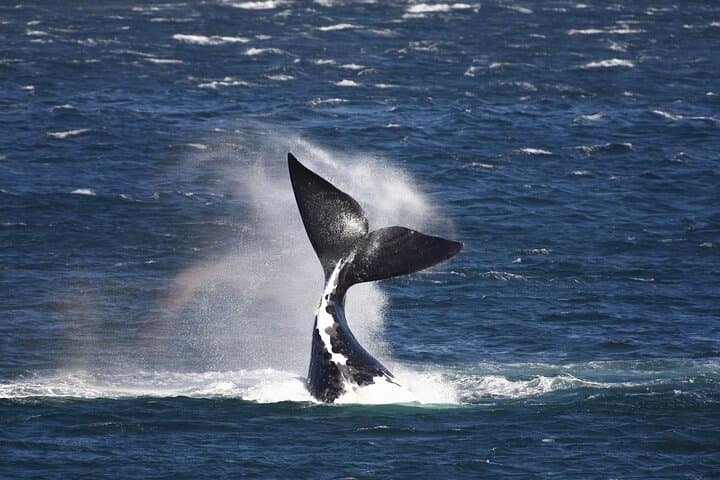
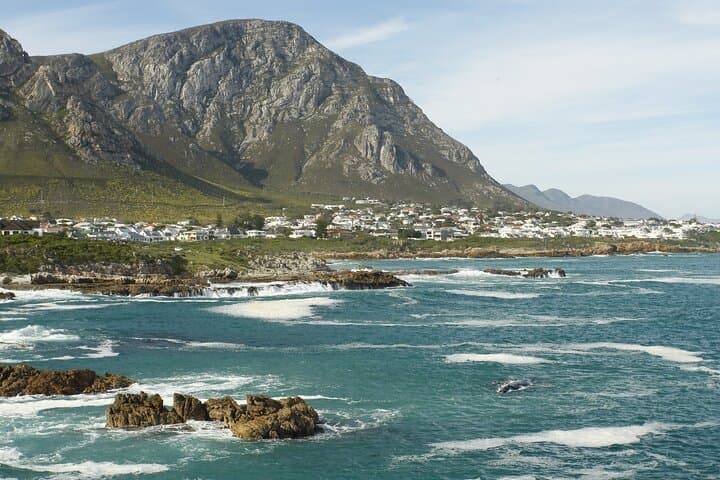
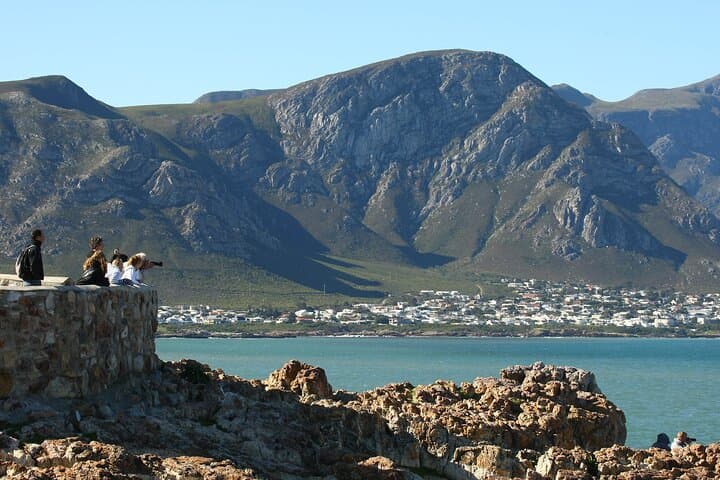
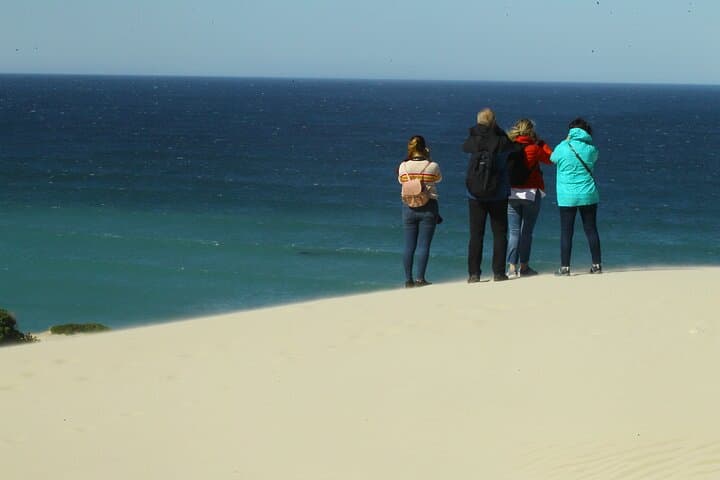
The cliff edge is a simple stage: scrubbed fynbos underfoot, a cool Atlantic wind pushing up from Walker Bay, and the patient arc of the ocean where white-backed Southern Right Whales come to feed and calve. Stand roughly 15 metres above the surf and the water drops to about 10 metres deep just below the cliffs — shallow enough that whales can come within a few dozen metres of shore, often appearing between 50 and 300 metres out.
The cliff edge is a simple stage: scrubbed fynbos underfoot, a cool Atlantic wind pushing up from Walker Bay, and the patient arc of the ocean where white-backed Southern Right Whales come to feed and calve. Stand roughly 15 metres above the surf and the water drops to about 10 metres deep just below the cliffs — shallow enough that whales can come within a few dozen metres of shore, often appearing between 50 and 300 metres out.
This land-based tour follows Hermanus’s famous cliff path, a route shaped by Cape geology and the fishing-town history of a place that once depended on whales for industry. Local guides like Dave de Beer bring two decades of observation, combining field knowledge with stories of the whaling era and the recovery of Southern Rights. The walk traces cultural touchpoints — a small museum stop explains past whaling practices and the modern shift toward conservation and eco-tourism — then moves into the rhythm of watching, reading whale behavior, and timing for breaching or fluke displays.
Expect vantage points rather than boat-level proximity: binoculars, patience, and a steady camera are essential. The route is low-elevation and accessible for most walkers but exposed to sun and wind; mornings and late afternoons offer the softest light and calmer seas. Practical tips: layer for coastal wind, bring water, and wear sturdy shoes for uneven cliff paths. With local insight and a clear understanding of whale behavior, this walk turns a short coastal hike into a focused wildlife encounter — high on observation, low on impact.