THE ADVENTURE COLLECTIVE® · Independent discovery and booking for outdoor travel

Walk Hermanus’s cliff tops with a local guide, starting at the Whale Museum and moving between 5–7 dramatic vantage points by minibus. Expect close shore views of southern right whales, hands-on natural history interpretation, and easy paved walking.
Walk Hermanus’s cliff tops with a local guide, starting at the Whale Museum and moving between 5–7 dramatic vantage points by minibus. Expect close shore views of southern right whales, hands-on natural history interpretation, and easy paved walking.
The cliff wind here in Hermanus has a voice — it nudges you along paved paths that hug vertical coastal edges while the Atlantic pushes against the rocks below.
Verified experiences and guided adventures in the surrounding area.
Operated by Percy Tours · Hermanus, Western Cape
The cliff wind here in Hermanus has a voice — it nudges you along paved paths that hug vertical coastal edges while the Atlantic pushes against the rocks below.
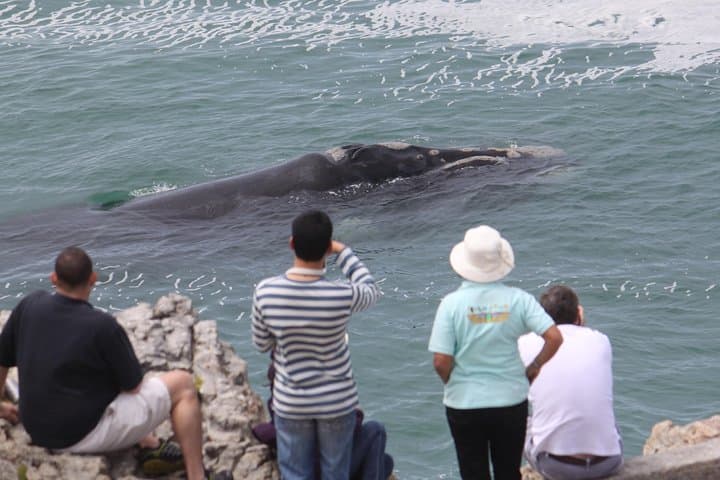
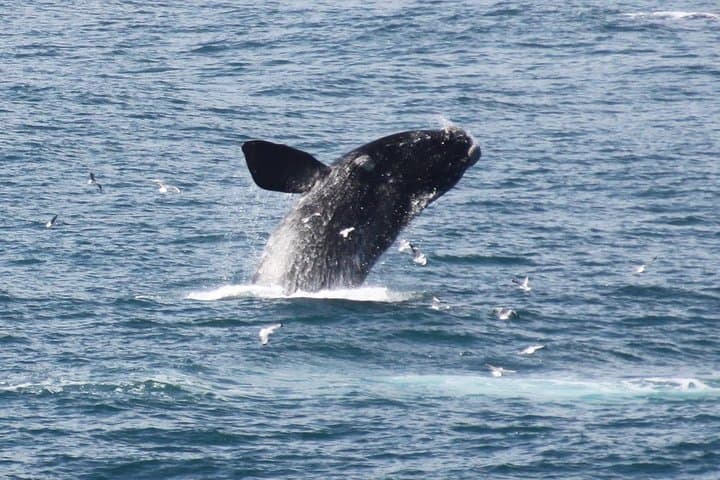
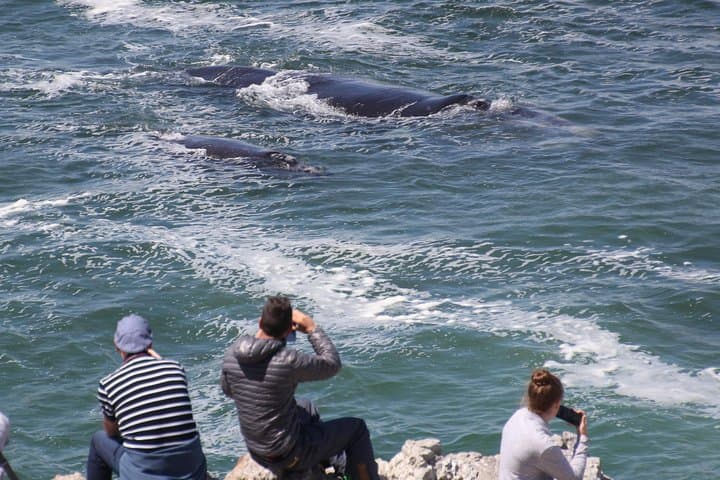
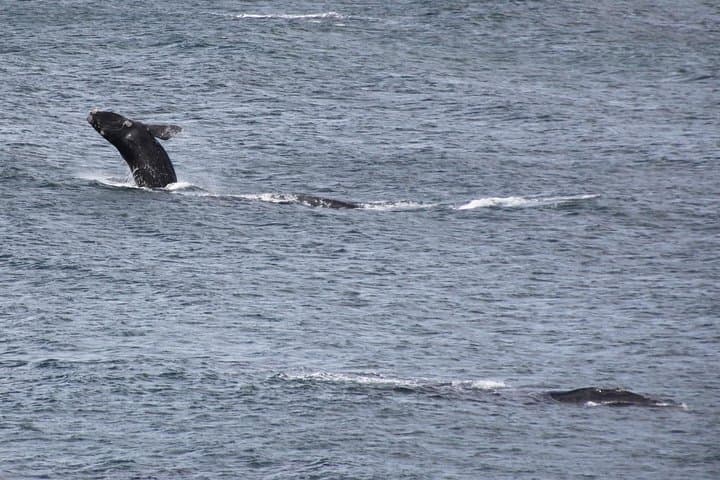
Begin inside the Whale Museum amid a life-size skeleton and interpretive displays that lay out why southern right whales return each winter to these bays. From there your guide leads a 2–3 hour circuit, moving by air‑conditioned kombi between 5–7 cliff-top vantage points. The geology is clear: layered sandstones and shales carved into steep coves where calm inlets allow whales to come astonishingly close; in good seasons animals can surface only metres from the cliff face.
Hermanus’s whale tradition stretches back to early 20th-century shore-based spotting; today the town balances tourism with a coastal fishing heritage. Guides point out lookouts named for local fishermen and explain migration timing tied to Southern Ocean currents.
Practically, expect gentle walking on paved and gravel paths, short inclines, and frequent stops for viewing and photography. Tours run year-round within the June–November prime season; weather can change fast so layers matter. Bring binoculars, a windproof jacket, sturdy closed shoes, and a charged camera. Hydration and sun protection make long, exposed viewpoints comfortable.
If whales aren’t visible from a cliff, guides will still interpret seabird behavior, dolphin activity, and coastal geology — making the walk as much about learning the sea as seeing it. This is a low‑impact, high‑reward way to meet one of the ocean’s largest visitors without getting wet.
easy.
2–3 hours.
Suitable for most fitness levels; participants should be able to walk short distances on paved and gravel surfaces with occasional steps.
June to November is the prime season for southern right whales; peak sightings are often July–September when mothers and calves are common.
The tour notes wheelchair accessibility and paved paths at many lookouts, but contact the operator about specific access needs and vehicle pick-up points before booking.
Tours may cancel for safety in bad weather; standard cancellation policy allows a full refund if cancelled at least 24 hours in advance, and operators typically offer rebooking options.
Yes—infants and small children can use strollers; the tour is designed for all ages with short walks and frequent stops.
Hermanus grew from a 19th-century fishing settlement into a world-famous shore-watching site; locals formalized cliff lookouts as whale watching became popular in the early 20th century.
Shore-based watching reduces disturbance to whales compared with boats; local groups monitor visitor access and promote keeping a respectful distance from haul-out sites.
Percy Tours operates guided outdoor trips and adventures with an emphasis on safety, stewardship, and memorable experiences.
The cliff wind here in Hermanus has a voice — it nudges you along paved paths that hug vertical coastal edges while the Atlantic pushes against the rocks below.
The cliff wind here in Hermanus has a voice — it nudges you along paved paths that hug vertical coastal edges while the Atlantic pushes against the rocks below.
Begin inside the Whale Museum amid a life-size skeleton and interpretive displays that lay out why southern right whales return each winter to these bays. From there your guide leads a 2–3 hour circuit, moving by air‑conditioned kombi between 5–7 cliff-top vantage points. The geology is clear: layered sandstones and shales carved into steep coves where calm inlets allow whales to come astonishingly close; in good seasons animals can surface only metres from the cliff face.
Hermanus’s whale tradition stretches back to early 20th-century shore-based spotting; today the town balances tourism with a coastal fishing heritage. Guides point out lookouts named for local fishermen and explain migration timing tied to Southern Ocean currents.
Practically, expect gentle walking on paved and gravel paths, short inclines, and frequent stops for viewing and photography. Tours run year-round within the June–November prime season; weather can change fast so layers matter. Bring binoculars, a windproof jacket, sturdy closed shoes, and a charged camera. Hydration and sun protection make long, exposed viewpoints comfortable.
If whales aren’t visible from a cliff, guides will still interpret seabird behavior, dolphin activity, and coastal geology — making the walk as much about learning the sea as seeing it. This is a low‑impact, high‑reward way to meet one of the ocean’s largest visitors without getting wet.