THE ADVENTURE COLLECTIVE® · Independent discovery and booking for outdoor travel

Spend a day along South Africa’s southern coast from Cape Town to Hermanus — cliffside whale watching, fynbos gardens in Betty’s Bay, and a farm stall stop in Grabouw. Perfect for photographers and nature-focused day-trippers who want scenic views without heavy hiking.
Spend a day along South Africa’s southern coast from Cape Town to Hermanus — cliffside whale watching, fynbos gardens in Betty’s Bay, and a farm stall stop in Grabouw. Perfect for photographers and nature-focused day-trippers who want scenic views without heavy hiking.
You pull off the highway as Walker Bay opens up: a raw stretch of blue where cliffs step down to wind-swept shorelines and seawater throws white against dark rock. Land-based viewing points give you the sense of whales moving under the surface, their spouts and tails punctuating long, low afternoons. The town itself unfolds with gallery windows, seafood shacks and compact streets that invite slow wandering.
Verified experiences and guided adventures in the surrounding area.
Operated by iGoAfrika Tours · Hermanus, Western Cape
You pull off the highway as Walker Bay opens up: a raw stretch of blue where cliffs step down to wind-swept shorelines and seawater throws white against dark rock. Land-based viewing points give you the sense of whales moving under the surface, their spouts and tails punctuating long, low afternoons. The town itself unfolds with gallery windows, seafood shacks and compact streets that invite slow wandering.
Hermanus grew from a 19th-century fishing and farming outcrop into a seaside village famous for southern right whales that return each winter to calve and socialise. Geologically the coast is shaped by wave-eroded cliffs and coastal flats that host Cape fynbos — low shrubs adapted to sandy soils and regular fires — while nearby valleys carry streams down from the Klein River foothills.
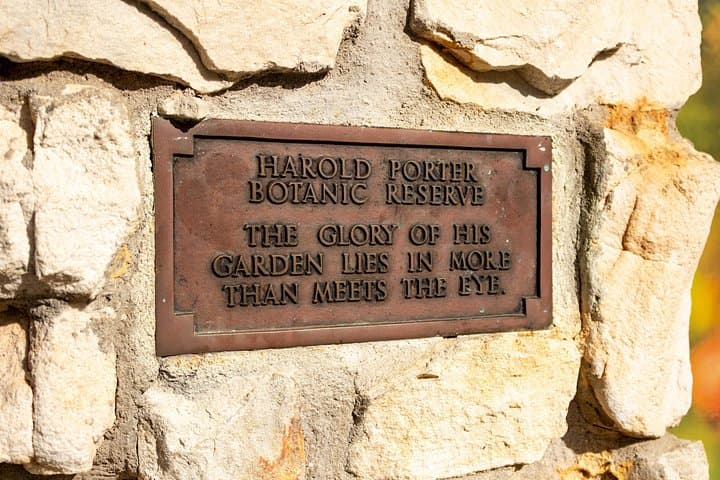
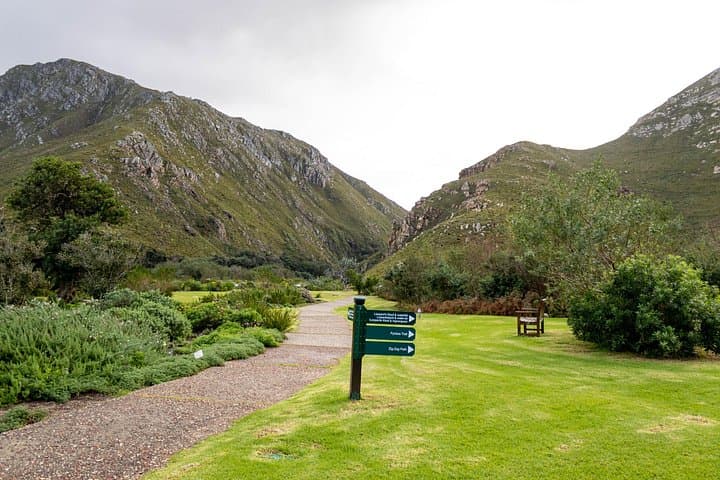
Local culture leans on the sea: fresh catches, craft markets and small farms like Peregrine in Grabouw that sell preserves and breads. For quieter green space, Harold Porter National Botanical Gardens in Betty’s Bay offers waterfalls and mapped walking trails through native plants.
Practical guidance: this is a long, mostly vehicle-based day (plan on roughly 9–10 hours including drives). Whale season runs July–November — mornings and late afternoons can be best for light and calm seas. Wear layered windproof clothing, bring binoculars and a charged camera, and allow time for short cliff-path walks on uneven ground. Respect fenced viewing points and local wildlife rules; parking and short hikes are part of the rhythm here, so comfortable shoes and water matter more than technical gear.
easy.
9–10 hours.
Suitable for all fitness levels; mostly vehicle-based with short, uneven cliff walks up to 1 km.
Southern right whales are most commonly sighted from July through November; peak sightings are often between August and October when mothers and calves are present.
No—this is a vehicle-based day with short, mostly optional walks; the tour is suitable for most fitness levels, including families and older travelers.
No—sightings are seasonal and depend on whale movement and weather; the guide will use known vantage points to maximize viewing opportunities.
Many viewpoints and the main town are accessible, but some cliff paths and botanical garden trails include uneven surfaces and steps—check specific accessibility needs with the operator before booking.
Hermanus began as a 19th‑century fishing and farming settlement and later became known for whaling‑related activity before evolving into a conservation‑minded tourism town.
Walker Bay and nearby reserves are subject to marine protection measures and fynbos conservation; stick to paths, avoid disturbing wildlife, and support local businesses that follow sustainable practices.
iGoAfrika Tours operates guided outdoor trips and adventures with an emphasis on safety, stewardship, and memorable experiences.
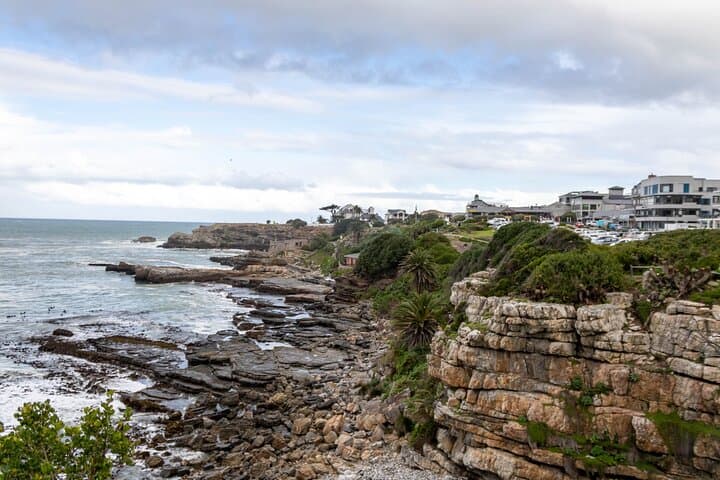
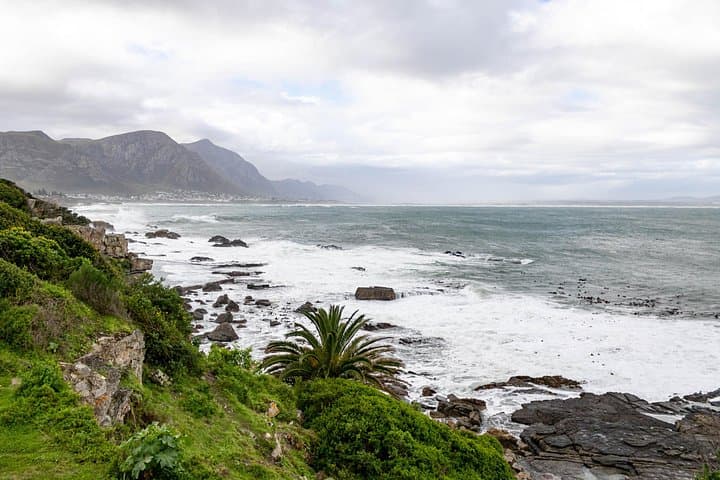
You pull off the highway as Walker Bay opens up: a raw stretch of blue where cliffs step down to wind-swept shorelines and seawater throws white against dark rock. Land-based viewing points give you the sense of whales moving under the surface, their spouts and tails punctuating long, low afternoons. The town itself unfolds with gallery windows, seafood shacks and compact streets that invite slow wandering.
You pull off the highway as Walker Bay opens up: a raw stretch of blue where cliffs step down to wind-swept shorelines and seawater throws white against dark rock. Land-based viewing points give you the sense of whales moving under the surface, their spouts and tails punctuating long, low afternoons. The town itself unfolds with gallery windows, seafood shacks and compact streets that invite slow wandering.
Hermanus grew from a 19th-century fishing and farming outcrop into a seaside village famous for southern right whales that return each winter to calve and socialise. Geologically the coast is shaped by wave-eroded cliffs and coastal flats that host Cape fynbos — low shrubs adapted to sandy soils and regular fires — while nearby valleys carry streams down from the Klein River foothills.
Local culture leans on the sea: fresh catches, craft markets and small farms like Peregrine in Grabouw that sell preserves and breads. For quieter green space, Harold Porter National Botanical Gardens in Betty’s Bay offers waterfalls and mapped walking trails through native plants.
Practical guidance: this is a long, mostly vehicle-based day (plan on roughly 9–10 hours including drives). Whale season runs July–November — mornings and late afternoons can be best for light and calm seas. Wear layered windproof clothing, bring binoculars and a charged camera, and allow time for short cliff-path walks on uneven ground. Respect fenced viewing points and local wildlife rules; parking and short hikes are part of the rhythm here, so comfortable shoes and water matter more than technical gear.