THE ADVENTURE COLLECTIVE® · Independent discovery and booking for outdoor travel

See Helsinki from a red double‑decker: this 24‑hour hop‑on hop‑off route threads the waterfront, design districts and historic squares. Learn when to ride, where to hop off and what practical gear will make the most of your loop.
See Helsinki from a red double‑decker: this 24‑hour hop‑on hop‑off route threads the waterfront, design districts and historic squares. Learn when to ride, where to hop off and what practical gear will make the most of your loop.
You climb the red steps at Stop 1 and the city unfolds: granite streets give way to a waterfront where the Baltic nudges the harbors, gulls wheel above ferries and the double-decker eases into traffic. The upper deck is a vantage point — glass and steel of modern docks contrast with ochre Bulevardi facades and the green sweep of Kaivopuisto.
Verified experiences and guided adventures in the surrounding area.
Operated by Royal Line Oy · Helsinki, Uusimaa
You climb the red steps at Stop 1 and the city unfolds: granite streets give way to a waterfront where the Baltic nudges the harbors, gulls wheel above ferries and the double-decker eases into traffic. The upper deck is a vantage point — glass and steel of modern docks contrast with ochre Bulevardi facades and the green sweep of Kaivopuisto.
Helsinki began as a trading outpost in 1550 and was reshaped by 19th‑century neoclassical plans and later Art Nouveau neighborhoods like Eira. Geologically the region sits on ancient Baltic Shield bedrock, smoothed by the last Ice Age; that low, rocky archipelago defines the city’s relationship with the sea. Culturally, the tour threads markets, saunas and design districts: you’ll pass Market Square, Löyly’s wooden silhouette, Sibelius Park and cruise terminals where Stockholm ferries arrive.
Practically, expect an ~80‑minute loop per full circuit with stops at major piers and neighborhoods; schedules tighten in summer (buses every 30–40 minutes between 10:00–16:00) and relax to two daily departures off‑season. The ticket is valid for a 24‑hour interval and can be split within two days, audio guides and free Wi‑Fi are standard, and wheelchair access is available though winter conditions may limit it.
Plan stops to stretch legs, sample a market stall or drop into a design shop. Wear comfortable shoes, keep a portable charger and a travel card handy, and time your hop‑offs to avoid peak commuter windows. The bus is a pragmatic way to orient yourself to Helsinki’s coastline, parks and public saunas before you step back onto the streets.
easy.
1–2 hours per loop (80 minutes typical).
Suitable for all fitness levels; involves short walks when you hop off to explore
A full loop runs about 80 minutes, but traffic and harbour calls can extend it to around 90–120 minutes at times.
Buses are wheelchair accessible, though accessibility can be limited in winter—contact the operator for specific dates.
Yes—the ticket is valid for a 24‑hour interval and may be divided within two days according to the operator notes.
Yes, onboard audio commentary is provided in multiple languages and free Wi‑Fi is available during the ride.
Founded in 1550 as a trading town, Helsinki was redesigned in the 19th century into a neoclassical capital and later developed distinct Art Nouveau neighborhoods.
Use the bus to reduce car trips, avoid feeding shorebirds at the piers and follow local recycling norms; winter operations may be restricted to protect accessibility.
Royal Line Oy operates guided outdoor trips and adventures with an emphasis on safety, stewardship, and memorable experiences.
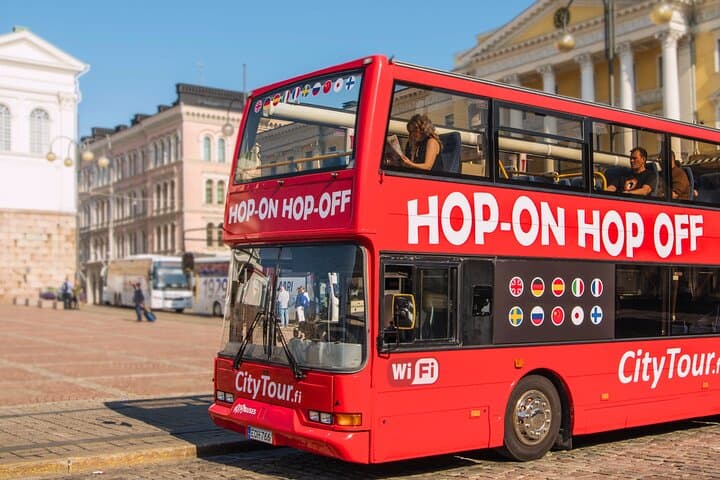

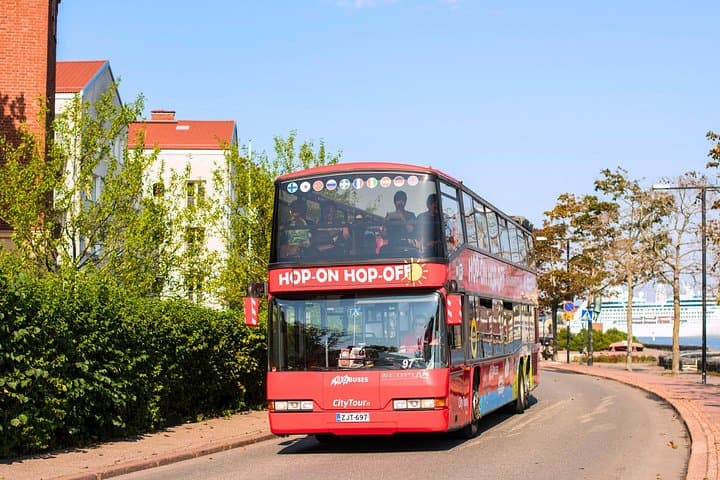
You climb the red steps at Stop 1 and the city unfolds: granite streets give way to a waterfront where the Baltic nudges the harbors, gulls wheel above ferries and the double-decker eases into traffic. The upper deck is a vantage point — glass and steel of modern docks contrast with ochre Bulevardi facades and the green sweep of Kaivopuisto.
You climb the red steps at Stop 1 and the city unfolds: granite streets give way to a waterfront where the Baltic nudges the harbors, gulls wheel above ferries and the double-decker eases into traffic. The upper deck is a vantage point — glass and steel of modern docks contrast with ochre Bulevardi facades and the green sweep of Kaivopuisto.
Helsinki began as a trading outpost in 1550 and was reshaped by 19th‑century neoclassical plans and later Art Nouveau neighborhoods like Eira. Geologically the region sits on ancient Baltic Shield bedrock, smoothed by the last Ice Age; that low, rocky archipelago defines the city’s relationship with the sea. Culturally, the tour threads markets, saunas and design districts: you’ll pass Market Square, Löyly’s wooden silhouette, Sibelius Park and cruise terminals where Stockholm ferries arrive.
Practically, expect an ~80‑minute loop per full circuit with stops at major piers and neighborhoods; schedules tighten in summer (buses every 30–40 minutes between 10:00–16:00) and relax to two daily departures off‑season. The ticket is valid for a 24‑hour interval and can be split within two days, audio guides and free Wi‑Fi are standard, and wheelchair access is available though winter conditions may limit it.
Plan stops to stretch legs, sample a market stall or drop into a design shop. Wear comfortable shoes, keep a portable charger and a travel card handy, and time your hop‑offs to avoid peak commuter windows. The bus is a pragmatic way to orient yourself to Helsinki’s coastline, parks and public saunas before you step back onto the streets.