THE ADVENTURE COLLECTIVE® · Independent discovery and booking for outdoor travel

Drive down the Great Rift Valley, cycle through towering gorges and take a quiet boat ride to watch hippos at Lake Naivasha. This full-day guided outing from Nairobi delivers geology, wildlife, and local culture in one accessible adventure.
Drive down the Great Rift Valley, cycle through towering gorges and take a quiet boat ride to watch hippos at Lake Naivasha. This full-day guided outing from Nairobi delivers geology, wildlife, and local culture in one accessible adventure.
You set out from Nairobi before the city swallows the sun—an easy silence on the road broken only by the guide's cadence and the slow reveal of the Great Rift Valley. By the time the minivan pulls into the viewpoint the valley has already widened, the escarpment folding like a palm. Wind moves through the geology here with intent; the cliffs of Hell's Gate press and dare you to look closer.
Verified experiences and guided adventures in the surrounding area.
Operated by Gracepatt Ecotours Kenya · Naivasha, Nakuru County
You set out from Nairobi before the city swallows the sun—an easy silence on the road broken only by the guide's cadence and the slow reveal of the Great Rift Valley. By the time the minivan pulls into the viewpoint the valley has already widened, the escarpment folding like a palm. Wind moves through the geology here with intent; the cliffs of Hell's Gate press and dare you to look closer.
At Hell's Gate National Park the landscape changes from wide savanna to raw rock and narrow gorges. The air tastes faintly of dust and something geothermal, an audible low hum from the earth that reminds you the Rift is still tectonic business. The park's signature features—sheer red cliffs, steaming vents, and the sliced corridors of Fischer's Tower and the gorge—are a working textbook of rift geology: faults and uplift revealing layers of volcanic history.
Culturally the route traces human adaptations to this dramatic fault line. Maasai herders historically moved stock across the valley while small fishing communities set up on Lake Naivasha’s shores, a freshwater anomaly in a region otherwise dominated by alkaline lakes. Today glass-green greenhouses and flower farms along the road supply global markets, a visible sign of how local economies now lean on Lake Naivasha's freshwater resource.
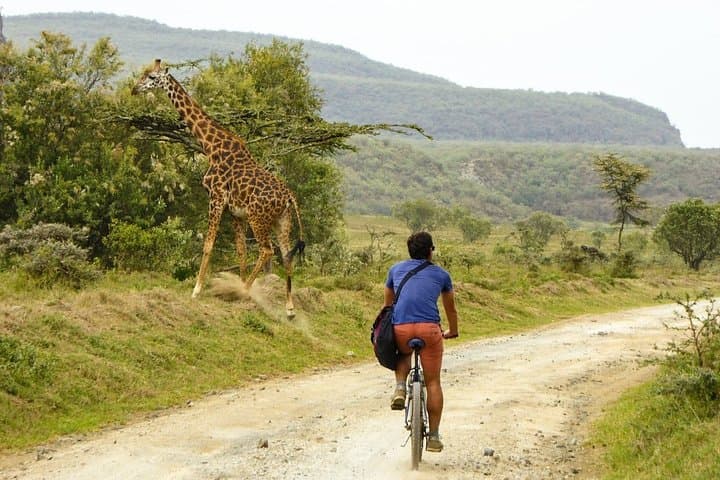
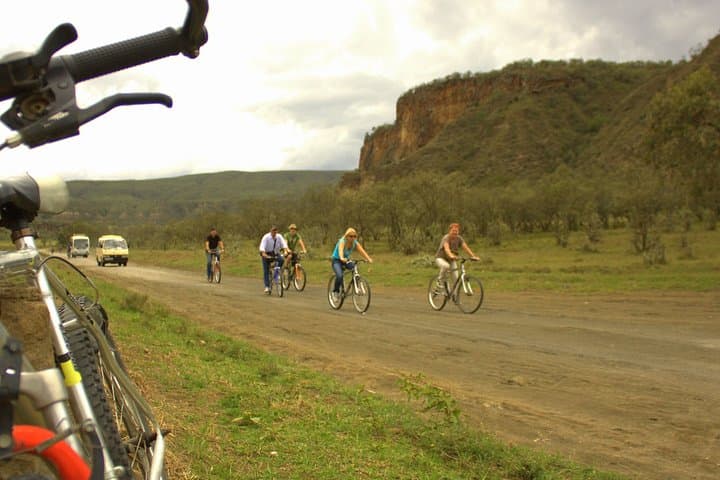
The guided day balances motion and close observation. You can choose a short safari drive or swap the vehicle for a bike—a compact dose of adrenaline as you pedal seven kilometers beneath jagged walls and past grazing zebras and warthogs. The ranger's post is a good checkpoint to stretch and swap lenses.
After lunch at Naivasha Fisherman's Camp, the boat ride is quieter but equally alive. Hippos bob like submerged monuments, surfacing with a nonchalant snort. African fish eagles call overhead; marsh fringes host kingfishers and a scatter of flamingos on distant shallows.
Practical edge: this is a full day (about 10 hours) with moderate walking and brief cycling. Footwear should handle gravel and hot rock; sun protection is mandatory. Hippos are territorial—observe from the boat and follow your guide's instructions. Weather can change quickly; the park is exposed, so early starts and flexible layers pay off.
For travelers based in Nairobi this itinerary packs a meaningful cross-section of Rift Valley life—geology, wildlife, local livelihoods—and wraps it in a single, well-paced day. It’s accessible to most fitness levels and delivers landscapes that feel both ancient and immediate, the earth gently but insistently reminding you it is still moving.
easy.
10 hours.
Suitable for most fitness levels; expect short walks, a 7 km optional bike ride, and brief periods standing on the boat.
The tour is approximately 10 hours—pickup from Nairobi in the morning and return in the late afternoon.
Yes—participants can choose a short game drive or a guided 7 km cycling route through Hell's Gate.
Yes—the listed inclusions cover all park entrance fees.
Hippos are commonly seen near the lake surface; sightings are frequent but never guaranteed.
The tour is family-friendly; infants must sit on an adult’s lap during transport and activities where required.
Wear breathable layers, closed-toe shoes for walking and cycling, sun protection, and bring a light jacket for early morning or cooler months.
Hell's Gate sits within the Great Rift Valley—land shaped by tectonic forces over millions of years; local Maasai and smallholder communities have long lived along the lakeshore.
Lake Naivasha’s freshwater is under pressure from agriculture and tourism; choose operators who support responsible water use and avoid disturbing wildlife, especially hippos.
Gracepatt Ecotours Kenya operates guided outdoor trips and adventures with an emphasis on safety, stewardship, and memorable experiences.


You set out from Nairobi before the city swallows the sun—an easy silence on the road broken only by the guide's cadence and the slow reveal of the Great Rift Valley. By the time the minivan pulls into the viewpoint the valley has already widened, the escarpment folding like a palm. Wind moves through the geology here with intent; the cliffs of Hell's Gate press and dare you to look closer.
You set out from Nairobi before the city swallows the sun—an easy silence on the road broken only by the guide's cadence and the slow reveal of the Great Rift Valley. By the time the minivan pulls into the viewpoint the valley has already widened, the escarpment folding like a palm. Wind moves through the geology here with intent; the cliffs of Hell's Gate press and dare you to look closer.
At Hell's Gate National Park the landscape changes from wide savanna to raw rock and narrow gorges. The air tastes faintly of dust and something geothermal, an audible low hum from the earth that reminds you the Rift is still tectonic business. The park's signature features—sheer red cliffs, steaming vents, and the sliced corridors of Fischer's Tower and the gorge—are a working textbook of rift geology: faults and uplift revealing layers of volcanic history.
Culturally the route traces human adaptations to this dramatic fault line. Maasai herders historically moved stock across the valley while small fishing communities set up on Lake Naivasha’s shores, a freshwater anomaly in a region otherwise dominated by alkaline lakes. Today glass-green greenhouses and flower farms along the road supply global markets, a visible sign of how local economies now lean on Lake Naivasha's freshwater resource.
The guided day balances motion and close observation. You can choose a short safari drive or swap the vehicle for a bike—a compact dose of adrenaline as you pedal seven kilometers beneath jagged walls and past grazing zebras and warthogs. The ranger's post is a good checkpoint to stretch and swap lenses.
After lunch at Naivasha Fisherman's Camp, the boat ride is quieter but equally alive. Hippos bob like submerged monuments, surfacing with a nonchalant snort. African fish eagles call overhead; marsh fringes host kingfishers and a scatter of flamingos on distant shallows.
Practical edge: this is a full day (about 10 hours) with moderate walking and brief cycling. Footwear should handle gravel and hot rock; sun protection is mandatory. Hippos are territorial—observe from the boat and follow your guide's instructions. Weather can change quickly; the park is exposed, so early starts and flexible layers pay off.
For travelers based in Nairobi this itinerary packs a meaningful cross-section of Rift Valley life—geology, wildlife, local livelihoods—and wraps it in a single, well-paced day. It’s accessible to most fitness levels and delivers landscapes that feel both ancient and immediate, the earth gently but insistently reminding you it is still moving.