THE ADVENTURE COLLECTIVE® · Independent discovery and booking for outdoor travel

Explore a rare Cold War-era heliocomplex outside Tashkent, then walk through Sukok Forest to springs and picnic spots. This accessible day trip blends technical history, quiet pine trails and local cuisine.
Explore a rare Cold War-era heliocomplex outside Tashkent, then walk through Sukok Forest to springs and picnic spots. This accessible day trip blends technical history, quiet pine trails and local cuisine.
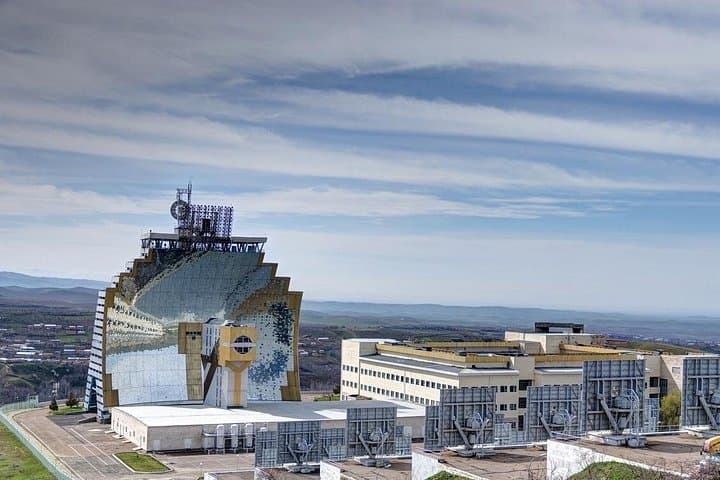
A low morning sun irons the horizon as an air-conditioned van leaves Tashkent and the city’s bustle falls away into steppe and pine-sheltered lanes. Within an hour you arrive at the Heliocomplex — a concrete relic from Cold War-era experiments — its austere geometry catching the light like a machine learning to be quiet.
Verified experiences and guided adventures in the surrounding area.
Operated by Sayyah Uzbekistan · Tashkent, Tashkent
A low morning sun irons the horizon as an air-conditioned van leaves Tashkent and the city’s bustle falls away into steppe and pine-sheltered lanes. Within an hour you arrive at the Heliocomplex — a concrete relic from Cold War-era experiments — its austere geometry catching the light like a machine learning to be quiet.
The Heliocomplex is one of only two structures of its kind built during the Soviet period, designed for concentrated-solar experiments and research. A local researcher guides visitors through its chambers, explaining engineering choices shaped by mid-20th-century science and the geopolitical urgency of the time. The region’s geology shifts from flat irrigated plains to the sandy loam and granite outcrops that feed the springs around Sukok.
A short drive brings you to Sukok Forest, a government-protected stand of pine often called the “Russian forest” of Uzbekistan. Follow a gentle 5 km round-trip trail to a clear spring; the stream edges nudge you onward, and the canopy moderates the heat. After a picnic or lunch in the village, return along the streambank where foam and rock map seasonal flows.
Practical guidance: plan a full-day window (5–7 hours), wear sturdy walking shoes for uneven forest trails, and carry water and sun protection. Photography is best in morning light at the Heliocomplex; in late afternoon the forest cools and wildlife becomes active. The route suits most fitness levels and offers a concise mix of Cold War history, hands-on science interpretation, and accessible nature walking.
easy.
5–7 hours.
Suitable for most people with basic mobility; requires walking up to 5 km on light terrain.
The round-trip walk to the spring is approximately 5 km and rated light—expect 1–2 hours depending on stops.
Yes; the tour includes access and commentary from a researcher who explains the complex’s function.
No; lunch is not included—there is time to eat at local restaurants in Sukok where kebabs are popular.
Yes; the overall tour is suitable for most ages and fitness levels, though some trail sections have uneven terrain.
The Heliocomplex was built in the Soviet era for concentrated-solar research—one of only two such installations globally—reflecting mid-20th-century scientific priorities in Central Asia.
Sukok Forest is a protected area administered locally; visitors should stick to trails, avoid disturbing springs, and dispose of waste properly to protect water sources.
Sayyah Uzbekistan operates guided outdoor trips and adventures with an emphasis on safety, stewardship, and memorable experiences.

A low morning sun irons the horizon as an air-conditioned van leaves Tashkent and the city’s bustle falls away into steppe and pine-sheltered lanes. Within an hour you arrive at the Heliocomplex — a concrete relic from Cold War-era experiments — its austere geometry catching the light like a machine learning to be quiet.
A low morning sun irons the horizon as an air-conditioned van leaves Tashkent and the city’s bustle falls away into steppe and pine-sheltered lanes. Within an hour you arrive at the Heliocomplex — a concrete relic from Cold War-era experiments — its austere geometry catching the light like a machine learning to be quiet.
The Heliocomplex is one of only two structures of its kind built during the Soviet period, designed for concentrated-solar experiments and research. A local researcher guides visitors through its chambers, explaining engineering choices shaped by mid-20th-century science and the geopolitical urgency of the time. The region’s geology shifts from flat irrigated plains to the sandy loam and granite outcrops that feed the springs around Sukok.
A short drive brings you to Sukok Forest, a government-protected stand of pine often called the “Russian forest” of Uzbekistan. Follow a gentle 5 km round-trip trail to a clear spring; the stream edges nudge you onward, and the canopy moderates the heat. After a picnic or lunch in the village, return along the streambank where foam and rock map seasonal flows.
Practical guidance: plan a full-day window (5–7 hours), wear sturdy walking shoes for uneven forest trails, and carry water and sun protection. Photography is best in morning light at the Heliocomplex; in late afternoon the forest cools and wildlife becomes active. The route suits most fitness levels and offers a concise mix of Cold War history, hands-on science interpretation, and accessible nature walking.