THE ADVENTURE COLLECTIVE® · Independent discovery and booking for outdoor travel

A helicopter flight that pairs an aerial survey of White Island’s steaming crater with a landing on Mount Tarawera’s dramatic summit. Short on-foot sections, big on geology and history — weather-dependent and richly narrated.
A helicopter flight that pairs an aerial survey of White Island’s steaming crater with a landing on Mount Tarawera’s dramatic summit. Short on-foot sections, big on geology and history — weather-dependent and richly narrated.
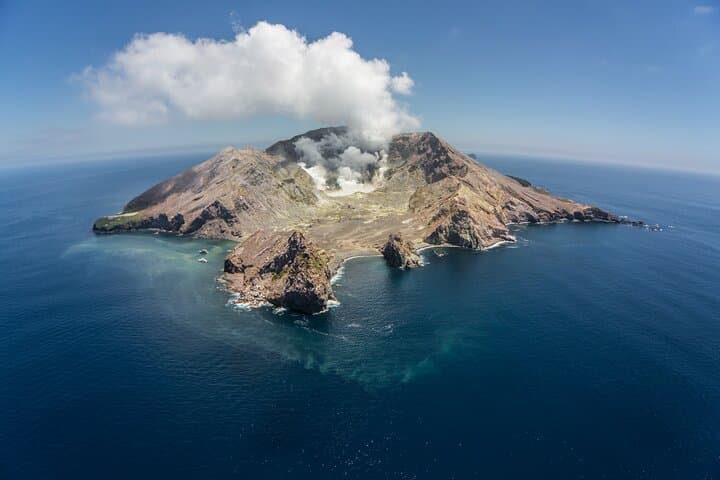
The helicopter lifts from Rotorua and the world rearranges itself: farmland flattens to checkerboard, the Bay of Plenty opens like a bright bruise, and Whakaari — White Island — rises as a living slab of steam and mineral. From the air the crater lake and fumarole plumes read as movement; the pilot’s commentary cuts through headset static and places every ridge and ring in context.
Verified experiences and guided adventures in the surrounding area.
Operated by Volcanic Air · Rotorua, Bay of Plenty
The helicopter lifts from Rotorua and the world rearranges itself: farmland flattens to checkerboard, the Bay of Plenty opens like a bright bruise, and Whakaari — White Island — rises as a living slab of steam and mineral. From the air the crater lake and fumarole plumes read as movement; the pilot’s commentary cuts through headset static and places every ridge and ring in context.
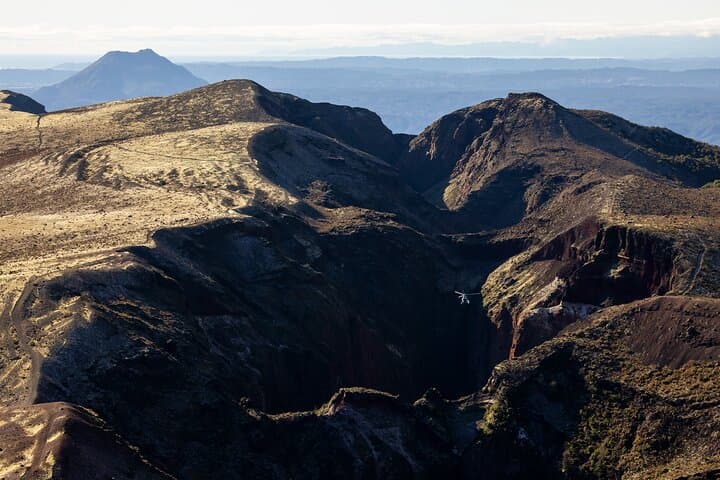
This flight pairs two volcanic stories. Whakaari is New Zealand’s only permanently active offshore volcano, its vents shifting daily and tragically noted for the 2019 eruption. Inland, Mount Tarawera carries the scars of 1886, when a vastly larger eruption carved craters and reshaped the local landscape and communities. The area is also central to Te Arawa iwi history; local guides will often frame geology alongside cultural meaning.
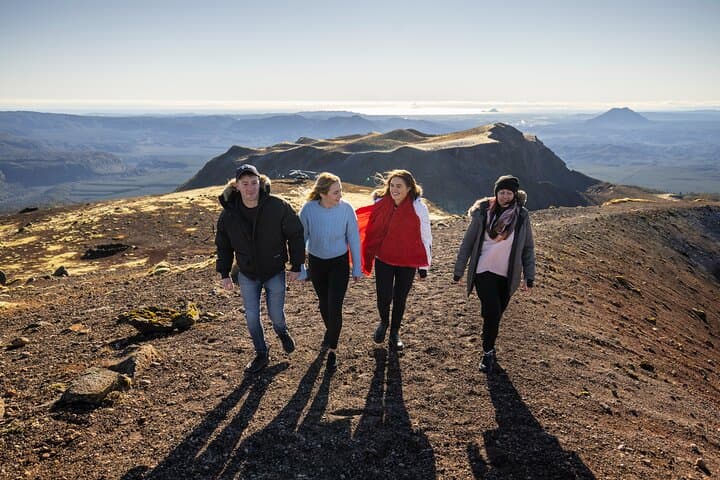
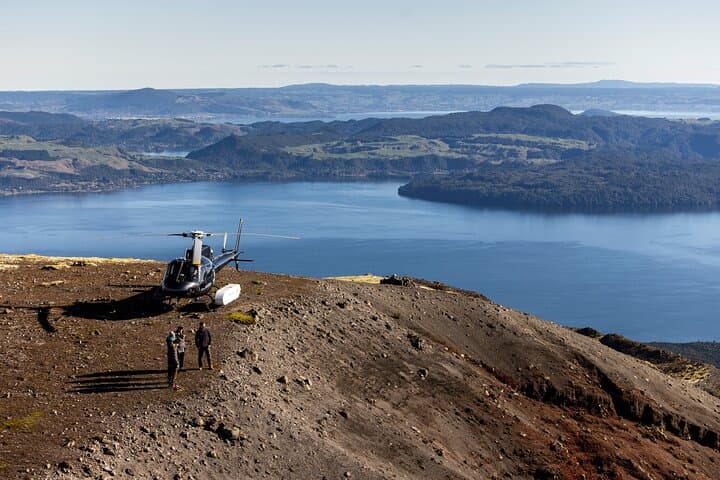
Expect a high-altitude survey of White Island (flyover) and a short landing and walk on Tarawera’s rim with commanding views into calderas and across the Rotorua lakes. Terrain on the summit is uneven volcanic rock with loose scree; the on-foot portion is short but exposed to wind and sun. Operators provide headsets and a pilot-guide; flights are weather-dependent and occasionally cancelled for safety.
Practical tips: arrive at the Volcanic Air office in Rotorua early, bring layers and sturdy shoes, and charge your camera — light levels change fast. Note passenger weight limits, minimum group requirements, and that transfers are not included. For photographers and volcano curious travelers, this is compact, intense access to two of Aotearoa’s most dramatic volcanic features.
moderate.
1.5–2 hours.
Suitable for people in reasonable health who can walk short distances over uneven ground and handle brief exposure to wind and sun.
No — this tour flies over White Island (Whakaari) to view the active crater; the landing and short walk occur on Mount Tarawera.
Flights are weather-dependent; the operator may cancel or reschedule for safety and will refund if cancelled at least 24 hours in advance per policy.
No — hotel transfers are not included; participants should make their own way to the Volcanic Air office in Rotorua.
Infants must sit on laps, and there is a per-seat maximum of 135 kg (297 lbs); the tour also requires a minimum of two adult fares to operate.
Mount Tarawera’s 1886 eruption was the largest in New Zealand’s living memory, reshaping the landscape and affecting local Māori communities; Whakaari’s activity has long been noted by sailors and scientists alike.
Access to active volcanic areas is tightly regulated for safety and ecological protection; operators follow monitoring guidance and visitors should avoid disturbing fragile geothermal features.
Volcanic Air operates guided outdoor trips and adventures with an emphasis on safety, stewardship, and memorable experiences.
The helicopter lifts from Rotorua and the world rearranges itself: farmland flattens to checkerboard, the Bay of Plenty opens like a bright bruise, and Whakaari — White Island — rises as a living slab of steam and mineral. From the air the crater lake and fumarole plumes read as movement; the pilot’s commentary cuts through headset static and places every ridge and ring in context.
The helicopter lifts from Rotorua and the world rearranges itself: farmland flattens to checkerboard, the Bay of Plenty opens like a bright bruise, and Whakaari — White Island — rises as a living slab of steam and mineral. From the air the crater lake and fumarole plumes read as movement; the pilot’s commentary cuts through headset static and places every ridge and ring in context.
This flight pairs two volcanic stories. Whakaari is New Zealand’s only permanently active offshore volcano, its vents shifting daily and tragically noted for the 2019 eruption. Inland, Mount Tarawera carries the scars of 1886, when a vastly larger eruption carved craters and reshaped the local landscape and communities. The area is also central to Te Arawa iwi history; local guides will often frame geology alongside cultural meaning.
Expect a high-altitude survey of White Island (flyover) and a short landing and walk on Tarawera’s rim with commanding views into calderas and across the Rotorua lakes. Terrain on the summit is uneven volcanic rock with loose scree; the on-foot portion is short but exposed to wind and sun. Operators provide headsets and a pilot-guide; flights are weather-dependent and occasionally cancelled for safety.
Practical tips: arrive at the Volcanic Air office in Rotorua early, bring layers and sturdy shoes, and charge your camera — light levels change fast. Note passenger weight limits, minimum group requirements, and that transfers are not included. For photographers and volcano curious travelers, this is compact, intense access to two of Aotearoa’s most dramatic volcanic features.