THE ADVENTURE COLLECTIVE® · Independent discovery and booking for outdoor travel

Soar above the Greater Caucasus on a helicopter tour that connects Tusheti’s stone villages, Kazbegi’s glaciated slopes and Gudauri’s alpine bowls in a single day. Expect dramatic vistas, possible short landings, and rapid altitude and temperature shifts.
Soar above the Greater Caucasus on a helicopter tour that connects Tusheti’s stone villages, Kazbegi’s glaciated slopes and Gudauri’s alpine bowls in a single day. Expect dramatic vistas, possible short landings, and rapid altitude and temperature shifts.
You lift off from Tbilisi and the city recedes beneath a lattice of roads and rooftops. Within minutes the Caucasus rises like an inland ocean, ridgelines cutting the horizon. The helicopter threads valleys, skims ruby meadows and trades the hum of the city for a wind you can feel at the edge of the door.
Verified experiences and guided adventures in the surrounding area.
Operated by Individual Entrepreneur Vazha Gakharia · Tbilisi, Tbilisi
You lift off from Tbilisi and the city recedes beneath a lattice of roads and rooftops. Within minutes the Caucasus rises like an inland ocean, ridgelines cutting the horizon. The helicopter threads valleys, skims ruby meadows and trades the hum of the city for a wind you can feel at the edge of the door.
This route crosses distinct landscapes: the high, stone villages of Tusheti with their medieval watchtowers; the volcanic and glacial slopes around Mount Kazbek (Mkinvartsveri, 5,033 m); and the soft, snow-fed bowls that surround the Gudauri ski corridor. Tusheti’s villages—Omalo among them—were shaped by centuries of herding and defensive architecture, while Kazbegi’s valleys have long been a corridor between Georgia and the Greater Caucasus. Geology here is active: uplifted limestone and granite, glaciated cirques and steep river-cut gorges define what you see.
Expect short landings on alpine meadows or marked pads for photos and local interactions; weather and permissions govern where pilots can touch down. A helicopter tour compresses long, difficult overland approaches into hours, offering access to remote pastures, highland towers and sweeping glacier views that otherwise require multi-day treks.
Practical notes: book in spring–autumn for the most stable flying weather, bring layered clothing for rapid temperature change, secure camera gear against rotor wash, and prepare for high-altitude sun. Operators prioritize safety and local regulations—listen to briefings, carry ID, and respect grazing lands and wildlife. For travelers who want to see Georgia’s high country in a single day, the flight is direct, dramatic and efficient.
easy.
3–8 hours.
Minimal fitness required; you’ll mostly board, sit, and make brief disembarkations for photos or short walks at landing sites.
Many operators include short landings at designated alpine meadows or village pads when weather and permissions allow; however some flights may be flyovers only depending on conditions.
Flights typically cruise between 1,500–4,000 meters depending on route and weather, giving close views of ridgelines and glaciers without necessarily summiting peaks like Kazbek.
Helicopter operators assess passengers individually; tours are generally suitable for most ages but not recommended for pregnant travelers or those with serious heart conditions.
Book at least several weeks ahead in high season (June–September) to secure preferred dates and landing permissions; last-minute bookings may still be possible subject to availability.
Tusheti’s mountain communities maintained semi-autonomous highland life with defensive towers dating to medieval times; Kazbegi served as a strategic passage across the Greater Caucasus.
Alpine meadows are fragile and grazing is managed locally; choose operators who minimize unnecessary landings, follow no-trace principles, and coordinate with local authorities.
Individual Entrepreneur Vazha Gakharia operates guided outdoor trips and adventures with an emphasis on safety, stewardship, and memorable experiences.

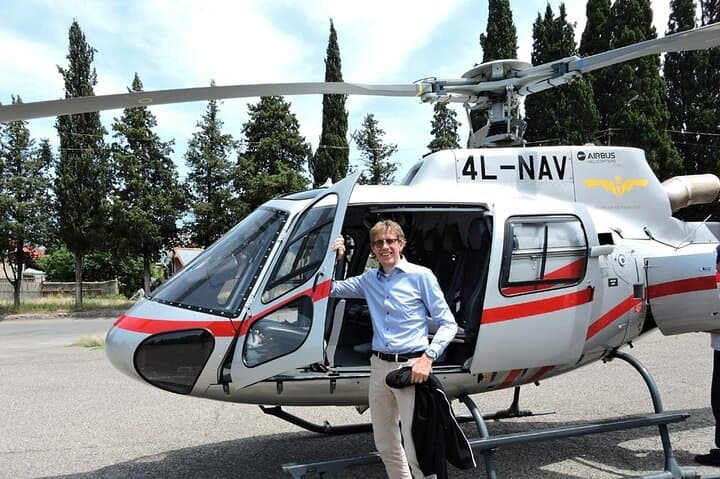
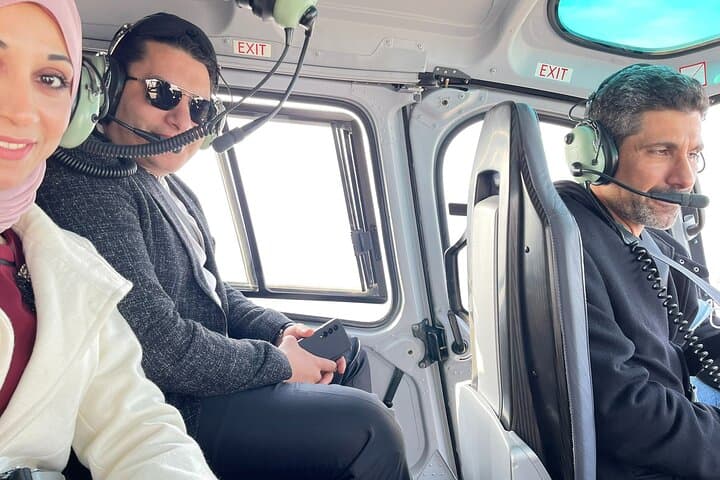
You lift off from Tbilisi and the city recedes beneath a lattice of roads and rooftops. Within minutes the Caucasus rises like an inland ocean, ridgelines cutting the horizon. The helicopter threads valleys, skims ruby meadows and trades the hum of the city for a wind you can feel at the edge of the door.
You lift off from Tbilisi and the city recedes beneath a lattice of roads and rooftops. Within minutes the Caucasus rises like an inland ocean, ridgelines cutting the horizon. The helicopter threads valleys, skims ruby meadows and trades the hum of the city for a wind you can feel at the edge of the door.
This route crosses distinct landscapes: the high, stone villages of Tusheti with their medieval watchtowers; the volcanic and glacial slopes around Mount Kazbek (Mkinvartsveri, 5,033 m); and the soft, snow-fed bowls that surround the Gudauri ski corridor. Tusheti’s villages—Omalo among them—were shaped by centuries of herding and defensive architecture, while Kazbegi’s valleys have long been a corridor between Georgia and the Greater Caucasus. Geology here is active: uplifted limestone and granite, glaciated cirques and steep river-cut gorges define what you see.
Expect short landings on alpine meadows or marked pads for photos and local interactions; weather and permissions govern where pilots can touch down. A helicopter tour compresses long, difficult overland approaches into hours, offering access to remote pastures, highland towers and sweeping glacier views that otherwise require multi-day treks.
Practical notes: book in spring–autumn for the most stable flying weather, bring layered clothing for rapid temperature change, secure camera gear against rotor wash, and prepare for high-altitude sun. Operators prioritize safety and local regulations—listen to briefings, carry ID, and respect grazing lands and wildlife. For travelers who want to see Georgia’s high country in a single day, the flight is direct, dramatic and efficient.