THE ADVENTURE COLLECTIVE® · Independent discovery and booking for outdoor travel

Board a helicopter in Pokhara and cross the northern Himalayan front for a short landing at Annapurna Base Camp. Expect sweeping glacial views, a brief tea break at high altitude, and practical limits on time and weight.
Board a helicopter in Pokhara and cross the northern Himalayan front for a short landing at Annapurna Base Camp. Expect sweeping glacial views, a brief tea break at high altitude, and practical limits on time and weight.
Helicopter rotors slice the thin Himalayan air as Pokhara shrinks into a patchwork of rice terraces and silver rivers below. In less than an hour you’re flying shoulder-to-shoulder with a skyline of glaciers and serrated ridgelines: Annapurna I’s bulk, the pyramidal Fishtail (Machapuchare), and the distant sweep of Dhaulagiri passing like cards on a table.
Verified experiences and guided adventures in the surrounding area.
Operated by Alpine Club of Himalaya · Pokhara, Gandaki Province
Helicopter rotors slice the thin Himalayan air as Pokhara shrinks into a patchwork of rice terraces and silver rivers below. In less than an hour you’re flying shoulder-to-shoulder with a skyline of glaciers and serrated ridgelines: Annapurna I’s bulk, the pyramidal Fishtail (Machapuchare), and the distant sweep of Dhaulagiri passing like cards on a table.
The Annapurna region is both geologic theater and cultural landscape. These peaks rose from tectonic collision; the deep Modi Khola gorge below carries meltwater toward the Pokhara Valley. The Annapurna Sanctuary—an amphitheater of high cirques—has long been home to Gurung and Magar communities whose villages scatter the lower slopes and whose tea houses shaped modern trekking culture.
Expect a short landing window at base camp (typically 15–30 minutes) for tea and photos; operators limit time to reduce altitude risk. The flight path follows classic panoramic corridors, with views of terraced farmland, rhododendron belts, and high moraine fields that tell of recent glacial change.
Practical side: weight limits, passport and ID for boarding, and a warm layer are essential—temperatures at 4,100 m drop quickly even midday. Morning flights offer the clearest light and calmer winds; afternoons often bring cloud build-up. If you have cardiovascular concerns or are pregnant, consult your physician—the rapid ascent is brief but significant.
This is an aerial immersion rather than a trek—come for the alpine clarity, the compact window on high Himalayan geology and culture, and leave with a sharpened sense of how quickly the mountains can command attention.
easy.
1–2 hours.
No special fitness required beyond boarding a helicopter; expect brief standing time at high altitude.
Flights typically last 60–120 minutes round-trip, with 15–30 minutes on the ground at Annapurna Base Camp.
Most travelers can fly, but those with serious heart or respiratory conditions, pregnant travelers, or very young infants should consult a doctor; operators may have weight limits.
Many tours include a short landing for tea and photos, but time on the ground is limited for safety at high altitude.
Weather (monsoon clouds, wind), visibility, and aircraft scheduling all affect flights; operators may cancel for safety and offer refunds per policy.
The Annapurna Sanctuary became internationally known after 1950s expeditions; trekking routes and tea-house culture developed in the 1970s around these mountains.
Peak visitation and helicopter activity increase noise and emissions; operators limit ground time and follow permit rules to reduce impact on fragile alpine environments.
Alpine Club of Himalaya operates guided outdoor trips and adventures with an emphasis on safety, stewardship, and memorable experiences.
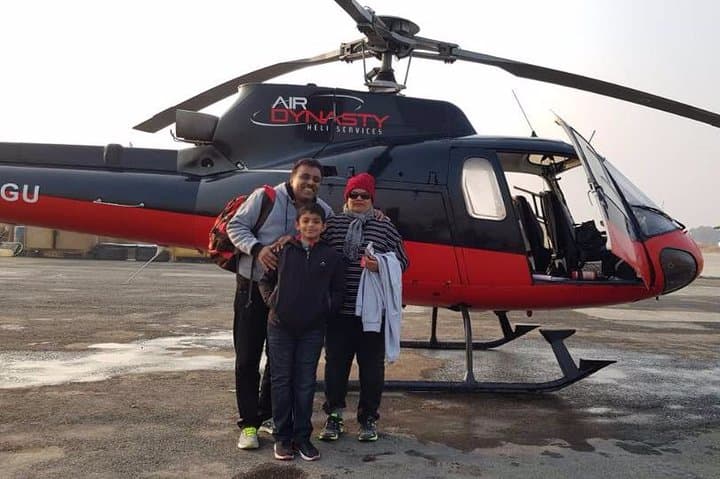
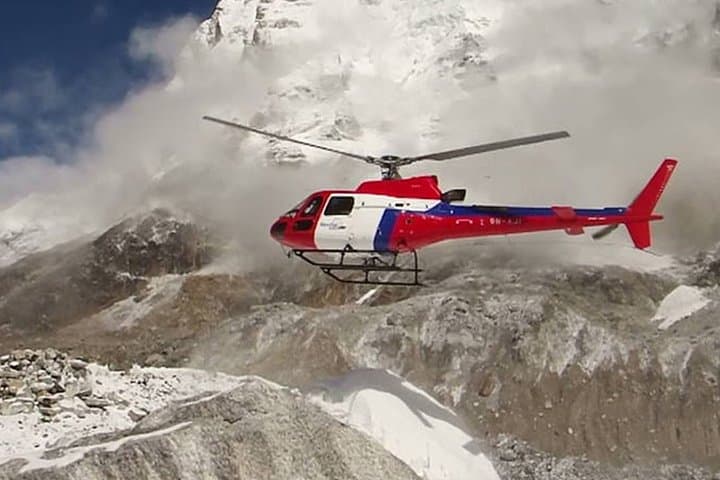
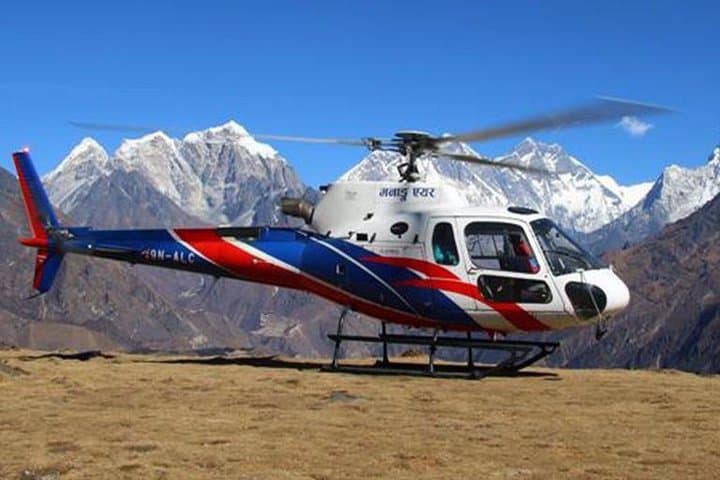
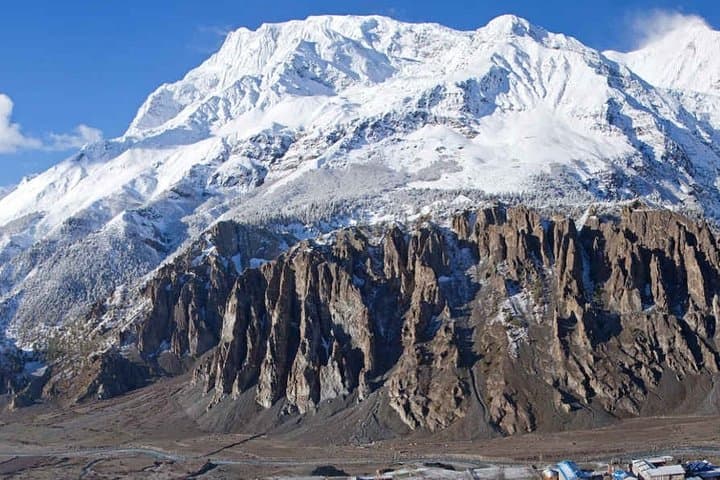
Helicopter rotors slice the thin Himalayan air as Pokhara shrinks into a patchwork of rice terraces and silver rivers below. In less than an hour you’re flying shoulder-to-shoulder with a skyline of glaciers and serrated ridgelines: Annapurna I’s bulk, the pyramidal Fishtail (Machapuchare), and the distant sweep of Dhaulagiri passing like cards on a table.
Helicopter rotors slice the thin Himalayan air as Pokhara shrinks into a patchwork of rice terraces and silver rivers below. In less than an hour you’re flying shoulder-to-shoulder with a skyline of glaciers and serrated ridgelines: Annapurna I’s bulk, the pyramidal Fishtail (Machapuchare), and the distant sweep of Dhaulagiri passing like cards on a table.
The Annapurna region is both geologic theater and cultural landscape. These peaks rose from tectonic collision; the deep Modi Khola gorge below carries meltwater toward the Pokhara Valley. The Annapurna Sanctuary—an amphitheater of high cirques—has long been home to Gurung and Magar communities whose villages scatter the lower slopes and whose tea houses shaped modern trekking culture.
Expect a short landing window at base camp (typically 15–30 minutes) for tea and photos; operators limit time to reduce altitude risk. The flight path follows classic panoramic corridors, with views of terraced farmland, rhododendron belts, and high moraine fields that tell of recent glacial change.
Practical side: weight limits, passport and ID for boarding, and a warm layer are essential—temperatures at 4,100 m drop quickly even midday. Morning flights offer the clearest light and calmer winds; afternoons often bring cloud build-up. If you have cardiovascular concerns or are pregnant, consult your physician—the rapid ascent is brief but significant.
This is an aerial immersion rather than a trek—come for the alpine clarity, the compact window on high Himalayan geology and culture, and leave with a sharpened sense of how quickly the mountains can command attention.